FINWIRES · TerminalLIVE
FINWIRES

HKG:1211

59 stories mentioning HKG:1211Updated 2d ago

Every FINWIRES story that references HKG:1211, newest first.

What's the latest news on HKG:1211?

Asia

Chinese Passenger Car Sales Fall 23% in June

Chinese retail sales of passenger cars slid 23.2% to 1.6 million units in June, the China Passenger Car Association said in a Wednesday press release.New energy vehicle sales fell 9% during the month, with domestic brands slipping 11%, mainstream joint venture-made NEVs plunging 45%, and luxury brands declining 11%.Retail sales of gas-powered vehicles plunged 39% year over year, with pure gasoline vehicle sales falling 42% and conventional hybrids slipping 7%.Vehicle exports surged 82% to 877,000 units in June, with 56.9% of the figure coming from NEVs.Production fell 2.7% year over year to 2.3 million units.China's biggest local automakers include Dongfeng Motor Group (HKG:0489), SAIC Motor (SHA:600104), Chongqing Changan Automobile (SHE:000625), BAIC Motor (HKG:1958), Guangzhou Automobile Group (SHA:601238, HKG:2238), Great Wall Motors (SHA:601633, HKG:2333), Chery Automobile (HKG:9973), and FAW Group (SHE:000800).Top new-energy vehicle manufacturers include BYD (SHE:002594, HKG:1211), Li Auto (HKG:2015), XPeng (HKG:9868) and NIO (HKG:9866, SGX:NIO).

Shanghai Composite^SZSEHKG:0489HKG:1211HKG:1958HKG:2015HKG:2238HKG:9866HKG:9868HKG:9973SGX:NIOSHA:600104SHA:601238SHE:000625SHE:000800SHE:002594
Asia

Sales of Chinese NEVs Rise 22% in June, CPCA Says

Sales of Chinese new energy vehicles rose 22% year over year to more than 1.5 million units in June, according to preliminary figures from the China Passenger Car Association released Thursday.The increase was attributable to higher oil prices, improved supply conditions and stronger exports, the association said.BYD's (HKG:1211, SHE:002594) sales reached 397,292 units, topping the association's list.Geely's (HKG:0175) sales were at 158,849 during the period, while Chery Automobile's (HKG:9973) were at 106,900.Tesla's sales reached 89,091 units during the period.

Shanghai Composite^SZSEHKG:0175HKG:1211HKG:9973SHE:002594
BYD Leads China NEV Sales in June
US Markets

BYD Leads China NEV Sales in June

BYD (HKG:1211, SHE:002594) led June's new energy vehicle sales as demand for such vehicles continues to surge abroad, even as domestic expansion faces distinct retail headwinds.BYD recorded the highest number of sales among Chinese NEV makers, selling 403,472 units during the month, up 5.46% from a year earlier. The carmaker's momentum was buoyed by its overseas performance, where passenger exports nearly doubled year over year to a record 174,897 units, offsetting a cool domestic retail market.Meanwhile, Zhejiang Leapmotor Technology (HKG:9863) and Nio (HKG:9866, SGX:NIO) recorded significant increases in their global deliveries, jumping 95% and 62.9% year over year, respectively, to deliver 93,376 units and 40,597 units.Leapmotor's numbers were boosted by its extended-range hybrid lineup, while Nio's deliveries were split across its luxury brand and its emerging sub-brands.SAIC Motor (SHA:600104) maintained strong overall volume, with group-wide sales reaching 395,000 units in June, up 8.1% from the previous year. Sales were boosted by electrification across the company's portfolio. Monthly NEV-specific sales 66.6% year over year to hit 201,000 units.Meanwhile, Geely Automobile's (HKG:0175) NEV sales climbed 2% year on year to 240,799 units, while those of Chery Automobile (HKG:9973) rose 9.5% to 240,585 units.Meanwhile, XPeng (HKG:9868) sold 40,126 vehicles during the month, bringing deliveries in the second quarter to 103,295 units. The carmaker plans to launch and presale a new model, XPENG MONA L03, on Thursday.Li Auto (HKG:2015) delivered 30,895 NEVs in the same month, bringing 1.7 million units into sale as of the end of June. The automaker said it surpassed 150,000 units in cumulative production after introducing a new flagship SUV, Li L8, on June 23.The number in NEV exports rose, but analysts from S&P Global said it is not enough to lift the slumping domestic demand.On a June 15 note, the ratings firm predicted NEV domestic sales to drop by 7% year on year to 25.4 million units in June as demand slowed down due to a reduction in trade-in and NEV purchase tax incentives."While mainland China automakers have been praised for their speed to market and ability to rapidly update products and technology, this frenetic cycle has a downside," S&P Global said. "The pace of model updates from mainland OEMs is causing some consumers to delay purchases, waiting for better deals both technologically and financially."

HKG:0175HKG:1211HKG:2015HKG:9863HKG:9866HKG:9868HKG:9973SGX:NIOSHA:600104SHE:002594
Asia

Update: South Korean Automakers to Recall Vehicles to Fix Defects

Six automakers have decided to recall more than 146,000 vehicles in South Korea to fix defective components, according to the Korean transport ministry on Thursday.Hyundai Motor (KRX:005380), BYD's (HKG:1211, SHE:002594) Korean arm, Mercedes-Benz Korea, and three other automakers will be recalling 146,505 vehicles across 38 models.

HKG:1211KRX:005380SHE:002594
Asia

Market Chatter: BYD to Soon Decide on Acquiring Existing Car Factory in Europe

Chinese electric car manufacturer BYD Company (HKG:1211, SHE:002594) is close to deciding on the acquisition of an existing European automobile manufacturing plant to act as a catalyst for expansion in the region, according to a Reuters report on Wednesday, quoting BYD's special adviser for Europe, Alfredo Altavilla.The company is looking at Spain and France for brownfield investments and acquiring ​an existing factory from a traditional automaker, Altavilla said in a Reuters conference in Frankfurt, adding that a decision was expected soon.If the acquisition materializes, it would give BYD a second European assembly site ​after Hungary, which is due to start production in the fourth quarter, the report said.(Market Chatter news is derived from conversations with market professionals globally. This information is believed to be from reliable sources but may include rumor and speculation. Accuracy is not guaranteed.)

HKG:1211SHE:002594
Asia

BYD's Sales, Output Rise in June

BYD's (HKG:1211, SHE:002594) sales of new energy vehicles rose to 403,472 units in June, while production jumped to 403,246 vehicles.For the first half of 2026, the Chinese automaker's sales and output slipped 16% and 15% year over year, respectively, to 1.8 million vehicles each, according to a Wednesday filing.

HKG:1211
Asia

Market Chatter: Top Chinese Battery Makers Absent from Japan's Security Certification

None of China's major battery makers have received Japan's cybersecurity approval yet, despite an upcoming 2027 mandate requiring grid-connected storage equipment, Nikkei Asia reported on Wednesday.The certification process, managed by the Ministry of Economy, Trade and Industry and the Innovation Platform Agency, requires companies to submit checklists verifying basic security compliance, the news daily said.While rivals such as Tesla and SMA Solar already appear on the certified list, prominent Chinese firms, including Sungrow (SHE:300274), Huawei, BYD (HKG:1211, SHE:002594), and Contemporary Amperex Technology or CATL (SHE:300750), remain absent from the registry as of this week, the publication said.Sungrow, Huawei, BYD, and CATL didn't immediately reply to MTNewswire's request for comments.(Market Chatter news is derived from conversations with market professionals globally. This information is believed to be from reliable sources but may include rumor and speculation. Accuracy is not guaranteed.)

HKG:1211SHE:002594SHE:300274SHE:300750
After WuXi AppTec, Alibaba Sues Pentagon to Contest Chinese Military Company Designation
US Markets

After WuXi AppTec, Alibaba Sues Pentagon to Contest Chinese Military Company Designation

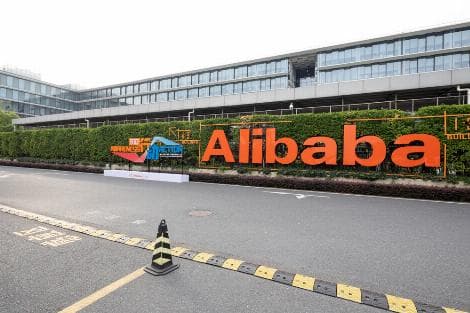
Alibaba Group (HKG:9988) has sued the US Department of Defense on Tuesday, seeking to overturn its designation as a "Chinese military company" and accusing the Pentagon of acting without factual basis or fair process in branding it as a threat to national security.The lawsuit was filed in the US District Court for the Northern District of California in San Jose, also naming Secretary of Defense Pete Hegseth, Deputy Secretary Stephen Feinberg, and Assistant Secretary for Industrial Base Policy Michael Cadenazzi as defendants."The determinations have no basis in fact or law... To label Alibaba a 'Chinese military company' is to brand it an instrument of the Chinese military and a threat to US national security," Alibaba wrote.The Pentagon added Alibaba and several other Chinese companies to its Section 1260H list on June 8, tagging the e-commerce and tech company as "a military-civil fusion contributor to the Chinese defense industrial base because it is affiliated with" the Ministry of Industry and Information Technology.Prior to the lawsuit, Alibaba had denied this designation, calling it "a mistake," according to a June 9 Hong Kong bourse filing."There is no basis to conclude that Alibaba Group should be placed on the CMC List. Alibaba Group is not a Chinese military company nor part of any military-civil fusion strategy."Alibaba at the time warned that it would "take all available legal action against attempts to misrepresent the company."In its lawsuit, Alibaba said it is owned by a broad, public shareholder base, and since early 2025, the only investors to hold 5% or more of its stock are three American financial institutions: JPMorgan, Citigroup, and BlackRock."No individual shareholder controls the company, and no state-owned entity has ever controlled the company," Alibaba argued.The company also stressed that it "has no affiliation with MIIT, SASAC, or the [People's Liberation Army]."SASAC, or the State-owned Assets Supervision and Administration Commission, acts as the state's investor and manages the country's non-financial state-owned enterprises.Alibaba's complaint also noted that it held talks with the Department of Defense prior to the designation. Alibaba said it met with Pentagon officials on Jan. 21 to present information and answer any concerns.The company said it then submitted additional evidence on Jan. 30, detailing its longstanding cooperation with the US government, including a letter from the Director of the National Intellectual Property Rights Coordination Center, part of the US Department of Homeland Security.However, on Feb. 13, the Pentagon posted an updated 1260H list, designating Alibaba as a Chinese military company before withdrawing it within an hour, citing a need to review "the most recent information available."Alibaba said the Department declined to disclose to the company what information it was relying on.Starting June 30, 2026, the Pentagon will be prohibited from "enter[ing] into, renew[ing], or extend[ing] a contract for the procurement of goods, services, or technology" from companies on the designated list.Effective June 30, 2027, the ban extends to the procurement of goods or services that "include goods or services produced or developed by" companies on the list.A spokesperson for the Pentagon declined to comment to, saying the Department does not comment on ongoing litigation.China's Ministry of Commerce had already threatened to retaliate after the Pentagon added Alibaba, Baidu (HKG:9888), BYD (HKG:1211, SHE:002594), Nio (HKG:9866), WuXi AppTec (HKG:2359, SHA:603259) and Robosense Technology (HKG:2498) to the list.The updated list supersedes an earlier version from January 2025, and reinstated ChangXin Memory Technologies and Yangtze Memory Technologies on the list after they were withdrawn from the February version. Both companies are among China's leading memory chipmakers and are currently pursuing public listings.Alibaba is not the first Chinese company to contest the 1260H designation. WuXi AppTec filed its own suit against the Pentagon on June 11, describing its inclusion as "the product of political pressure."In January 2021, Xiaomi (HKG:1810) also sued the US after it was designated as one of several "Communist Chinese military companies" (CCMC) under the National Defense Authorization Act of 1999.The smartphone maker was then removed from the list in May 2021, with the US District Court for the District of Columbia issuing a final order vacating the Pentagon's designation of Xiaomi as a CCMC.Alibaba has also asked the court in California to vacate the designation as "arbitrary and capricious."

HKG:1211HKG:1810HKG:2359HKG:2498HKG:9866HKG:9888HKG:9988SHA:603259SHE:002594
Asia

Market Chatter: Chinese Auto Majors Exploring Plans to Produce in Canada via JVs

China's BYD (HKG:1211, SHE:002594) and Chery Automobile (HKG:9973) are considering plans to produce electric vehicles in Canada via joint ventures with local partners, Bloomberg reported Monday, citing a Canadian minister.Geely Automobile's (HKG:0175) parent Zhejiang Geely and Shanghai Launch Automotive Technical are also considering similar plans, Canadian Industry Minister Melanie Joly reportedly said.The plans would help the major Chinese auto manufacturers use Canada's low-tariff quota of about 6% for their electric vehicles.BYD, Geely, Chery Automobile, and Launch Automotive did not immediately respond to requests for comment from.(Market Chatter news is derived from conversations with market professionals globally. This information is believed to be from reliable sources but may include rumor and speculation. Accuracy is not guaranteed.)

HKG:0175HKG:1211HKG:9973SHE:002594
Asia

China Bars 46 More US Companies in Expanded Crackdown

China has expanded its restrictions against U.S. companies, banning 46 more firms, including Lockheed Martin and Raytheon Missiles & Defense, from government procurements, the Ministry of Finance announced Monday.The measure halts government purchases of these companies' products and exempts them from operating in China.The updated list also includes subsidiaries of Lockheed Martin and Raytheon, as well as General Atomics Aeronautical Systems and Boeing Defense, Space & Security, among others.The move builds on a separate crackdown earlier on Monday, when the Ministry of Commerce blacklisted 10 US tech and defense firms, including Aveox, Red Cat Holdings, and Teal Drones.The development follows the Trump administration's military designation on Chinese tech firms, including Alibaba (HKG:9988), Baidu (HKG:9888), BYD (HKG:1211, SHE:002594), and Nio (HKG:9866, SGX:NIO).

Shanghai Composite^SZSEHKG:1211HKG:9866HKG:9888HKG:9988SGX:NIOSHE:002594
Asia

Market Chatter: BYD Denies Claims It Violated Hungary Environmental Rules

BYD (HKG:1211, SHE:002594) said its legal team would respond to allegations that it violated environmental rules in Hungary during the construction of its first European factory, Bloomberg reported, citing a company senior official.Executive Vice President Stella Li said the claims are false when asked about the allegations, according to the report.The Chinese carmaker is currently under investigation over claims that it moved toxic soil from its construction site in the southern city of Szeged to an outside location, Bloomberg said.BYD did not immediately respond to a request for comment from.(Market Chatter news is derived from conversations with market professionals globally. This information is believed to be from reliable sources but may include rumor and speculation. Accuracy is not guaranteed.)

HKG:1211SHE:002594
Asia

Beijing Slams US for 'Military' Designation of Large Chinese Firms

China's Commerce Ministry expressed "strong dissatisfaction and firm opposition" to the U.S. government's action to include several large Chinese firms on a list of those aiding its military, it said Saturday.The statements come after the U.S. Defense Department named Chinese companies such as Alibaba (HKG:9988), Baidu (HKG:9888), and BYD (HKG:1211, SHE:002594), and Nio (HKG:9866, SGX:NIO) as supporters of the People's Liberation Army.Beijing called on Washington to stop its "erroneous practices" and provide non-discriminatory treatment to Chinese firms.

Shanghai Composite^SZSEHKG:1211HKG:9866HKG:9888HKG:9988SGX:NIOSHE:002594
Asia

Chengxin Raises Related-Party Transaction Amounts for 2026; Shares Down 3%

Chengxin Lithium (SHE:002240) raised the estimated transaction amounts with its related parties for the year, according to a Shenzhen bourse filing on Saturday.The lithium company's shares fell 3% during Monday's morning trade.The estimated amounts for Huayou Holding, CALB Group (HKG:3931) and BYD (HKG:1211, SHE:002594) were increased to 4 billion yuan from 3 billion yuan each.Meanwhile, the estimated transactions for Langsheng New Energy and Langsheng New Material were increased to 2 billion yuan from 1 billion yuan.

HKG:1211HKG:3931SHE:002240SHE:002594
China Threatens Retaliation After Pentagon Adds Alibaba, Baidu, BYD to Military Blacklist
US Markets

China Threatens Retaliation After Pentagon Adds Alibaba, Baidu, BYD to Military Blacklist

China's Ministry of Commerce on Saturday threatened to retaliate after the US Defense Department added a number of Chinese companies, including Alibaba (HKG:9988), Baidu (HKG:9888) and BYD (HKG:1211, SHE:002594), to its list of firms it deems linked with the Chinese military."China will resolutely and forcefully retaliate, and the US will bear full responsibility for the consequences," a spokesperson for the Ministry of Commerce said over the weekend, adding that "China expresses its strong dissatisfaction and firm opposition" to the designations.The Pentagon published its updated Section 1260H list on June 8, which supersedes an earlier version from January 2025. The updated roster now also includes electric-vehicle maker Nio (HKG:9866), pharmaceutical research and manufacturing services provider WuXi AppTec (HKG:2359, SHA:603259), AI robotics company Robosense Technology (HKG:2498), and Unitree Robotics, which is currently pursuing an initial public offering in Shanghai. Nvidia recently said it plans to collaborate with Unitree to build robots.The list also names telcos China Mobile (HKG:0941, SHA:600941), China Telecom (HKG:0728, SHA:601728), and China Unicom (HKG:0762), as well as chipmaker Semiconductor Manufacturing International (HKG:0981, SHA:688981), Huawei Technologies, Contemporary Amperex Technology (SHE:300750, HKG:3750) and Tencent (HKG:0700), most of which were added in January.The June update also reinstated ChangXin Memory Technologies and Yangtze Memory Technologies on the list after they were withdrawn from the February version. Both companies are among China's leading memory chipmakers and are currently pursuing public listings.As the Pentagon noted, being on the list means an entity is identified as a contributor to China's "Military-Civil Fusion strategy," supporting the modernization goals of the People's Liberation Army "by ensuring it can acquire advanced technologies and expertise developed by PRC companies, universities, and research programs that appear to be civilian entities."While these Chinese companies face no formal sanctions under the list, the Pentagon is prohibited from entering into, renewing or extending contracts with them or acquiring their products starting June 30, 2026.Several newly listed companies pushed back, with Alibaba saying it is "not a Chinese military company nor part of any military-civil fusion strategy." The company warned that it will take "all available legal action against attempts to misrepresent the company."Baidu said there was "no justification" for its inclusion, adding that it does not expect the designation to impact its business.BYD, which recently toppled Tesla as the world's top electric vehicle seller, echoed Alibaba and Baidu's statements, adding that the move will not impact its business.Meanwhile, analysts from Jefferies said the update was largely anticipated, noting that an earlier version of the list had briefly appeared in February before being withdrawn without explanation.Jefferies also noted on June 9 that while the Defense Department is prohibited from procurement of goods and services from entities in the list, "it does not restrict US citizens from engaging in trading activity with the listed companies."In a separate Jefferies note on June 9, analysts from the bank said 10 companies were removed from the list, including, most notably, CNOOC (HKG:0883, SHA:600938)."The immediate implication for companies on the 1260H list is that they are prohibited from providing any goods or services to the US military directly or via contractors. We believe the final decision-maker is the US president," said Jefferies."President Trump has just concluded his China trip, and, in our view, the US-China relationship is moving in an incrementally positive direction. In our view, President Trump is largely occupied with Iran, the high oil price (thus higher inflation risk), and the upcoming mid-term election, implying there will be less motivation for the US to escalate geopolitical tension with China."

Shanghai Composite^SZSEHKG:0700HKG:0728HKG:0762HKG:0883HKG:0941HKG:0981HKG:1211HKG:2359HKG:2498HKG:3750HKG:9866HKG:9888HKG:9988SHA:600938SHA:600941SHA:601728SHA:603259SHA:688981SHE:002594SHE:300750
Asia

Market Chatter: Turkiye Suspends BYD's Tax Exemptions, Warns of Repayments If It Fails to Build Promised Factory

Turkiye suspended BYD's (HKG:1211, SHE:002594) import tax exemptions and added the company would pay back taxes if it does not proceed with its commitment to build operations in the country, Nikkei Asia reported Thursday, citing the Industry and Technology Ministry.BYD's incentives were suspended since the beginning of 2026, the report said, citing a ministry official.The removal of the electric car giant's tax exemptions has impacted its sales in Turkiye, with only 152 cars sold in May, down from 3,866 in January, Nikkei said.BYD signed an agreement with the ministry in July 2024 to establish a factory with a yearly capacity of 150,000 electric and plug-in hybrids, the report said.(Market Chatter news is derived from conversations with market professionals globally. This information is believed to be from reliable sources but may include rumor and speculation. Accuracy is not guaranteed.)

HKG:1211SHE:002594
Asia

BYD Plans EU Footprint Expansion via Factory Acquisition, Charging Infrastructure Rollout

Chinese automaker BYD (HKG:1211, SHE:002594) is looking to expand its European footprint through the acquisition of an existing factory and investments in charging infrastructure, according to separate media reports on Wednesday.Executive Vice President Stella Li told reporters in Berlin that the company is looking to establish a second assembly plant in southern Europe, preferably by acquiring an existing factory, Reuters reported.Separately, Li said BYD plans to invest 2 billion euros in Europe over the next few years to support ultra-fast charging for its mainstream models, the Financial Times reported.The initiative includes the deployment of 3,000 flash-charging stations across the region by 2027, including 600 in the U.K.

HKG:1211SHE:002594
Asia

Market Chatter: BYD Chairman Predicts Significant Growth Through 2030

BYD Company (HKG:1211, SHE:002594) aims to become the world's largest automaker by scale within five years, Chairman Wang Chuanfu said at the company's annual general meeting, according to a report by state-owned Shanghai Securities News on Tuesday.Wang said BYD's growth will be driven by its second-generation Blade Battery, flash-charging technology, and new products planned over the next two years, with domestic and overseas markets expected to serve as dual growth engines, according to the report.He also said overseas sales are on track to exceed the company's initial target of 1.5 million vehicles, citing strong demand and years of investment in international markets, the report said.Separately, Wang said the company's sales this year will depend largely on battery production capacity, adding that BYD will allocate resources to maximize output.(Market Chatter news is derived from conversations with market professionals globally. This information is believed to be from reliable sources but may include rumor and speculation. Accuracy is not guaranteed.)

HKG:1211SHE:002594
Asia

BYD Says 'No Justification' for US Military Label; Hong Kong Shares Fall 3%

BYD (SHE:002594, HKG:1211) said there is "no justification" for its inclusion in the U.S. Department of Defense's list of Chinese military companies.The carmaker is "neither a Chinese military company nor a military-civil fusion contributor to the Chinese defense industrial base," according to a Tuesday filing with the Hong Kong bourse.BYD said its inclusion in the list won't affect its normal business operations.Shares of the company were down 3% in Hong Kong, while its Shenzhen-listed shares fell nearly 2%.

HKG:1211SHE:002594
Asia

Hong Kong Stocks End Mixed; Alibaba, Baidu Push Back on Pentagon List

Hong Kong stocks ended mixed Tuesday as investors weighed a fragile Israel-Iran truce and fresh Pentagon scrutiny of major Chinese companies.The Hang Seng Index fell 0.4%, or 91.16 points, to close at 24,565.90, while the Hang Seng China Enterprises Index slipped 0.2%, or 16.77 points, to finish at 8,324.59.Oil prices settled higher after swinging sharply during Monday's session, when both Iran and Israel indicated they would halt attacks following an appeal from U.S. President Donald Trump.Tehran, however, warned it could resume military action if Israel continued strikes against Hezbollah in Lebanon, signaling the fragility of the truce.In corporate news, the Pentagon added several major Chinese companies, including Alibaba, Baidu, BYD (HKG:1211, SHE:002594), and Nio, to a list of entities it alleges have links to China's military.Alibaba (HKG:9988), Baidu (HKG:9888), and Nio (HKG:9866) rejected the designation, saying they were neither Chinese military companies nor participants in China's military-civil fusion program.The companies also said the move would not have a material impact on their operations.Alibaba closed over 1% lower, while Baidu and Nio ended nearly 1% higher.

Hang SengHKG:1211HKG:9866HKG:9888HKG:9988SHE:002594
Pentagon Accuses Alibaba, Tencent, BYD, CATL of China Military Links
US Markets

Pentagon Accuses Alibaba, Tencent, BYD, CATL of China Military Links

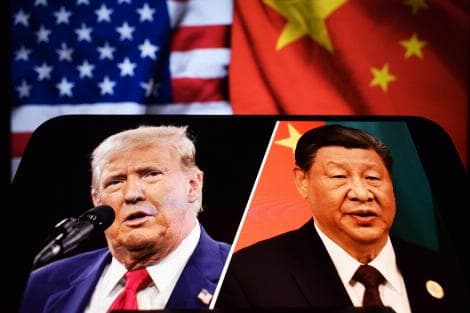
The U.S. added dozens of Chinese companies to a list of firms it says support Beijing's military, a move that could heighten tensions between the world's two largest economies.The Pentagon added several major Chinese technology, electric-vehicle, and battery companies, including Alibaba (HKG:9988), Tencent (HKG:0700), BYD (HKG:1211, SHE:002594), CATL (HKG:3750, SHE:300750), Baidu (HKG:9888), and Nio (HKG:9866), to its list of "Chinese military companies," according to a notice published Monday.The U.S. Department of Defense said the companies were designated under Section 1260H of the National Defense Authorization Act, which requires the Pentagon to identify entities it deems linked to China's military or that support military-civil fusion efforts.The Pentagon briefly published the updated list in February, when President Donald Trump's planned visit to China was still under consideration, before withdrawing it without explanation.It later asked the Federal Register to remove the notice from public inspection and withdraw it from publication, stating: "We would like to remove this notice from public inspection and withdraw the notice from publication," without providing a reason.The list was released less than a month after Trump met Chinese President Xi Jinping in Beijing, where the two leaders discussed trade and technology issues.The updated list also includes Huawei Technologies, DJI, Semiconductor Manufacturing International (HKG:0981, SHA:688981), China Mobile (HKG:0941, SHA:600941), China Telecom (HKG:0728), China Unicom (HKG:0762), Hikvision (SHE:002415), SenseTime (HKG:0020), Unitree Robotics, TP-Link, among others.Also included was WuXi AppTec (HKG:2359, SHA:603259), one of China's largest pharmaceutical research and manufacturing services providers.WuXi AppTec said separately in a statement on Tuesday that its inclusion on the list was "clearly a mistake" and that it would take immediate steps to challenge the designation.The company said it does not meet the statutory criteria for a "Chinese military company" and is not owned, controlled by, or affiliated with any Chinese military or government entity.China's embassy in Washington criticized the designation, saying Beijing opposed "making discriminatory lists to go after Chinese companies.""The U.S. should stop its wrong practice and create a fair, just, and non-discriminatory environment for Chinese companies," an embassy spokesperson said in a statement to Reuters.The spokesperson added that Chinese companies operate in accordance with local laws and regulations.The new list is largely unchanged from the withdrawn February version, except for the addition of memory chipmakers CXMT and YMTC, whose earlier removal had sparked criticism from U.S. lawmakers.Bloomberg News reported earlier that the Pentagon's decision to initially remove YMTC and CXMT prompted the list's swift withdrawal in February.The notice also removed several entities from the previous list, including CNOOC China and CNOOC International Trading, both of which are owned by state-controlled oil producer CNOOC.However, the Pentagon added CNOOC subsidiary China BlueChemical (HKG:3983) to the updated list and said in the filing that CNOOC is directly owned and controlled by China.The notice also removed several entities from the previous list, including Anhui Sun Create Electronics, China International Information Services, China National Chemical Engineering, China Traffic Construction USA, COSCO Shipping Finance, among others.Companies designated under the program may seek reconsideration by submitting information to challenge their inclusion on the list, according to the notice.While the designation carries limited immediate legal consequences, the Pentagon has increasingly used the list to restrict companies' access to U.S. military contracts and research funding.The designation is also viewed by investors as a warning signal that can precede broader U.S. trade, investment, or regulatory restrictions.

HKG:0700HKG:0728HKG:0762HKG:0883HKG:0941HKG:1211HKG:2359HKG:3750HKG:9866HKG:9888HKG:9988SHA:600938SHA:600941SHA:603259SHE:002594SHE:300750

Showing 21-40 of 59

Track with the FINWIRES app suite