FINWIRES · TerminalLIVE
FINWIRES

HKG:9988

68 stories mentioning HKG:9988Updated 7d ago

Every FINWIRES story that references HKG:9988, newest first.

Asia

Zephirin Adjusts Alibaba Group's Price Target to HK$92 from HK$112, Keeps at Sell

Alibaba Group (HKG:9988) has an average rating of buy and mean price target of HK$185.29, according to analysts polled by FactSet.(covers equity, commodity and economic research from major banks and research firms in North America, Asia and Europe. Research providers may contact us here: https://finwires.com/en/contact)

HKG:9988
Asia

Hong Kong Stocks Slide Amid US Sanctions, Middle East Escalation; Alibaba, JD.com Fall on Regulatory Scrutiny

Hong Kong stocks extended losses Thursday as fresh U.S. sanctions on China- and Hong Kong-linked entities over alleged ties to Iran's military and escalating tensions in the Middle East weighed on sentiment.The Hang Seng Index fell 0.7%, or 158.67 points, to close at 24,249.29, while the Hang Seng China Enterprises Index dropped 1.2%, or 101.65 points, to finish at 8,217.08.The U.S. government on Wednesday imposed sanctions on 11 individuals and entities, including several in China and Hong Kong, for allegedly supporting weapons procurement for Iran's Islamic Revolutionary Guard Corps and military.Nine of those targeted were China- and Hong Kong-based individuals and companies, while another Hong Kong firm was accused of operating within Iran's covert banking network, according to the U.S. Treasury.Meanwhile, Washington launched a fresh round of strikes against multiple targets in Iran, according to the U.S. military, prompting Tehran to announce the full closure of the Strait of Hormuz.In corporate news, Alibaba (HKG:9988) closed over 5% lower after Beijing regulators called in major e-commerce platforms over alleged misleading promotions during the annual "618" shopping festival.JD.com (HKG:9618) closed nearly 3% lower after being named among the platforms summoned by regulators.

Hang SengHKG:9618HKG:9988
Asia

Market Chatter: Alibaba Group Replaces Dingtalk CEO

Alibaba Group (HKG:9988) has replaced the chief executive of its enterprise communications software DingTalk a little over a year after luring him back, Bloomberg reported Thursday.According to the report, the company tapped technologist Chen Yusen to succeed Dingtalk chief executive and co-creator Chen Hang after a rare rebuke of the division's management style following employee complaints.The high-profile leadership change also follows an internal debate over the productivity platform's place in the company's broader AI strategy, Bloomberg reported.(Market Chatter news is derived from conversations with market professionals globally. This information is believed to be from reliable sources but may include rumor and speculation. Accuracy is not guaranteed.)

HKG:9988
Asia

Market Chatter: Beijing Regulator Summons Alibaba, JD.com Over Discount Promotions

Beijing's branch of the State Administration for Market Regulation summoned several major e-commerce platforms over what officials described as misleading promotional practices during the annual "618" shopping festival, according to a report on Thursday by state broadcaster CCTV.The platforms included Alibaba's (HKG:9988) Taobao and Tmall, JD.com (HKG:9618), PDD Holdings' Pinduoduo, ByteDance's Douyin, and Xiaohongshu.The regulator criticized some platforms for advertising "10 Billion Yuan Subsidy" campaigns that appeared to promise tens of billions of yuan in consumer discounts, the report said.Taobao, Tmall, and JD.com were cited for failing to provide details of the actual subsidy amounts offered during the campaign, as well as the respective contributions made by the platforms and participating merchants, according to CCTV.Shares of Alibaba were down nearly 6% in Thursday's afternoon trade, while JD.com was down nearly 4%.(Market Chatter news is derived from conversations with market professionals globally. This information is believed to be from reliable sources but may include rumor and speculation. Accuracy is not guaranteed.)

HKG:9618HKG:9988
Asia

Market Chatter: Ant International Mulls $1 Billion Funding Round to Accelerate Growth

Ant International is looking to raise $1 billion to boost growth, Bloomberg reported Wednesday, citing people familiar with the matter.The funding round could value Ant International at $10 billion or even higher. This could facilitate the listing of parent Ant Group in Hong Kong, reviving plans that started in 2020, according to the news outlet.Existing shareholders General Atlantic and Silver Lake are among the potential investors in the funding round.Ant Group is the fintech affiliate of Alibaba (HKG:9988).Ant did not immediately respond to' request for comments.(Market Chatter news is derived from conversations with market professionals globally. This information is believed to be from reliable sources but may include rumor and speculation. Accuracy is not guaranteed.)

Shanghai Composite^SZSEHKG:9988
WeChat's Tie-Up With Smartphone Makers Threatens Apple's China Market Share, Jefferies Says
US Markets

WeChat's Tie-Up With Smartphone Makers Threatens Apple's China Market Share, Jefferies Says

Tencent Holdings' (HKG:0700) recent move to integrate WeChat with China's major smartphone manufacturers via an agent-to-agent (A2A) capability poses a risk to Apple's market position in China, according to Jefferies analysts.The tech company recently confirmed that it is partnering with smartphone makers Huawei, Honor, Xiaomi (HKG:1810), OPPO and vivo to roll out A2A features, according to Jefferies."The collaboration is ongoing, and those capabilities will be rolled out gradually," WeChat was quoted by Nikkei Asia as saying.The first device to support the feature is the Honor 500 Pro smartphone, Jefferies said.The integration works by allowing a smartphone's AI assistant to take verbal instructions, then convert them into a text message and send it to WeChat."The WeChat agent will interact with its mini programs' agents to execute a transaction on the cloud. The benefit to [smartphone] OEMs is [a] faster upgrade cycle and potential [revenue] share," said Jefferies.However, Jefferies warned that "it may not meet [Apple's] privacy focus, but iPhone could risk lagging behind in China."The investment bank noted that the integration "will revolutionize the app-centric eCommerce ecosystem today, as consumers do not have to give specific merchant choice. AI could choose for them."Jefferies said this would turn smartphone makers into a "user intent distributor," making them gatekeepers to which e-commerce players the consumers pick to make purchases."It would give [smartphone] OEMs bargaining power that did not exist before," Jefferies said.However, the bank said Apple could lag behind in China as Tencent has not partnered with the US company on A2A. Jefferies cited Apple's existing agreement with Alibaba Group (HKG:9988) as a potential reason. Apple teamed up with Alibaba to deploy the Chinese tech and e-commerce company's AI model for Apple Intelligence in China.WeChat's A2A also involves limited on-device AI, as transactions would likely take place in the public cloud, said Jefferies."Therefore, it may not meet [Apple's] privacy requirements. However, as this ecosystem grows, iPhone could risk market share loss to local brands."Apple's share of the smartphone market in China had shrunk to 19% in the first quarter of 2026 from 22% in the fourth quarter of 2025, according to Counterpoint Research.However, it still ranked second overall in the three-month period, next to Huawei.Counterpoint said Apple continued to benefit from the strong demand for the iPhone 17 series earlier this year.

HKG:0700HKG:1810HKG:9988
Asia

Hong Kong Stocks End Mixed; Alibaba, Baidu Push Back on Pentagon List

Hong Kong stocks ended mixed Tuesday as investors weighed a fragile Israel-Iran truce and fresh Pentagon scrutiny of major Chinese companies.The Hang Seng Index fell 0.4%, or 91.16 points, to close at 24,565.90, while the Hang Seng China Enterprises Index slipped 0.2%, or 16.77 points, to finish at 8,324.59.Oil prices settled higher after swinging sharply during Monday's session, when both Iran and Israel indicated they would halt attacks following an appeal from U.S. President Donald Trump.Tehran, however, warned it could resume military action if Israel continued strikes against Hezbollah in Lebanon, signaling the fragility of the truce.In corporate news, the Pentagon added several major Chinese companies, including Alibaba, Baidu, BYD (HKG:1211, SHE:002594), and Nio, to a list of entities it alleges have links to China's military.Alibaba (HKG:9988), Baidu (HKG:9888), and Nio (HKG:9866) rejected the designation, saying they were neither Chinese military companies nor participants in China's military-civil fusion program.The companies also said the move would not have a material impact on their operations.Alibaba closed over 1% lower, while Baidu and Nio ended nearly 1% higher.

Hang SengHKG:1211HKG:9866HKG:9888HKG:9988SHE:002594
Asia

Several Chinese Firms Push Back Against Deemed Ties to Chinese Military

A number of Hong Kong-listed entities on Tuesday pushed back on the U.S. Department of Defense's decision to include their names in the Chinese military companies list.Among those listed, Alibaba (HKG:9988), Baidu (HKG:9888), and Nio (HKG:9866) said there was no basis or justification for their inclusion on the list.Each of the companies said that they were neither a Chinese military company nor a military-civil fusion contributor to the Chinese defense industrial base.All three went on to say the designation would not impact their business.For its part, the U.S. Department of Defense said the companies were designated under Section 1260H, which requires the agency to identify entities it deems linked to China's military or supporting military-civil fusion efforts.While the designation carries limited immediate legal consequences, the Pentagon has increasingly used the list to restrict companies' access to U.S. military contracts and research funding, Bloomberg previously reported.A 1260H designation is also reportedly viewed as a warning to U.S. investors and can precede tougher trade or regulatory restrictions.

HKG:9866HKG:9888HKG:9988
Pentagon Accuses Alibaba, Tencent, BYD, CATL of China Military Links
US Markets

Pentagon Accuses Alibaba, Tencent, BYD, CATL of China Military Links

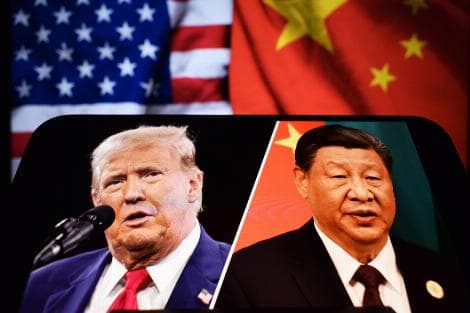
The U.S. added dozens of Chinese companies to a list of firms it says support Beijing's military, a move that could heighten tensions between the world's two largest economies.The Pentagon added several major Chinese technology, electric-vehicle, and battery companies, including Alibaba (HKG:9988), Tencent (HKG:0700), BYD (HKG:1211, SHE:002594), CATL (HKG:3750, SHE:300750), Baidu (HKG:9888), and Nio (HKG:9866), to its list of "Chinese military companies," according to a notice published Monday.The U.S. Department of Defense said the companies were designated under Section 1260H of the National Defense Authorization Act, which requires the Pentagon to identify entities it deems linked to China's military or that support military-civil fusion efforts.The Pentagon briefly published the updated list in February, when President Donald Trump's planned visit to China was still under consideration, before withdrawing it without explanation.It later asked the Federal Register to remove the notice from public inspection and withdraw it from publication, stating: "We would like to remove this notice from public inspection and withdraw the notice from publication," without providing a reason.The list was released less than a month after Trump met Chinese President Xi Jinping in Beijing, where the two leaders discussed trade and technology issues.The updated list also includes Huawei Technologies, DJI, Semiconductor Manufacturing International (HKG:0981, SHA:688981), China Mobile (HKG:0941, SHA:600941), China Telecom (HKG:0728), China Unicom (HKG:0762), Hikvision (SHE:002415), SenseTime (HKG:0020), Unitree Robotics, TP-Link, among others.Also included was WuXi AppTec (HKG:2359, SHA:603259), one of China's largest pharmaceutical research and manufacturing services providers.WuXi AppTec said separately in a statement on Tuesday that its inclusion on the list was "clearly a mistake" and that it would take immediate steps to challenge the designation.The company said it does not meet the statutory criteria for a "Chinese military company" and is not owned, controlled by, or affiliated with any Chinese military or government entity.China's embassy in Washington criticized the designation, saying Beijing opposed "making discriminatory lists to go after Chinese companies.""The U.S. should stop its wrong practice and create a fair, just, and non-discriminatory environment for Chinese companies," an embassy spokesperson said in a statement to Reuters.The spokesperson added that Chinese companies operate in accordance with local laws and regulations.The new list is largely unchanged from the withdrawn February version, except for the addition of memory chipmakers CXMT and YMTC, whose earlier removal had sparked criticism from U.S. lawmakers.Bloomberg News reported earlier that the Pentagon's decision to initially remove YMTC and CXMT prompted the list's swift withdrawal in February.The notice also removed several entities from the previous list, including CNOOC China and CNOOC International Trading, both of which are owned by state-controlled oil producer CNOOC.However, the Pentagon added CNOOC subsidiary China BlueChemical (HKG:3983) to the updated list and said in the filing that CNOOC is directly owned and controlled by China.The notice also removed several entities from the previous list, including Anhui Sun Create Electronics, China International Information Services, China National Chemical Engineering, China Traffic Construction USA, COSCO Shipping Finance, among others.Companies designated under the program may seek reconsideration by submitting information to challenge their inclusion on the list, according to the notice.While the designation carries limited immediate legal consequences, the Pentagon has increasingly used the list to restrict companies' access to U.S. military contracts and research funding.The designation is also viewed by investors as a warning signal that can precede broader U.S. trade, investment, or regulatory restrictions.

HKG:0700HKG:0728HKG:0762HKG:0883HKG:0941HKG:1211HKG:2359HKG:3750HKG:9866HKG:9888HKG:9988SHA:600938SHA:600941SHA:603259SHE:002594SHE:300750
Asia

Pentagon Accuses Alibaba, Tencent, BYD of Ties to Chinese Military

The Pentagon added several major Chinese companies, including Alibaba (HKG:9988), Tencent (HKG:0700), BYD (HKG:1211, SHE:002594), CATL (SHE:300750, HKG:3750), Baidu (HKG:9888), and Nio (HKG:9866), to its list of "Chinese military companies," according to a notice published on MondayThe U.S. Department of Defense said the companies were designated under Section 1260H, which requires the agency to identify entities it deems linked to China's military or supporting military-civil fusion efforts.The updated list also includes Huawei Technologies, DJI, Semiconductor Manufacturing International (HKG:0981, SHA:688981), China Mobile (HKG:0941, SHA:600941), China Telecom (HKG:0728), and China Unicom (HKG:0762), among others.Also included on the list was WuXi AppTec (HKG:2359, SHA:603259), one of China's largest pharmaceutical research and manufacturing services providers.The companies were included in a previous version of the list that was briefly posted in February before being withdrawn minutes later without explanation, Bloomberg News reported separately.WuXi AppTec said separately in a statement that its inclusion on the list was "clearly a mistake" and that it would take immediate steps to challenge the designation.The company said it does not meet the statutory criteria for a "Chinese military company" and is not owned, controlled by, or affiliated with any Chinese military or government entity.While the designation carries limited immediate legal consequences, the Pentagon has increasingly used the list to restrict companies' access to U.S. military contracts and research funding, Bloomberg said.A 1260H designation is also reportedly viewed as a warning to U.S. investors and can precede tougher trade or regulatory restrictions.

HKG:0700HKG:0728HKG:0762HKG:0941HKG:0981HKG:1211HKG:2359HKG:9866HKG:9888HKG:9988SHA:600941SHA:603259SHA:688981SHE:002594SHE:300750
Asia

Market Chatter: Jardine Matheson Mulling Asset Disposal to Realign Strategic Goals

Jardine Matheson (SGX:J36) is considering disposing of further assets as part of the conglomerate's strategy to focus on higher growth areas, according to a report by Bloomberg on Friday, citing people familiar with the matter.One of the options on the table is the sale of an office tower in Hong Kong, after initially selling 13 floors to Alibaba Group (HKG:9988) and Ant Group in 2025 for HK$7.2 billion, the report said.The company is also considering selling Hong Kong and Macau-based Mercedes-Benz dealership, Zung Fu, the report added.(Market Chatter news is derived from conversations with market professionals globally. This information is believed to be from reliable sources but may include rumor and speculation. Accuracy is not guaranteed.)

HKG:9988SGX:J36
Chipmaker CXMT Wins Approval for China's Largest IPO Since 2022
US Markets

Chipmaker CXMT Wins Approval for China's Largest IPO Since 2022

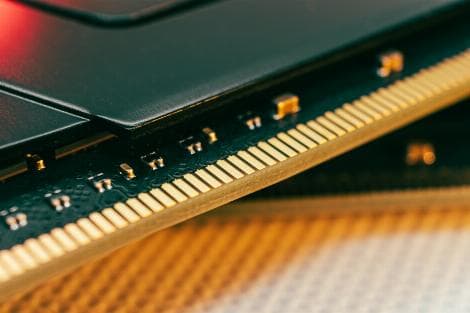
ChangXin Memory Technologies has received approval from the Shanghai Stock Exchange to proceed with an initial public offering, targeting 29.5 billion yuan in proceeds, which would make it the largest IPO in China in four years.The Shanghai bourse's Listing Review Committee on Wednesday noted that CXMT "meets the issuance conditions, listing conditions, and information disclosure requirements" for an IPO.The chipmaker plans to list 10.6 billion shares on the STAR Market board, accounting for at least 10% of its share capital post-issuance.CXMT has agreed to grant underwriters an overallotment option to issue up to an additional 15% of the shares in the offering.China International Capital Corporation and CITIC Securities are serving as lead underwriters.Based on its IPO target size, the deal would mark the largest in China since CNOOC's (SHA:600938, HKG:0883) 32.3 billion yuan Shanghai IPO in 2022. It would also be the biggest in Asia since Contemporary Amperex Technology or CATL's (SHE:300750, HKG:3750) HK$41 billion Hong Kong IPO last year.CXMT describes itself as the world's fourth-largest supplier of dynamic random access memory (DRAM). The company competes with South Korea's Samsung Electronics (KRX:005930) and SK Hynix (KRX:000660), and US-based Micron Technology. They collectively control 90% of the DRAM market, according to The Wall Street Journal.DRAM is a chip that serves as a key component for processors, including those used for artificial intelligence models.The company supplies its products to domestic clients like Alibaba Holdings (HKG:9988), ByteDance, Tencent Holdings (HKG:0700) and Xiaomi (HKG:1810).Of the total proceeds, CXMT plans to use 13 billion yuan to upgrade its DRAM technology, 9 billion yuan for DRAM research and development, and 7.5 billion yuan to upgrade its production line."After years of development, the company has broken through key core technologies in DRAM and successfully achieved independent R&D, design, and commercial mass production of its products, filling a long-standing gap in the global market for DRAM products from mainland China," according to a translated text of CXMT's IPO prospectus.The IPO comes as CXMT continues to bank on the strong global demand for chips amid the AI boom. For the first quarter ended March 31, CXMT swung to an attributable net profit of 24.8 billion yuan from an attributable net loss of 1.56 billion yuan a year earlier. Revenue surged 719% to 50.8 billion yuan from 6.2 billion yuan.The company expects to book up to 57 billion yuan in attributable profit for the first half of 2026, versus an attributable net loss of 2.33 billion yuan a year prior. Revenue is forecast to jump by up to 677% from a year earlier to up to 120 billion yuan.Ao Fei, managing director at Beijing Xinhan Capital, told Bloomberg that CXMT's "position in the industry and its strategic importance to the nation speaks for itself.""CXMT is the reason China has been able to get a foothold in DRAM, arguably the most critical memory segment powering the AI revolution.""This is a national champion that has catalyzed China's entire semiconductor supply chain, serves as a training ground for the next generation of talent, and has elevated the industry to a new frontier," Ao reportedly said."You could argue that ChangXin today occupies the same pivotal position that CATL held at the time of its listing."Meanwhile, Dong Shaopeng, a senior research fellow at the Chongyang Institute for Financial Studies, Renmin University of China, told China's Global Times that the Shanghai bourse's approval of CXMT's listing follows the outcome of policy guidance, industrial efforts and coordinated support from the financial system."Against this backdrop, continued breakthroughs in China's semiconductor industry could bring structural adjustments to the global chip market landscape," Dong was quoted by the Global Times as saying.CXMT's Shanghai IPO also comes amid an influx of new listings in mainland China and Hong Kong. Total funds raised from A-share IPOs in the first quarter of 2026 rose 8% year over year to 27.4 billion yuan, according to data from KPMG.

Shanghai CompositeHKG:0700HKG:0883HKG:1810HKG:3750HKG:9988KRX:000660KRX:005930SHA:600938SHE:300750
Asia

STT GDC, Alibaba Cloud Roll Out AI Training Initiative for Singapore Firms

ST Telemedia Global Data Centres (STT GDC) partnered with Alibaba's (HKG:9988) cloud unit and Tech Talent Assembly, an affiliate of the National Trades Union Congress, to support the adoption of generative and agentic AI across Singapore enterprises and workers, according to a Tuesday press release.The initiative aims to support up to 1,000 enterprises, developers, and students through access to AI tools, implementation support, and workforce training.Participants will receive access to Alibaba Cloud's Qwen and Wan models, as well as agentic AI tools including Qoder and QoderWork, for applications such as workflow automation, software development, and customer engagement.The program will begin in June and include workshops, guided deployment support, and AI infrastructure readiness assessments developed by STT GDC.Alibaba shares were down nearly 3% in Wednesday's late morning trade.

HKG:9988
Asia

Alibaba Introduces New AI Chip for Training and Inference Workloads

Alibaba (HKG:9988) unveiled the Zhenwu M890 AI processor, which the company said delivers three times the performance of its predecessor and supports workloads ranging from model training to inference, according to a Wednesday press release.At its cloud summit, the Chinese technology giant also introduced Qwen 3.7-Max, a large language model built for multi-step agentic workloads.Alibaba also launched the Panjiu AL128 Supernode Server, which is designed to handle high-frequency AI inference requests.T-Head, Alibaba's chip unit, has shipped more than 560,000 Zhenwu chips to over 400 customers across 20 industries, including automakers and financial services companies, the company said.

HKG:9988
Asia

Market Chatter: US Approves Sale of Nvidia's H200 Chips to China, But Zero Deliveries Made

Despite U.S. clearance for 10 Chinese companies, including Alibaba Group (HKG:9988), Tencent Holdings (HKG:0700) and ByteDance to buy Nvidia H200 chips, zero deliveries have been made to date, Reuters reported Thursday. citing three people familiar with the matter.While the U.S. Commerce Department approved sales of up to 75,000 units per company, Beijing has reportedly told local companies to stall purchases.Other companies that secured licenses to buy Nvidia chips include JD.com (HKG:9618), Lenovo (HKG:0992) and Hon Hai Precision Industry (TPE:2317) or Foxconn, the report said.Nvidia CEO Jensen Huang expects U.S. President Donald Trump and Chinese President Xi Jinping to build on their good relationship during the US-China summit to improve ties, Huang told Chinese state broadcaster CCTV on Thursday.(Market Chatter news is derived from conversations with market professionals globally. This information is believed to be from reliable sources but may include rumor and speculation. Accuracy is not guaranteed.)

HKG:0700HKG:0992HKG:9618HKG:9988TPE:2317
Research

Yuanta Securities Upgrades Alibaba Group to Buy from Hold; Price Target is HK$163.40

HKG:9988
Alibaba's Fiscal Q4 Profit Surges 106% on Cloud Intelligence Investments
US Markets

Alibaba's Fiscal Q4 Profit Surges 106% on Cloud Intelligence Investments

Alibaba's (HKG:9988) attributable profit soared 106% in the fiscal fourth quarter on the effects of its investments, especially in the cloud intelligence segment.Attributable net income rose 106% to about 25.5 billion yuan in the fourth fiscal quarter ended March 31 from 12.38 billion yuan a year prior, according to a Wednesday disclosure to the Hong Kong bourse.Earnings per share at the Chinese e-commerce and tech giant increased 101% year over year to 1.30 yuan from 0.65 yuan.Revenue edged up 3% to 243.4 billion yuan from 236.5 billion yuan in the year-ago period.The top line from its cloud intelligence group jumped 38% year over year to 41.6 billion yuan, while revenue from external customers jumped 40% on public cloud revenue growth and AI-related products."Our strategic investments continued to translate into business growth," Alibaba Chief Financial Officer Toby Xu said in a statement, adding AI-related product revenue surged in triple digits for the 11th straight month.The rise of its cloud intelligence revenue is also attributable to Alibaba's full-stack AI investments that have progressed from incubation to commercialization, CEO Eddie Wu said.Revenue from the quick commerce segment surged 57% to 20 billion yuan from 12.7 billion yuan a year earlier, thanks to the rollout of its Taobao Instant Commerce product at the end of April 2025.The China commerce wholesale operations saw a top line of 5.94 billion yuan, up 3% from 5.79 billion yuan due to higher revenue from its value-added services.For the fiscal year ended March 31, 2026, attributable net income slipped 18% year over year to 105.9 billion yuan from 129.5 billion yuan. Revenue jumped 3% to 1.024 trillion yuan from 996.4 billion yuan previously.The company's board approved a cash dividend of $0.13125 per ordinary share or $1.05 per American depositary share for the fiscal year 2026, payable to shareholders of record on June 11.

HKG:9988
Asia

Alibaba Group's Fiscal Q4 Attributable Net Income Soars 106%; Full-Year Dividend Declared

Alibaba Group's (HKG:9988) attributable net income for the fourth fiscal quarter ended March 31 rose 106% to 25.48 billion yuan from 12.38 billion yuan a year prior.The Chinese ecommerce and tech giant's earnings per share increased to 1.30 yuan from 0.65 yuan in the corresponding period of the previous fiscal year, according to a Wednesday Hong Kong bourse filing.Revenue climbed 3% to 243.38 billion yuan from 236.45 billion yuan in the year-ago period.For the full year ended March 31, attributable net income slipped to 105.9 billion yuan from 129.47 billion yuan a year prior, with revenue increasing to 1.024 trillion yuan from 996.35 billion yuan previously.The company's board approved a cash dividend of $0.13125 per ordinary share or $1.05 per American depositary share for the fiscal year 2026, payable to shareholders of record on June 11. It will be paid on or around July 6 and July 13, respectively, to holders of ordinary shares and ADSs.

HKG:9988
Asia

Market Chatter: Thai Entity Suspected of Helping Alibaba Gain Nvidia Chips

A Thai entity advancing Thailand's artificial intelligence ambitions is suspected of smuggling Nvidia chips to China, including to data centers owned by Alibaba Group (HKG:9988), Bloomberg reported Friday, citing people familiar with the matter.According to the report, Bangkok-based OBON Corp. purchased $2.5 billion worth of servers containing advanced Nvidia chips from Super Micro Computer, some of which were later allegedly sent to Alibaba.U.S. prosecutors earlier this year charged Super Micro Computer co-founder Yih-Shyan "Wally" Liaw of violating U.S. export controls by working with a "rotating cast" of third-party brokers to send Nvidia chips to China.One of the entities that Liaw worked with was OBON Corp., the report said, citing people familiar with the matter.A spokesperson for Alibaba denied the allegation. "Alibaba has no business relationship with Super Micro, OBON or any third-party brokers who may have been mentioned in the indictment in question," the spokesperson reportedly told Bloomberg.(Market Chatter news is derived from conversations with market professionals globally. This information is believed to be from reliable sources but may include rumor and speculation. Accuracy is not guaranteed.)

HKG:9988
Asia

Market Chatter: Alibaba Group, Tencent Earnings to Slow Over Mounting AI Costs

Alibaba Group (HKG:9988) and Tencent Holdings (HKG:0700) could post slower earnings growth in their upcoming results next week as artificial intelligence costs rise and domestic competition intensifies, Bloomberg said in an earnings preview Friday.Tencent's full-year earnings growth is expected to slow to the low-teen percentage range as AI investments double, while Alibaba faces pressure from China's soft consumption outlook, Bloomberg reported, citing Bloomberg Intelligence.Bloomberg Intelligence also said stronger cloud-computing demand is unlikely to provide a meaningful earnings boost for either company in 2026 because of intense competition and margin pressure in the segment.Both firms are due to announce their result on Wednesday next week.(Market Chatter news is derived from conversations with market professionals globally. This information is believed to be from reliable sources but may include rumor and speculation. Accuracy is not guaranteed.)

HKG:0700HKG:9988

Showing 41-60 of 68

Track with the FINWIRES app suite