FINWIRES · TerminalLIVE
FINWIRES

HKG:9866

20 stories mentioning HKG:9866Updated 21d ago

Every FINWIRES story that references HKG:9866, newest first.

Asia

Chinese Passenger Car Sales Fall 23% in June

Chinese retail sales of passenger cars slid 23.2% to 1.6 million units in June, the China Passenger Car Association said in a Wednesday press release.New energy vehicle sales fell 9% during the month, with domestic brands slipping 11%, mainstream joint venture-made NEVs plunging 45%, and luxury brands declining 11%.Retail sales of gas-powered vehicles plunged 39% year over year, with pure gasoline vehicle sales falling 42% and conventional hybrids slipping 7%.Vehicle exports surged 82% to 877,000 units in June, with 56.9% of the figure coming from NEVs.Production fell 2.7% year over year to 2.3 million units.China's biggest local automakers include Dongfeng Motor Group (HKG:0489), SAIC Motor (SHA:600104), Chongqing Changan Automobile (SHE:000625), BAIC Motor (HKG:1958), Guangzhou Automobile Group (SHA:601238, HKG:2238), Great Wall Motors (SHA:601633, HKG:2333), Chery Automobile (HKG:9973), and FAW Group (SHE:000800).Top new-energy vehicle manufacturers include BYD (SHE:002594, HKG:1211), Li Auto (HKG:2015), XPeng (HKG:9868) and NIO (HKG:9866, SGX:NIO).

Shanghai Composite^SZSEHKG:0489HKG:1211HKG:1958HKG:2015HKG:2238HKG:9866HKG:9868HKG:9973SGX:NIOSHA:600104SHA:601238SHE:000625SHE:000800SHE:002594
CATL Invests in New Zealand Biographite Maker CarbonScape
US Markets

CATL Invests in New Zealand Biographite Maker CarbonScape

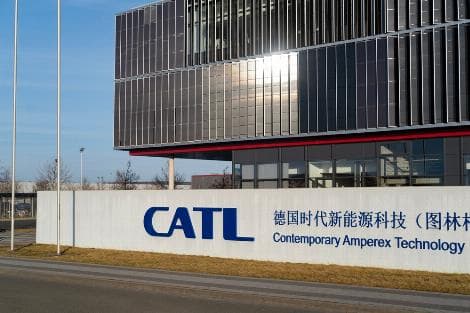
Contemporary Amperex Technology (SHE:300750, HKG:3750) or CATL has made a strategic investment in New Zealand-based bio-based graphite materials maker CarbonScape.Through the investment, the Chinese battery maker plans "to advance the commercial scale-up and deployment" of bio-based graphite materials for next-generation battery supply chains, CarbonScape and CATL said in a joint press release on Monday.The multi-year collaboration covers technology de-risking and scale-up, as well as strategic investment and financing.While the companies did not disclose the financial terms of the transaction, Bloomberg reported that CATL invested to acquire a 20% stake in CarbonScape.As part of the deal, CATL will also secure representation on CarbonScape's board, according to the press release.The partnership seeks to establish local graphite supply chains for automakers in the U.S. and Europe.CATL supplies batteries to major automakers, including Tesla, BMW, Mercedes-Benz, Volkswagen, Honda Motor (TYO:7267), Hyundai Motor (KRX:005380), NIO (HKG:9866, SGX:NIO) and Li Auto (HKG:2015).The companies noted that over 75% of graphite used in batteries comes from an oil-based feedstock. CarbonScape said its technology enables the production of battery-grade graphite from forestry by-products."What we have built at CarbonScape is the only proven pathway to produce battery-grade graphite from forestry residues, at target cost parity with conventional graphite and with a carbon-negative footprint. CATL's investment is the most powerful validation this technology could receive," said Vincent Ledoux-Pedailles, Chief Commercial Officer of CarbonScape.Hong Kong-based investment firm Lochpine Capital, which serves as the strategic offshore investment arm of CATL, has also made a strategic investment in CarbonScape."CarbonScape has developed a differentiated approach to graphite production using forestry by-products, and we are pleased to support the company alongside CATL as it advances its technology and commercialisation plans," said Blake Niu, Lead Partner at Lochpine Capital.

HKG:2015HKG:3750HKG:9866KRX:005380SGX:NIOSHE:300750TYO:7267
BYD Leads China NEV Sales in June
US Markets

BYD Leads China NEV Sales in June

BYD (HKG:1211, SHE:002594) led June's new energy vehicle sales as demand for such vehicles continues to surge abroad, even as domestic expansion faces distinct retail headwinds.BYD recorded the highest number of sales among Chinese NEV makers, selling 403,472 units during the month, up 5.46% from a year earlier. The carmaker's momentum was buoyed by its overseas performance, where passenger exports nearly doubled year over year to a record 174,897 units, offsetting a cool domestic retail market.Meanwhile, Zhejiang Leapmotor Technology (HKG:9863) and Nio (HKG:9866, SGX:NIO) recorded significant increases in their global deliveries, jumping 95% and 62.9% year over year, respectively, to deliver 93,376 units and 40,597 units.Leapmotor's numbers were boosted by its extended-range hybrid lineup, while Nio's deliveries were split across its luxury brand and its emerging sub-brands.SAIC Motor (SHA:600104) maintained strong overall volume, with group-wide sales reaching 395,000 units in June, up 8.1% from the previous year. Sales were boosted by electrification across the company's portfolio. Monthly NEV-specific sales 66.6% year over year to hit 201,000 units.Meanwhile, Geely Automobile's (HKG:0175) NEV sales climbed 2% year on year to 240,799 units, while those of Chery Automobile (HKG:9973) rose 9.5% to 240,585 units.Meanwhile, XPeng (HKG:9868) sold 40,126 vehicles during the month, bringing deliveries in the second quarter to 103,295 units. The carmaker plans to launch and presale a new model, XPENG MONA L03, on Thursday.Li Auto (HKG:2015) delivered 30,895 NEVs in the same month, bringing 1.7 million units into sale as of the end of June. The automaker said it surpassed 150,000 units in cumulative production after introducing a new flagship SUV, Li L8, on June 23.The number in NEV exports rose, but analysts from S&P Global said it is not enough to lift the slumping domestic demand.On a June 15 note, the ratings firm predicted NEV domestic sales to drop by 7% year on year to 25.4 million units in June as demand slowed down due to a reduction in trade-in and NEV purchase tax incentives."While mainland China automakers have been praised for their speed to market and ability to rapidly update products and technology, this frenetic cycle has a downside," S&P Global said. "The pace of model updates from mainland OEMs is causing some consumers to delay purchases, waiting for better deals both technologically and financially."

HKG:0175HKG:1211HKG:2015HKG:9863HKG:9866HKG:9868HKG:9973SGX:NIOSHA:600104SHE:002594
Asia

Nio's Deliveries Surge 63% in June

Nio (HKG:9866, SGX:NIO) delivered 40,597 vehicles in June, up 63% year over year, according to a Wednesday release by the company.Of the total, the auto company delivered 21,908 vehicles from its NIO brand, 11,743 from ONVO, and 6,946 from FIREFLY.As of June 30, total deliveries reached nearly 1.2 million vehicles.

HKG:9866SGX:NIO
After WuXi AppTec, Alibaba Sues Pentagon to Contest Chinese Military Company Designation
US Markets

After WuXi AppTec, Alibaba Sues Pentagon to Contest Chinese Military Company Designation

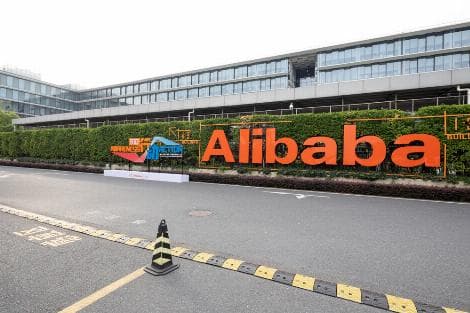
Alibaba Group (HKG:9988) has sued the US Department of Defense on Tuesday, seeking to overturn its designation as a "Chinese military company" and accusing the Pentagon of acting without factual basis or fair process in branding it as a threat to national security.The lawsuit was filed in the US District Court for the Northern District of California in San Jose, also naming Secretary of Defense Pete Hegseth, Deputy Secretary Stephen Feinberg, and Assistant Secretary for Industrial Base Policy Michael Cadenazzi as defendants."The determinations have no basis in fact or law... To label Alibaba a 'Chinese military company' is to brand it an instrument of the Chinese military and a threat to US national security," Alibaba wrote.The Pentagon added Alibaba and several other Chinese companies to its Section 1260H list on June 8, tagging the e-commerce and tech company as "a military-civil fusion contributor to the Chinese defense industrial base because it is affiliated with" the Ministry of Industry and Information Technology.Prior to the lawsuit, Alibaba had denied this designation, calling it "a mistake," according to a June 9 Hong Kong bourse filing."There is no basis to conclude that Alibaba Group should be placed on the CMC List. Alibaba Group is not a Chinese military company nor part of any military-civil fusion strategy."Alibaba at the time warned that it would "take all available legal action against attempts to misrepresent the company."In its lawsuit, Alibaba said it is owned by a broad, public shareholder base, and since early 2025, the only investors to hold 5% or more of its stock are three American financial institutions: JPMorgan, Citigroup, and BlackRock."No individual shareholder controls the company, and no state-owned entity has ever controlled the company," Alibaba argued.The company also stressed that it "has no affiliation with MIIT, SASAC, or the [People's Liberation Army]."SASAC, or the State-owned Assets Supervision and Administration Commission, acts as the state's investor and manages the country's non-financial state-owned enterprises.Alibaba's complaint also noted that it held talks with the Department of Defense prior to the designation. Alibaba said it met with Pentagon officials on Jan. 21 to present information and answer any concerns.The company said it then submitted additional evidence on Jan. 30, detailing its longstanding cooperation with the US government, including a letter from the Director of the National Intellectual Property Rights Coordination Center, part of the US Department of Homeland Security.However, on Feb. 13, the Pentagon posted an updated 1260H list, designating Alibaba as a Chinese military company before withdrawing it within an hour, citing a need to review "the most recent information available."Alibaba said the Department declined to disclose to the company what information it was relying on.Starting June 30, 2026, the Pentagon will be prohibited from "enter[ing] into, renew[ing], or extend[ing] a contract for the procurement of goods, services, or technology" from companies on the designated list.Effective June 30, 2027, the ban extends to the procurement of goods or services that "include goods or services produced or developed by" companies on the list.A spokesperson for the Pentagon declined to comment to, saying the Department does not comment on ongoing litigation.China's Ministry of Commerce had already threatened to retaliate after the Pentagon added Alibaba, Baidu (HKG:9888), BYD (HKG:1211, SHE:002594), Nio (HKG:9866), WuXi AppTec (HKG:2359, SHA:603259) and Robosense Technology (HKG:2498) to the list.The updated list supersedes an earlier version from January 2025, and reinstated ChangXin Memory Technologies and Yangtze Memory Technologies on the list after they were withdrawn from the February version. Both companies are among China's leading memory chipmakers and are currently pursuing public listings.Alibaba is not the first Chinese company to contest the 1260H designation. WuXi AppTec filed its own suit against the Pentagon on June 11, describing its inclusion as "the product of political pressure."In January 2021, Xiaomi (HKG:1810) also sued the US after it was designated as one of several "Communist Chinese military companies" (CCMC) under the National Defense Authorization Act of 1999.The smartphone maker was then removed from the list in May 2021, with the US District Court for the District of Columbia issuing a final order vacating the Pentagon's designation of Xiaomi as a CCMC.Alibaba has also asked the court in California to vacate the designation as "arbitrary and capricious."

HKG:1211HKG:1810HKG:2359HKG:2498HKG:9866HKG:9888HKG:9988SHA:603259SHE:002594
Asia

China Bars 46 More US Companies in Expanded Crackdown

China has expanded its restrictions against U.S. companies, banning 46 more firms, including Lockheed Martin and Raytheon Missiles & Defense, from government procurements, the Ministry of Finance announced Monday.The measure halts government purchases of these companies' products and exempts them from operating in China.The updated list also includes subsidiaries of Lockheed Martin and Raytheon, as well as General Atomics Aeronautical Systems and Boeing Defense, Space & Security, among others.The move builds on a separate crackdown earlier on Monday, when the Ministry of Commerce blacklisted 10 US tech and defense firms, including Aveox, Red Cat Holdings, and Teal Drones.The development follows the Trump administration's military designation on Chinese tech firms, including Alibaba (HKG:9988), Baidu (HKG:9888), BYD (HKG:1211, SHE:002594), and Nio (HKG:9866, SGX:NIO).

Shanghai Composite^SZSEHKG:1211HKG:9866HKG:9888HKG:9988SGX:NIOSHE:002594
Asia

Beijing Slams US for 'Military' Designation of Large Chinese Firms

China's Commerce Ministry expressed "strong dissatisfaction and firm opposition" to the U.S. government's action to include several large Chinese firms on a list of those aiding its military, it said Saturday.The statements come after the U.S. Defense Department named Chinese companies such as Alibaba (HKG:9988), Baidu (HKG:9888), and BYD (HKG:1211, SHE:002594), and Nio (HKG:9866, SGX:NIO) as supporters of the People's Liberation Army.Beijing called on Washington to stop its "erroneous practices" and provide non-discriminatory treatment to Chinese firms.

Shanghai Composite^SZSEHKG:1211HKG:9866HKG:9888HKG:9988SGX:NIOSHE:002594
China Threatens Retaliation After Pentagon Adds Alibaba, Baidu, BYD to Military Blacklist
US Markets

China Threatens Retaliation After Pentagon Adds Alibaba, Baidu, BYD to Military Blacklist

China's Ministry of Commerce on Saturday threatened to retaliate after the US Defense Department added a number of Chinese companies, including Alibaba (HKG:9988), Baidu (HKG:9888) and BYD (HKG:1211, SHE:002594), to its list of firms it deems linked with the Chinese military."China will resolutely and forcefully retaliate, and the US will bear full responsibility for the consequences," a spokesperson for the Ministry of Commerce said over the weekend, adding that "China expresses its strong dissatisfaction and firm opposition" to the designations.The Pentagon published its updated Section 1260H list on June 8, which supersedes an earlier version from January 2025. The updated roster now also includes electric-vehicle maker Nio (HKG:9866), pharmaceutical research and manufacturing services provider WuXi AppTec (HKG:2359, SHA:603259), AI robotics company Robosense Technology (HKG:2498), and Unitree Robotics, which is currently pursuing an initial public offering in Shanghai. Nvidia recently said it plans to collaborate with Unitree to build robots.The list also names telcos China Mobile (HKG:0941, SHA:600941), China Telecom (HKG:0728, SHA:601728), and China Unicom (HKG:0762), as well as chipmaker Semiconductor Manufacturing International (HKG:0981, SHA:688981), Huawei Technologies, Contemporary Amperex Technology (SHE:300750, HKG:3750) and Tencent (HKG:0700), most of which were added in January.The June update also reinstated ChangXin Memory Technologies and Yangtze Memory Technologies on the list after they were withdrawn from the February version. Both companies are among China's leading memory chipmakers and are currently pursuing public listings.As the Pentagon noted, being on the list means an entity is identified as a contributor to China's "Military-Civil Fusion strategy," supporting the modernization goals of the People's Liberation Army "by ensuring it can acquire advanced technologies and expertise developed by PRC companies, universities, and research programs that appear to be civilian entities."While these Chinese companies face no formal sanctions under the list, the Pentagon is prohibited from entering into, renewing or extending contracts with them or acquiring their products starting June 30, 2026.Several newly listed companies pushed back, with Alibaba saying it is "not a Chinese military company nor part of any military-civil fusion strategy." The company warned that it will take "all available legal action against attempts to misrepresent the company."Baidu said there was "no justification" for its inclusion, adding that it does not expect the designation to impact its business.BYD, which recently toppled Tesla as the world's top electric vehicle seller, echoed Alibaba and Baidu's statements, adding that the move will not impact its business.Meanwhile, analysts from Jefferies said the update was largely anticipated, noting that an earlier version of the list had briefly appeared in February before being withdrawn without explanation.Jefferies also noted on June 9 that while the Defense Department is prohibited from procurement of goods and services from entities in the list, "it does not restrict US citizens from engaging in trading activity with the listed companies."In a separate Jefferies note on June 9, analysts from the bank said 10 companies were removed from the list, including, most notably, CNOOC (HKG:0883, SHA:600938)."The immediate implication for companies on the 1260H list is that they are prohibited from providing any goods or services to the US military directly or via contractors. We believe the final decision-maker is the US president," said Jefferies."President Trump has just concluded his China trip, and, in our view, the US-China relationship is moving in an incrementally positive direction. In our view, President Trump is largely occupied with Iran, the high oil price (thus higher inflation risk), and the upcoming mid-term election, implying there will be less motivation for the US to escalate geopolitical tension with China."

Shanghai Composite^SZSEHKG:0700HKG:0728HKG:0762HKG:0883HKG:0941HKG:0981HKG:1211HKG:2359HKG:2498HKG:3750HKG:9866HKG:9888HKG:9988SHA:600938SHA:600941SHA:601728SHA:603259SHA:688981SHE:002594SHE:300750
Asia

Hong Kong Stocks End Mixed; Alibaba, Baidu Push Back on Pentagon List

Hong Kong stocks ended mixed Tuesday as investors weighed a fragile Israel-Iran truce and fresh Pentagon scrutiny of major Chinese companies.The Hang Seng Index fell 0.4%, or 91.16 points, to close at 24,565.90, while the Hang Seng China Enterprises Index slipped 0.2%, or 16.77 points, to finish at 8,324.59.Oil prices settled higher after swinging sharply during Monday's session, when both Iran and Israel indicated they would halt attacks following an appeal from U.S. President Donald Trump.Tehran, however, warned it could resume military action if Israel continued strikes against Hezbollah in Lebanon, signaling the fragility of the truce.In corporate news, the Pentagon added several major Chinese companies, including Alibaba, Baidu, BYD (HKG:1211, SHE:002594), and Nio, to a list of entities it alleges have links to China's military.Alibaba (HKG:9988), Baidu (HKG:9888), and Nio (HKG:9866) rejected the designation, saying they were neither Chinese military companies nor participants in China's military-civil fusion program.The companies also said the move would not have a material impact on their operations.Alibaba closed over 1% lower, while Baidu and Nio ended nearly 1% higher.

Hang SengHKG:1211HKG:9866HKG:9888HKG:9988SHE:002594
Asia

Several Chinese Firms Push Back Against Deemed Ties to Chinese Military

A number of Hong Kong-listed entities on Tuesday pushed back on the U.S. Department of Defense's decision to include their names in the Chinese military companies list.Among those listed, Alibaba (HKG:9988), Baidu (HKG:9888), and Nio (HKG:9866) said there was no basis or justification for their inclusion on the list.Each of the companies said that they were neither a Chinese military company nor a military-civil fusion contributor to the Chinese defense industrial base.All three went on to say the designation would not impact their business.For its part, the U.S. Department of Defense said the companies were designated under Section 1260H, which requires the agency to identify entities it deems linked to China's military or supporting military-civil fusion efforts.While the designation carries limited immediate legal consequences, the Pentagon has increasingly used the list to restrict companies' access to U.S. military contracts and research funding, Bloomberg previously reported.A 1260H designation is also reportedly viewed as a warning to U.S. investors and can precede tougher trade or regulatory restrictions.

HKG:9866HKG:9888HKG:9988
Pentagon Accuses Alibaba, Tencent, BYD, CATL of China Military Links
US Markets

Pentagon Accuses Alibaba, Tencent, BYD, CATL of China Military Links

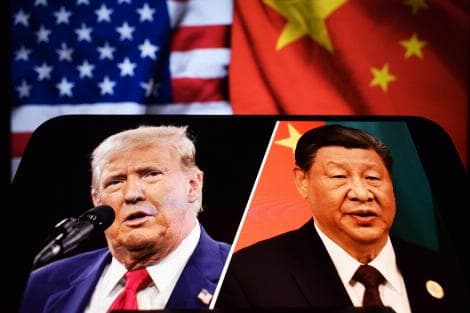
The U.S. added dozens of Chinese companies to a list of firms it says support Beijing's military, a move that could heighten tensions between the world's two largest economies.The Pentagon added several major Chinese technology, electric-vehicle, and battery companies, including Alibaba (HKG:9988), Tencent (HKG:0700), BYD (HKG:1211, SHE:002594), CATL (HKG:3750, SHE:300750), Baidu (HKG:9888), and Nio (HKG:9866), to its list of "Chinese military companies," according to a notice published Monday.The U.S. Department of Defense said the companies were designated under Section 1260H of the National Defense Authorization Act, which requires the Pentagon to identify entities it deems linked to China's military or that support military-civil fusion efforts.The Pentagon briefly published the updated list in February, when President Donald Trump's planned visit to China was still under consideration, before withdrawing it without explanation.It later asked the Federal Register to remove the notice from public inspection and withdraw it from publication, stating: "We would like to remove this notice from public inspection and withdraw the notice from publication," without providing a reason.The list was released less than a month after Trump met Chinese President Xi Jinping in Beijing, where the two leaders discussed trade and technology issues.The updated list also includes Huawei Technologies, DJI, Semiconductor Manufacturing International (HKG:0981, SHA:688981), China Mobile (HKG:0941, SHA:600941), China Telecom (HKG:0728), China Unicom (HKG:0762), Hikvision (SHE:002415), SenseTime (HKG:0020), Unitree Robotics, TP-Link, among others.Also included was WuXi AppTec (HKG:2359, SHA:603259), one of China's largest pharmaceutical research and manufacturing services providers.WuXi AppTec said separately in a statement on Tuesday that its inclusion on the list was "clearly a mistake" and that it would take immediate steps to challenge the designation.The company said it does not meet the statutory criteria for a "Chinese military company" and is not owned, controlled by, or affiliated with any Chinese military or government entity.China's embassy in Washington criticized the designation, saying Beijing opposed "making discriminatory lists to go after Chinese companies.""The U.S. should stop its wrong practice and create a fair, just, and non-discriminatory environment for Chinese companies," an embassy spokesperson said in a statement to Reuters.The spokesperson added that Chinese companies operate in accordance with local laws and regulations.The new list is largely unchanged from the withdrawn February version, except for the addition of memory chipmakers CXMT and YMTC, whose earlier removal had sparked criticism from U.S. lawmakers.Bloomberg News reported earlier that the Pentagon's decision to initially remove YMTC and CXMT prompted the list's swift withdrawal in February.The notice also removed several entities from the previous list, including CNOOC China and CNOOC International Trading, both of which are owned by state-controlled oil producer CNOOC.However, the Pentagon added CNOOC subsidiary China BlueChemical (HKG:3983) to the updated list and said in the filing that CNOOC is directly owned and controlled by China.The notice also removed several entities from the previous list, including Anhui Sun Create Electronics, China International Information Services, China National Chemical Engineering, China Traffic Construction USA, COSCO Shipping Finance, among others.Companies designated under the program may seek reconsideration by submitting information to challenge their inclusion on the list, according to the notice.While the designation carries limited immediate legal consequences, the Pentagon has increasingly used the list to restrict companies' access to U.S. military contracts and research funding.The designation is also viewed by investors as a warning signal that can precede broader U.S. trade, investment, or regulatory restrictions.

HKG:0700HKG:0728HKG:0762HKG:0883HKG:0941HKG:1211HKG:2359HKG:3750HKG:9866HKG:9888HKG:9988SHA:600938SHA:600941SHA:603259SHE:002594SHE:300750

Asia

Pentagon Accuses Alibaba, Tencent, BYD of Ties to Chinese Military

The Pentagon added several major Chinese companies, including Alibaba (HKG:9988), Tencent (HKG:0700), BYD (HKG:1211, SHE:002594), CATL (SHE:300750, HKG:3750), Baidu (HKG:9888), and Nio (HKG:9866), to its list of "Chinese military companies," according to a notice published on MondayThe U.S. Department of Defense said the companies were designated under Section 1260H, which requires the agency to identify entities it deems linked to China's military or supporting military-civil fusion efforts.The updated list also includes Huawei Technologies, DJI, Semiconductor Manufacturing International (HKG:0981, SHA:688981), China Mobile (HKG:0941, SHA:600941), China Telecom (HKG:0728), and China Unicom (HKG:0762), among others.Also included on the list was WuXi AppTec (HKG:2359, SHA:603259), one of China's largest pharmaceutical research and manufacturing services providers.The companies were included in a previous version of the list that was briefly posted in February before being withdrawn minutes later without explanation, Bloomberg News reported separately.WuXi AppTec said separately in a statement that its inclusion on the list was "clearly a mistake" and that it would take immediate steps to challenge the designation.The company said it does not meet the statutory criteria for a "Chinese military company" and is not owned, controlled by, or affiliated with any Chinese military or government entity.While the designation carries limited immediate legal consequences, the Pentagon has increasingly used the list to restrict companies' access to U.S. military contracts and research funding, Bloomberg said.A 1260H designation is also reportedly viewed as a warning to U.S. investors and can precede tougher trade or regulatory restrictions.

HKG:0700HKG:0728HKG:0762HKG:0941HKG:0981HKG:1211HKG:2359HKG:9866HKG:9888HKG:9988SHA:600941SHA:603259SHA:688981SHE:002594SHE:300750
Asia

Nio's Deliveries Jump 62% in May; Shares Rise 7%

Nio (HKG:9866, SGX:NIO) delivered 37,705 vehicles in May, up 62% from a year earlier, according to a Monday press release.The deliveries comprised 20,013 NIO-branded premium smart electric vehicles, 12,029 vehicles under the ONVO brand and 5,663 vehicles under the FIREFLY brand.For the first five months, deliveries rose 69% to 150,526 units.Hong Kong-listed shares of the new-energy vehicle maker were up over 7% in Monday afternoon trade.

HKG:9866SGX:NIO
Asia

Market Chatter: Chinese Auto Sector May Not Go Back to 'Golden Era,' Nio Chief Says

China's automobile sector may not return to its "golden era" as domestic car sales dropped for the seventh straight month in April, Reuters reported Thursday, citing Nio's (HKG:9866, SGX:NIO) top executive.The country is "no longer a growth market, but rather a saturated market," as automobile ownership reached 370 million vehicles, the report quoted Nio CEO William Li as saying.Li also reportedly said the Chinese auto industry is yet to see a recovery despite continued strong export levels.China remains the pure electric vehicle maker's primary market, the chief executive reportedly said when asked about plans to expand overseas.(Market Chatter news is derived from conversations with market professionals globally. This information is believed to be from reliable sources but may include rumor and speculation. Accuracy is not guaranteed.)

HKG:9866SGX:NIO
Asia Markets

Hong Kong Stocks Tumble as U.S.-Iran Tensions Escalate; Nio Advances on SUV Launch

Hong Kong stocks slumped Thursday as renewed U.S. military action against Iran and reports of fresh missile attacks in Kuwait rattled sentiment and undermined hopes for a peace deal.The Hang Seng Index fell 1.3%, or 322.07 points, to close at 25,006.16, while the Hang Seng China Enterprises Index dropped 1.2%, or 98.61 points, to finish at 8,364.41.The U.S. military launched fresh strikes targeting an Iranian drone operation that Washington said threatened U.S. forces and commercial shipping in the Strait of Hormuz, Reuters reported, citing a U.S. official.The strikes came hours after President Donald Trump dismissed Iranian reports suggesting a deal had been reached to restore traffic through the strategic waterway.Meanwhile, oil prices climbed more than 2% after Iran's Revolutionary Guards said they had targeted a U.S. airbase in response to an earlier U.S. attack on the port city of Bandar Abbas.In corporate news, Nio (HKG:9866, SGX:NIO) closed over 6% higher after unveiling its flagship ES9 electric SUV in China.CIG Shanghai's (HKG:6166, SHA:603083) Hong Kong shares advanced 11% after unveiling plans to raise about HK$1.98 billion through a stock offering.

Hang SengHKG:6166HKG:9866SGX:NIOSHA:603083
Asia

Nio Launches ES9 Electric SUV in China; Shares Jump 7%

Nio (HKG:9866, SGX:NIO) launched its flagship ES9 executive electric SUV in China, according to a Wednesday press release.Hong Kong-listed shares of the carmaker jumped nearly 7% in Thursday afternoon trade.The ES9 is priced from 498,000 yuan, or from 390,000 yuan under Nio's battery-as-a-service subscription plan, the press release showed.Separately, Nio said it plans to add more than 1,000 battery-swap stations this year and to start large-scale deployment of its fifth-generation swap stations in the third quarter.

HKG:9866SGX:NIO
Asia

Jefferies Adjusts Nio's Price Target to HK$47.60 From HK$47.50, Keeps at Hold

Nio (HKG:9866) has an average rating of overweight and mean price target of HK$58.69, according to analysts polled by FactSet.(covers equity, commodity and economic research from major banks and research firms in North America, Asia and Europe. Research providers may contact us here: https://finwires.com/en/contact)

HKG:9866
Asia

NIO Narrows Loss in Q1

NIO (SGX:NIO, HKG:9866) recorded an attributable loss of 496 million yuan in the first quarter of 2026, narrower than 6.89 billion yuan a year prior, according to a Thursday filing with the Hong Kong bourse.Loss per share stood at 0.20 yuan, compared with 3.29 yuan in the corresponding period of the previous fiscal year.Revenue soared 112% to 25.5 billion yuan from 12 billion yuan in the year-ago period.The automaker expects a revenue of between 32.8 billion yuan and 34.4 billion yuan in the second quarter, up 72% to 81% year over year.

HKG:9866SGX:NIO
Asia

Nio Deliveries Rise 23% in April

Nio (HKG:9866, SGX:NIO) delivered 29,356 vehicles in April, up 23% from a year earlier, according to a Sunday Hong Kong bourse filing.Hong Kong-listed shares of the new-energy vehicle maker were down nearly 2% in Monday morning trade.The deliveries comprised 19,024 NIO-branded premium smart electric vehicles, 5,352 vehicles under the ONVO brand, and 4,980 vehicles under the company's small high-end electric car brand FIREFLY.For the four months ended April 30, deliveries rose 71% to 112,821 units.

HKG:9866SGX:NIO
Asia

NIO's 2025 Loss Narrows as Revenue Jumps 33%

NIO (SGX:NIO, HKG:9866) booked 15.57 billion yuan in attributable loss for 2025, narrowing from a loss of 22.66 billion yuan in 2024, according to a Hong Kong bourse filing Friday.Shares of the Chinese new-energy vehicle maker jumped nearly 7% in Hong Kong trade Monday.Loss per share was 6.85 yuan, compared with 11.03 yuan in the prior year.Revenue rose 33% year on year to 87.49 billion yuan, figures showed.

HKG:9866SGX:NIO

Track with the FINWIRES app suite