FINWIRES · TerminalLIVE
FINWIRES

Shenzhen Composite Index

^SZSE
IndexIndex

527 stories mentioning Shenzhen Composite IndexUpdated just now

Trading amid mixed May data from China, including faster industrial production growth but falling fixed-asset investment and retail sales.

International

China Logs Forex Settlement of $257 Billion in April

Chinese banks settled $257.3 billion and sold $217.2 billion in foreign exchange in April, according to a Monday news release with the State Administration of Foreign Exchange.Banks' forex receipts on behalf of clients totaled $832 billion, while forex payments reached $770 billion.From January to April, banks cumulatively settled $1.024 trillion and sold $844.9 billion in forex. Banks' cumulative forex receipts on behalf of clients reached $3.038 trillion, and cumulative foreign exchange payments totaled $2.890 trillion.

Shanghai Composite^SZSE
Asia

Market Chatter: Russia Sets 'Serious Expectations' for Putin's Visit to China

Russia said it has "very serious" expectations for President Vladimir Putin's visit to Beijing, which aims to bolster the "privileged partnership" between both countries, Reuters reported Monday, citing Kremlin spokesman Dmitry Peskov.The visit, taking place on Tuesday and Wednesday, follows U.S. President Donald Trump's two-day trip and meeting with Chinese President Xi Jinping a week earlier.When asked whether the proposed Power of Siberia 2 gas pipeline will be on the table, Peskov confirmed that all items on the bilateral agenda will be discussed with Xi, Reuters reported.The Power of Siberia 2 gas pipeline is expected to deliver an additional 50 billion ​cubic ⁠meters per year from Russia's Arctic gas fields via Mongolia to China.(Market Chatter news is derived from conversations with market professionals globally. This information is believed to be from reliable sources but may include rumor and speculation. Accuracy is not guaranteed.)

Shanghai Composite^SZSE
Asia

Chinese Solar Cell Exports Climb 60% in April

Chinese solar cell exports grew 60% by volume year over year to 1.34 billion pieces in April, according to data from the General Administration of Customs released Monday.The figure follows an 80% rise in March, Bloomberg News reported separately.The amount grew 34% year over year to 21.6 billion yuan, Customs said.For the first four months, solar cell exports grew 43% year over year to 4.96 billion pieces, with the total amount jumping 31% to 81.7 billion yuan.The rise could be attributable to energy supply disruptions from the war in Iran, Bloomberg said.

Shanghai Composite^SZSE
Asia

Market Chatter: EU Said Planning New Rules on Critical Components Supply to Cut China Reliance

The European Commission is reportedly drafting a new law to cap what can be bought from a single critical components supplier to 30% to 40%.The plan, said to support the bloc's hopes to reduce dependence on China, will require European companies to source components from at least three suppliers from different countries, London's Financial Times reported Monday, citing two officials familiar with the matter."On 29 May, the European Commission will hold an orientation debate on EU-China relations. Orientation debates are a regular practice... By their nature, we do not comment on the internal discussion or on any details in that regard, but we can confirm that such debates do not involve the adoption of formal proposals," a spokesperson for the commission toldin response to a request for comment.(Market Chatter news is derived from conversations with market professionals globally. This information is believed to be from reliable sources but may include rumor and speculation. Accuracy is not guaranteed.)

Shanghai Composite^SZSE
International

Asia Week Ahead: Central Bank Moves, Inflation Data, Trade Numbers and GDP Reports

For this week in Asia, the economic calendar features a busy slate of macro releases across the region.The week begins with a slew of closely watched indicators from China, including industrial production and unemployment data.On Tuesday, markets turn to Japan's first-quarter GDP estimates and Malaysia's April inflation print.Wednesday features policy decisions in Indonesia and China, along with trade data from Taiwan.Thursday brings Japan's latest trade figures and Australia's closely watched labor market report. On Friday, Japan returns to the spotlight with its April inflation print.Here's what to watch in the week ahead.MONDAY, May 18The week kicked off with a flurry of macro releases from China.Industrial production: A 4.1% year-over-year expansion was recorded in April, sharply slowing from the 5.7% growth in March and way below expectations of a 5.9% rise.Retail sales: Growth decelerated to 0.2% year on year in April, versus 1.7% a month prior.Unemployment: The rate eased to 5.2% in April from 5.4% a month earlier.Meanwhile, prices of new residential properties in China's first-tier cities grew 0.1% month on month in April, decelerating from the 0.2% expansion in March.Chinese investments in real estate development fell 13.7% year on year to 2.397 trillion yuan between January and April.Outside China, Thailand reported that its gross domestic product grew at a faster rate of 2.8% in the first quarter of 2026 from 2.5% in the last three months of 2025.In Singapore, April trade showed a 24.5% year on year rise in non-oil domestic exports, extending the 15.3% increase in the previous month.Elsewhere, New Zealand's services sector showed a modest improvement in April but remained in contraction, with persistent cost pressures and global shipping disruptions continuing to weigh on sentiment, according to BusinessNZ.The BusinessNZ Performance of Services Index rose to 48.9 in April from 46.2 in March. A reading below the 50-point mark points to contraction.TUESDAY, May 19Markets will turn their attention to Japan's preliminary first-quarter GDP.Economists at ING said they expect the economy to grow at a similar rate as the previous quarter's 0.3% on a seasonally adjusted basis. "The war's impact on GDP should be minimal in 1Q26," the bank said in a preview.Meanwhile, Malaysia will disclose its April inflation print, with Trading Economics expecting prices to rise at a faster pace than the 1.7% year over year growth seen in March. According to the data platform, Malaysia's CPI could rise at a rate of 2.7%.In Australia, the Reserve Bank of Australia's meeting minutes will add color to the central bank's recent decision to increase the official cash rate by 25 basis points to 4.35%.CommBank said the minutes may provide more details on the board's discussion and how members were assessing the impact of the conflict around Iran.A consumer confidence report, due for release the same day, will capture sentiment over the most recent RBA rate hike and the ongoing conflict in the Middle East.Lastly, Hong Kong will report April unemployment stats on the same day.WEDNESDAY, May 20Bank Indonesia will meet for its monetary policy meeting and could raise rates by 25 basis points to 5% amid a depreciation of the local currency and a shift in expectations for Federal Reserve rate cuts, which bodes unfavorably for the Indonesian rupiah, ING forecasted.China will similarly set its one-year and five-year loan prime rates, with markets expecting no change in the prevailing rates of 3% and 3.5%, respectively.Trade data from Taiwan and Malaysia will be due.Taiwan is once again expected to show a "strong reading" when it releases April export orders data, with growth topping 54% year on year, ING said in a preview.The island nation started the year "quite strongly" amid external demand for its main high-tech products, which is expected to continue, according to the note.Meanwhile, Malaysia's trade surplus is expected to narrow to 10.5 billion ringgit from 24.6 billion ringgit in the month prior, Trading Economics forecasted.The Reuters Tankan Index for May, a key gauge of Japanese business confidence, will be due the same day.THURSDAY, May 21Japan will release several economic indicators on Thursday, including April trade data and March machinery orders.The country is expected to report a trade deficit of 29.7 billion yen for the month, reversing from a surplus of 667 billion yen in March, according to a Trading Economics consensus.New Zealand will similarly report its April trade balance, with analysts forecasting a trade surplus of around NZ$840 million, according to a Trading Economics consensus.Neighboring Australia will report labor data for April. Westpac expects unemployment to remain at 4.3%.Elsewhere, Hong Kong will report April inflation data while Macau will disclose first-quarter retail sales stats. In South Korea, the April producer price inflation data will be due.On the activity front, S&P Global will release flash purchasing managers' index reports covering May manufacturing, services, and composite activity in India, Australia and Japan.FRIDAY, May 22Japan's April inflation print will capture headlines on Friday, giving markets a look into how the energy shock from the Middle East conflict is impacting the economy.Economists at ING said energy effects may have a limited impact on growth but a greater impact on inflation, which is expected to clock in at 1.8% year on year in April -- up from 1.5% in March."Higher energy costs are expected to increase overall inflation. The impact, though, will likely be still less significant than that observed in other Asian and developed countries," ING said in a note.Inflation data will also be due in Macau.Meanwhile, Taiwan could see a marginal drop in its unemployment when it releases April labor stats. According to Trading Economics, Taiwan's jobless rate could go down to 3.3% from 3.35%.New Zealand is expected to see a "muted" rise in real retail sales when reporting its Q1 data, Westpac said in a preview. The bank expects a rise of 0.2% for the first three months of the year, versus the 0.9% growth recorded in the previous quarter. "The latter part of March saw fuel prices rising sharply, and that has been a drag on spending," Westpac said.Lastly, South Korea will release a report capturing consumer confidence for May. ING said it expects consumer sentiment to deteriorate further amid inflation hikes and energy headwinds.

ASX 200^BSEHang Seng^JKSEFTSE Bursa Malaysia KLCIKOSPINikkei 225^NSE^NZ50^SETShanghai Composite^STI^SZSETaiwan Weighted
Asia

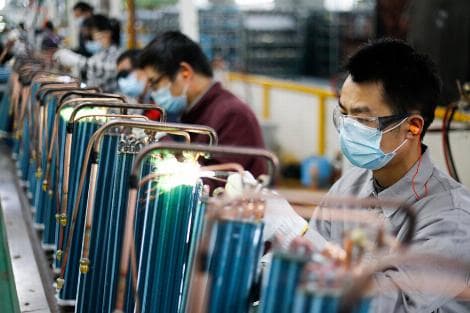
China Market Regulator Sets Priorities to Boost Private Sector Growth

China laid out 34 priorities to help the private sector grow, including fair competition and regulation and stronger legal protections, the State Administration for Market Regulation said Sunday.The market watchdog will improve regulations for enterprise-related fees and credit incentive measures, as well as strengthen technology and trade businesses.China will also boost its anti-monopoly compliance to correct "involution" or intense competition in overcrowded markets, as well as ensure fair development, the regulator said.

Shanghai Composite^SZSE
China Economic Indicators Slide in April; Retail Sales Slump Hardest Since December 2022
US Markets

China Economic Indicators Slide in April; Retail Sales Slump Hardest Since December 2022

Chinese economic indicators slid in April, with retail sales falling to their slowest since December 2022, indicating sluggishness in the second quarter.Retail sales edged up 0.2% year over year in April, down from a 1.7% growth in March, the National Bureau of Statistics reported Monday.The indicator missed a forecast for a 2% rise, according to analysts polled by Reuters.The figure was the lowest since December 2022, according to NBS data seen by ING.Chinese retail sales may have fallen after demand was frontloaded from China's trade-in policy, with auto sales sliding 15.3% year over year, household appliance sales declining 15.1%, and furniture falling 10.1%, ING said in its note Monday.Petroleum prices may have also influenced lower retail sales growth in April, according to a separate note from Jefferies released Monday.Sans autos, retail sales would have gone up 1.8% in April, compared with 3.2% in March, Jefferies and the statistics bureau said."We believe that while consumer sentiment remains vulnerable, selected subsectors performed better due to consumers' focus on value for money," analysts at the investment bank said.Industrial output jumped 4.1% year over year in April, slowing from 5.7% in March and missing estimates of a 5.9% growth in a poll by Reuters.The softening of data was "surprising" as exports were strong in recent months, but a slump in domestic activity could well be dragging other categories, ING analysts said in a note.China's anti-involution policies, a crackdown on overcapacity, and aggressive price competition may have caused the 25.6% slide in solar cell industrial output, ING said.The Iran war may have also contributed to the 5.8% decline in crude oil processing, the Dutch multinational bank said.Crude oil production grew 1.2% to 17.9 million tons from a year earlier, with an average daily output of 598,000 tons.Natural gas also rose 1.9% to 21.9 billion cubic meters from a year earlier, a slowdown from the 3% rise in March.Fixed-asset investment also slid 1.6% year over year in the first four months, slower compared with market forecasts that predicted stable or slightly weaker growth, ING said.Geopolitical uncertainties that may have affected investments possibly weighed on the steep drop from a growth of 1.7% in the first three months, the Dutch bank said.Investment appetite could improve following U.S. President Donald Trump's visit to Beijing and the announcement of a new constructive strategic stability framework, which could contribute to less volatile relations, ING said.Among other developments, both the U.S. and China have already announced reciprocal tariff cuts, the Chinese Commerce Ministry said Sunday, but the gains have failed to excite investors.On to housing, the prices of new residential properties in China's first-tier cities grew 0.1% month on month in April, decelerating from the 0.2% expansion in March.Overall, the NBS's 70-city sample of property prices shows new home prices may have slipped 0.19% month on month, indicating proximity to the bottom, ING said."A stabilization in prices is a much-needed first step toward a recovery, as inventories remain high," the Dutch bank said.

Shanghai Composite^SZSE
Asia

Limited Trump-Xi Summit Progress Pulls Down Chinese Shares; Tianhai Automotive Electronics Jumps 147% in Shenzhen Debut

Chinese shares were down on Monday as rhetoric surrounding the summit between U.S. President Donald Trump and Chinese President Xi Jinping failed to boost market appetite.The Shanghai Composite Index, the main gauge of Chinese stocks, ticked down 0.1% to 4,131.53. The Shenzhen Component Index declined 0.2% to 15,530.23.Markets were hoping for broader trade and geopolitical breakthroughs, and were disappointed by the lack of concrete progress, Market Pulse reported.China and the U.S. agreed to establish Trade and Investment Councils, pursue reciprocal tariff reductions, and address non-tariff barriers on agricultural goods. China also pledged to address U.S. concerns on beef plant registrations and poultry exports.However, despite expectations of China buying "double-digit billions" in U.S. farm goods over three years, no details on products, prices, or volume have been released.Renewed warnings over tensions with Taiwan also bore down on regional risk sentiment.President Lai Ching-te said Taiwan "will not be sacrificed or traded" amid concerns regarding the content of the U.S.-China summit held last week. While Taiwan won't initiate trouble, it won't give up its "national sovereignty and dignity, or our democratic and free way of life, under pressure," Lai said, calling China the real source of regional instability.On the economic front, China's retail sales slightly rose 0.2% year on year in April to 3.725 trillion yuan. This was a sharp drop from the 1.7% growth in March and missed a Reuters forecast of a 2% rise.In company news, shares of Tianhai Automotive Electronics (SHE:001365) surged 147% versus their initial public offering price of 27.19 yuan on their first day of trading on the Shenzhen Stock Exchange.

Shanghai Composite^SZSESHE:001365
Asia

US Weighing Options for Action if Chinese Overcapacity Influences Exports, Trade Representative Says

U.S. government officials will present options for action to President Donald Trump if ongoing investigations show exports are being artificially influenced by Chinese industrial overcapacity, Trade Representative Jamieson Greer said on CBS."We'll certainly be presenting the president with those options if those investigations show what we think they might show, which is that there's a huge problem with overcapacity in China and other countries," Greer said on "Face the Nation" Sunday.Trade was among the issues both Trump and Xi discussed during their meeting in Beijing last week, with China saying both parties have agreed to reciprocal tariff cuts.Trump has rejigged his trade strategy after the U.S. Supreme Court struck down his tariffs in January, Bloomberg reported separately."I can't prejudge the outcomes of those investigations," which could authorize the president to take action such as tariffs, fees, and quotas, Greer said on CBS.

Shanghai Composite^SZSE
International

China Large-Scale Power Output Rises 2.6% to 744 Billion kWh in April

China's large-scale electricity production rose 2.6% year on year in April to 744 billion kilowatt-hours, according to official data released Monday by the National Bureau of Statistics.Thermal power generation rose 3.1% year-on-year, hydropower generation increased 12% and solar power generation climbed 7.1%.Conversely, wind power generation decreased 5.0%.

Shanghai Composite^SZSE
Asia

Market Chatter: Shein to Acquire Everlane in $100 Million Deal

Chinese online retailer Shein is set to acquire U.S. apparel brand Everlane from majority owner L Catterton in a roughly $100 million deal, Puck News reported Sunday, citing sources.Common stockholders in Everlane will not receive any payout from the transaction, and it is unclear whether preferred shareholders will receive cash or Shein shares, according to the report.(Market Chatter news is derived from conversations with market professionals globally. This information is believed to be from reliable sources but may include rumor and speculation. Accuracy is not guaranteed.)

Shanghai Composite^SZSE
Trump-Xi Summit Caps Off With $51B Agricultural Commitment, 200 Boeing Jet Order
US Markets

Trump-Xi Summit Caps Off With $51B Agricultural Commitment, 200 Boeing Jet Order

China has agreed to purchase U.S. agricultural goods worth $17 billion per year from 2026 to 2028 as part of agreements brokered during President Donald Trump's visit to Beijing last week, the White House said in a fact sheet published Sunday.Trump wrapped up his two-day meeting with Chinese President Xi Jinping on Friday, extending an invitation for Xi to visit Washington in September.The new agricultural commitments, which will total roughly $51 billion over the next three years, build on China's October 2025 pledge to purchase at least 25 million metric tons of U.S. soybeans. Additional agreements include restoring market access for U.S. beef facilities by renewing licenses that had lapsed during the 2025 tariff retaliations.Asifr from agriculture, Beijing also committed to purchasing 200 U.S.-made Boeing aircraft.China also pledged to address supply chain constraints and restrictions surrounding rare earths and critical minerals such as yttrium, scandium, neodymium, and indium. However, specific implementation details were not disclosed.Following the summit, China's Ministry of Commerce said "both sides should continue to implement the results of previous consultations and reach a positive consensus on relevant tariff arrangements."Financial markets reacted coolly to the summit. Lynn Song, ING's chief economist for Greater China, said, "Many market participants were left rather underwhelmed after the much-hyped Trump visit to China concluded, with equities and the CNY both softening on Friday as the summit ended without any major surprises."Despite initial optimism surrounding the last-minute inclusion of Nvidia CEO Jensen Huang in the U.S. business delegation, the summit produced no concrete breakthroughs on artificial intelligence chip exports."The lack of any concrete announcements at the end of Trump's China trip would likely cause a selloff in China AI stocks," analysts from Jefferies said in a note to clients. "This trip likely laid the groundwork for deals to take place in the next three to six months, especially as Xi is visiting the U.S. in September."To stabilize bilateral trading relations, the two nations plan to establish a "Board of Trade." According to the White House, the body will oversee "bilateral trade across non-sensitive goods" and serve as a "government-to-government forum for discussing investment-related issues."However, Jefferies noted that the Board of Trade is unlikely to lift the U.S. investment ban against certain Chinese companies. Instead, it will "govern less sensitive investment issues," such as Contemporary Amperex Technology or CATL's (SHE:300750, HKG:3750) plan to build a battery plant in the U.S.Commenting on the Board of Trade mechanism, the Commerce Ministry said: "The two sides will discuss issues such as tariff reductions on relevant products through the Trade Council and have agreed in principle to reduce tariffs on products of equal size of concern to each other."Equities in Shanghai and Shenzhen opened lower on Monday as post-summit momentum faded amid unmet expectations for a breakthrough."We believe the Trump-Xi summit is broadly neutral for HK/China stocks, with the outcome representing a stabilization of relations rather than any transformational change," analysts at Nomura said.Economists at Bank of America said in a Friday note that the bilateral meetings underscored a mutual "commitment to step up communications" rather than delivering tangible breakthroughs.On the geopolitical front, however, the White House reported that both sides affirmed shared stances on several security positions, including opposition to Iran's nuclear program, the reopening of the Strait of Hormuz, and the denuclearization of North Korea.

Shanghai Composite^SZSEHKG:3750SHE:300750
Asia

US, China Agree to Reciprocal Tariff Cuts

China and the U.S. agreed to establish Trade and Investment Councils, pursue reciprocal tariff reductions, and address non-tariff barriers on agricultural goods, according to a Sunday filing with China's commerce ministry.Tariff cuts would normalize China-U.S. farm trade, letting commercial buyers back in, Reuters cited Johnny Xiang of AgRadar Consulting.Also, China will address U.S. concerns on beef plant registrations and poultry exports.On May 15, Beijing renewed 425 U.S. beef plants for five years and approved 77 new ones. U.S., Reuters wrote. Agriculture Secretary Brooke Rollins said China also agreed to resume beef imports from 17 states.U.S. Trade Representative Jamieson Greer expects China to buy "double-digit billions" in U.S. farm goods over three years, according to Reuters. No details on products, prices, or volume have been released.China and the U.S. also reached arrangements on aircraft purchases and engine supplies, according to the commerce ministry, adding that both countries' trade teams will finalize the details to implement the consensus swiftly.

Shanghai Composite^SZSE
Asia

Market Chatter: China Envoy Slams U.S.-Bahrain Resolution on Hormuz Strait

China's U.N. ambassador Fu Cong rejected a proposed U.S.-Bahraini resolution on the Strait of Hormuz, calling the content and timing "not right," Reuters reported Saturday.Passing it now "is not going to be helpful," Fu said, urging both sides to pursue good-faith negotiations instead, according to the report.Fu added that China, as current Security Council president for the month of May, would not put the resolution to a vote, though a formal request from drafters has not yet been made, Reuters wrote.(Market Chatter news is derived from conversations with market professionals globally. This information is believed to be from reliable sources but may include rumor and speculation. Accuracy is not guaranteed.)

Shanghai Composite^SZSE
International

China's Coal Output Slips, While Oil, Gas, Electricity Output Grow in April

China's coal production fell, while industrial enterprises' production of crude oil, gas and electricity rose in April, according to Monday data from the National Bureau of Statistics.Coal output slipped 1% year on year to 390 million yuan, compared to a flat growth in March. The average daily output was 12.9 million tons.Crude oil production grew 1.2% to 17.9 million tons from a year earlier, with an average daily output of 598,000 tons.Natural gas also rose 1.9% to 21.9 billion cubic meters from a year earlier, a slowdown from the 3% rise in March. The average daily output was 730 million cubic meters.Electricity production grew 2.6% year on year to 744 billion kilowatt-hours, higher than 1.4% in the previous month. The average daily generation was 24.8 billion kilowatt-hours.

Shanghai Composite^SZSE
International

China's Industrial Output Growth Slows in April

China's industrial output rose 4.1% year over year in April, slowing from a 5.7% growth seen in March, according to data from the National Bureau of Statistics released Monday.Analysts polled by Reuters expected a 5.9% increase during the month.Output in the mining sector jumped 3.8% year over year, while production in the manufacturing sector rose 4%, and that of the utilities sector climbed 5.3%.

Shanghai Composite^SZSE
International

China's Real Estate Development Investment Falls 14% in January-April Period

Chinese investments in real estate development fell 13.7% year on year to 2.397 trillion yuan between January and April, according to the National Bureau of Statistics on Monday.Among these were residential investments, which dropped 13.1% to 1.846 trillion yuan from a year earlier.Funds available to real estate development enterprises fell 18.4% year on year to 2.670 trillion yuan.The total construction area declined 12.1% to 545.1 million square meters, while the completed construction area fell 24% to 118.9 million square meters.Meanwhile, the sales area of newly built commercial housing slipped 10.2% to 252.6 million square meters from a year earlier.

Shanghai Composite^SZSE
Asia

Newly-Built Houses in China's Top-Tier Cities Grow at Softer Pace in April

The prices of new residential properties in China's first-tier cities grew 0.1% month on month in April, decelerating from the 0.2% expansion in March, the National Bureau of Statistics reported Monday.Prices in Shanghai, Guangzhou, and Shenzhen jumped 0.4%, 0.1%, and 0.1%, respectively. Beijing saw a 0.2% fall in new-home prices, the NBS said.Prices of existing homes in first-level cities jumped 0.4% month on month.On a yearly basis, prices of newly built residential buildings slid 2.1% while those of existing homes plunged 6.8%.

Shanghai Composite^SZSE
International

China's Unemployment Rate Eases in April

China's unemployment rate in April eased to 5.2% from 5.4% in March, according to the National Bureau of Statistics on Monday.The unemployment rate in 31 major cities slipped to 5.2% from 5.3% in the previous month, with the weekly working hours averaged at 48 hours.The unemployment rate for the local labor force was 5.3%, and for the migrant workers and migrant agricultural workers at 5% each.

Shanghai Composite^SZSE
International

China's Fixed Asset Investment Drops 1.6% in April, Reversing Q1 Growth

China's fixed asset investment dropped 1.6% year on year to 14.1 trillion yuan between January and April, excluding rural households, according to Monday data from the National Bureau of Statistics.The latest print was in line with market expectations and reversed a 1.7% rise in the first quarter.Industrial investment rose 2.5% in the January-April period, with mining investment recording the biggest increase with a 11.1% jump from a year earlier.Meanwhile, infrastructure investment during the month climbed 4.3%, with water transport investment jumping the highest with a 28.4% climb, followed by air transport investment, which rose 27.3%.The country's private fixed asset investment between January and April declined 5.2% year on year.

Shanghai Composite^SZSE

Showing 241-260 of 527

Track with the FINWIRES app suite