FINWIRES · TerminalLIVE
FINWIRES

Nikkei 225

Nikkei 225
IndexIndex

728 stories mentioning Nikkei 225Updated just now

Japanese stocks opened little changed as investors stayed cautious ahead of the Bank of Japan's interest rate decision.

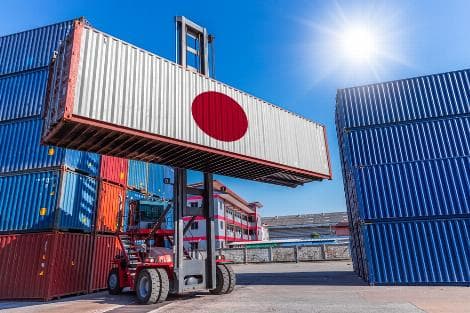
Japan's June Trade Deficit Widens on Weaker Yen, Oil Price Pressures
US Markets

Japan's June Trade Deficit Widens on Weaker Yen, Oil Price Pressures

Japan's trade deficit widened in June as persistent weak-yen pressures and elevated oil prices drove import growth past a stronger increase in exports, according to data from the Ministry of Finance on Wednesday.The trade deficit expanded to 406.9 billion yen from the revised deficit of 391.8 billion yen recorded in May. The latest figure was worse than the 120 billion yen consensus deficit forecast tracked by Investing.com, and reversed the 122.3 billion yen surplus recorded in June 2025.Exports jumped 19.3% to 10.929 trillion yen, faster than the forecast of 18.6% and the revised 16.8% figure in the previous month.Transport equipment exports grew 14% year over year, while electrical machinery exports expanded 29%, led by a 59% rise in integrated circuit exports and a 54% surge in semiconductor exports.Machinery exports increased 11%, led by semiconductor machinery, which jumped 19%.Imports surged 25.4% to 11.336 trillion yen during the month, accelerating from the 21% forecast and the month-ago increase of 12.5%.Mineral fuel imports led with a 42% increase. Fuel imports from the U.S. soared 258%, while imports from the Middle East slipped 2.5%.

Nikkei 225
Asia

Market Chatter: Japan in Advanced Talks with JPMorgan, Other US Banks to Finance $500 Billion US Investment Plan

A portion of Japan's $550 billion investment commitment in the United States is expected to be financed by US-based JPMorgan, along with other US banks, as discussions between the lenders and the Japanese government are reported to be in an advanced stage, Reuters reported Wednesday, citing people familiar with the talks.The financing talks follow Japan's 2025 trade agreement, pledging over $100 billion in investments in US-based projects to secure a 15% tariff rate on Japanese exports.The Japanese banks have been hesitant to finance the projects because their funding base is largely in yen, which makes it costly to secure the large amounts of US dollars for long-term infrastructure investments.So far, Japan has disclosed two batches of projects worth over $100 billion under its investment commitments and has only been able to finalize about $2.2 billion worth of financing, the report said.(Market Chatter news is derived from conversations with market professionals globally. This information is believed to be from reliable sources but may include rumor and speculation. Accuracy is not guaranteed.)

Nikkei 225
International

Market Chatter: Tokyo New Condo Prices Top 100 Million Yen for First Time in H1 2026

The average price of a new condominium in Tokyo and three surrounding prefectures surpassed 100 million yen for the first time in the first half of this year, jumping 13.1% on-year to a record 101.35 million yen, Nikkei Asia reported Tuesday, citing data from the Real Estate Economic Institute.Higher construction costs drove prices upward in the January-June period. Prices in central Tokyo rose 9.1% to 142.49 million yen, while those in Chiba surged 56.8% to 89.97 million yen. Prices in Kanagawa rose 20% to 83.46 million yen, while those in Saitama fell 1.3% to 64.69 million yen, the report said.New condo listings in Tokyo and the neighboring prefectures declined 0.8% to 7,989 units, it said.(Market Chatter news is derived from conversations with market professionals globally. This information is believed to be from reliable sources but may include rumor and speculation. Accuracy is not guaranteed.)

Nikkei 225
Asia

Market Chatter: Japan Mulls Revising Gasoline Subsidy Target from September

Japan's government is considering revising the current gasoline subsidy target of approximately 170 yen per liter for regular gasoline, raising it to 175 yen per liter starting in September, Kyodo News reported on Tuesday, citing multiple unnamed sources.The current subsidy level will be maintained through August to accommodate increased gasoline demand during the summer travel season, before being reduced after the peak period ends, the news daily said.The proposed 175 yen target matches the level set in 2025, when the Middle East situation last worsened, and subsidies have been in place since March 2026 following crude oil price surges, the publication said.(Market Chatter news is derived from conversations with market professionals globally. This information is believed to be from reliable sources but may include rumor and speculation. Accuracy is not guaranteed.)

Nikkei 225
Asia

Japan Targets 250 Trillion Yen in Domestic Investments by Fiscal 2040

Japan aims to raise domestic investments to 250 trillion yen by fiscal 2040, increase the share of stocks, investment trusts and debt securities in household financial assets to 40%, according to a Cabinet Secretariat release on Tuesday.The government will establish a public-private investment forum and promote collaboration between government-affiliated and private financial institutions in terms of capital supply, and consider measures to expand capital growth via public-private partnerships, according to the release.Banks and other financial institutions will work with government-backed lenders and funds to finance investments across 17 key sectors. Japan plans to strengthen banks' role in funding corporate growth via loans and investments, and ease lending rules to support large mergers and acquisition deals and major projects such as AI data centers, the release said.

Nikkei 225
Asia

Japanese Equities Open Higher

Japanese stocks edged up at Wednesday's open, tracking overnight gains on Wall Street driven by a rally of semiconductor stocks.The Nikkei 225 rose 217 points, or 0.3%, to 66,449.27 at the opening bell.At home, Japan's trade shortfall unexpectedly grew to 406.9 billion yen in June, as a weaker yen inflated import costs and elevated crude prices from the Iran conflict added further pressure.Elsewhere, investors' attention is turning to upcoming earnings from Tesla and Alphabet. This week, roughly a fifth of S&P 500 companies by market cap will report results.

Nikkei 225
International

Japan's Trade Deficit Widens in June; Export Growth Accelerates

Japan recorded a trade deficit of 406.9 billion yen in June, wider than the revised 391.8 billion yen deficit posted the previous month, according to preliminary data released by the Ministry of Finance on Wednesday.The latest print was worse than market expectations for a deficit of 120.0 billion yen tracked by Investing.com. In June 2025, Japan posted a trade surplus of 122.3 billion yen.Exports in June rose 19.3% year over year to 10.929 trillion yen, sharper than the 16.8% rise the previous month. It beat the consensus estimate of a 18.6% increase monitored by Investing.com.Imports rose 25.4% year over year to 11.339 trillion yen, accelerating from the 12.5% rise the previous month, and beating the consensus estimate of 21.0%.

Nikkei 225
Asia

Japanese Shares Rise Ahead of Tech Earnings, Oil Falls on Renewed Middle East Mediation Hopes

Japanese stocks gained, snapping a three-day selloff in semiconductor shares ahead of corporate earnings from technology majors including Alphabet and Intel, as well as strong preliminary earnings from Samsung Electronics.The benchmark Nikkei 225 closed up 2,091.07 points, or 3.26%, at 66,232.19.Oil prices declined on hopes of renewed mediation efforts to de-escalate the Middle East conflict, though the Iran-backed Houthis' announcement of a naval blockade on Saudi Arabia kept supply concerns intact.On the corporate side, Komehyo (TYO:2780) said its June brand and fashion sales rose 130.5% year over year to 21.3 billion yen, supported by strong individual purchases, according to a Tuesday filing on the Tokyo Stock Exchange.

Nikkei 225TYO:2780
Asia

Japan Shares Rebound as Tech Earnings Season Commences

Japanese shares rebounded when trading resumed after Monday's holiday, bucking broader regional declines, amid heightened tensions in the Middle East.The Nikkei 225 rose 402.9 points or 0.6% to open at 64,544.05.This week marks the start of megacap earnings, with Tesla and Alphabet reporting on Wednesday, followed by Microsoft, Meta, Apple, and Amazon next week, as investors demand clearer returns on massive AI spending.At home, Sumitomo Mitsui Financial Group (TYO:8316), Chugai Pharmaceutical (TYO:4519) and Shin-etsu Chemical (TYO:4063) are set to release earnings reports this week.

Nikkei 225TYO:4063TYO:4519TYO:8316
Asia Markets

Tech Turmoil Troubles Asian Stock Markets

Asian stock markets turned in a mixed performance Monday, with Seoul retreating on another chip-sector rout, while signals from Beijing helped undergird China-exposed exchanges.Hong Kong and Shanghai finished in the green, but Tokyo trading floors were closed for holiday. Seoul's semiconductor-heavy KOSPI index fell 4.5%, although other regional exchanges were muted.In Hong Kong, the Hang Seng Index opened higher and held ground, finishing up 2.4% after assurances from Beijing that government regulators and state investment funds will take steps to preserve equity values.The broad gauge Hang Seng rose 580.81 to 25,143.05, as gaining issues outnumbered losers 86 to five. The Hang Seng TECH Index gained 2.8% on the day, while the Mainland Properties Index rose 0.9%.Leading the upside was state-controlled oil producer CNOOC, gaining 5.2%, while utility holding company Power Assets declined 1.7%.On the mainland, the Shanghai Composite rose 0.9% to 3,796.28.In economic news, the People's Bank of China left one-year and five-year prime loan rates unchanged at 3% and 3.5% respectively.In market news, the China Securities Regulatory Commission (CSRC) will prevent risks in the capital market, boost supervision, and safeguard fair market order, commission chairman Wu Qing said at an investor meeting, reported Radio Television Hong Kong.Media reports that state investment pools could buy equities to stabilize markets also boosted trader sentiments.On the other regional exchanges, the Taiwan TWSE declined 0.5%; the Australian ASX 200 declined 0.1%; the Singapore Straits Times Index fell 0.2%, and the Thai Set rose 0.4%. In late trading in Mumbai, the Sensex was down 0.6%.The MSCI All Country Asia Pacific Index fell 0.2% on the day.

Hang SengNikkei 225Shanghai Composite
International

Asia Week Ahead: Bank Indonesia Decision, Japan Inflation, Korea GDP

Several key economic releases are due across Asia this week, including central bank decisions, inflation data, gross domestic product figures and flash purchasing managers' index reports.The week begins with China's benchmark lending rates on Monday, followed by Taiwan's June export orders on Tuesday.Indonesia's central bank will announce its interest rate decision on Wednesday. On Thursday, South Korea will report second-quarter gross domestic product, and Singapore will publish June inflation figures.The week wraps up with July flash PMI data from India and Japan on Friday. Japan will also release inflation numbers.Here's what to watch in the week ahead.MONDAY, July 20The People's Bank of China left its benchmark lending rates unchanged for the 14th consecutive month, matching the consensus forecast tracked by Investing.com.The one-year loan prime rate, which serves as the benchmark for most corporate and household loans, was held at 3%. Meanwhile, the five-year LPR, the reference rate for residential mortgages, was maintained at 3.5%.Elsewhere, Malaysia's trade surplus narrowed to 14.9 billion ringgit in June from 39.9 billion ringgit in May.Total exports grew 45.4% year over year to 177.9 billion ringgit, while imports rose 43.9% to a record 163 billion ringgit.India's infrastructure output for June is also expected later today.TUESDAY, July 21Taiwan will report June export orders, with ING economists forecasting a 43.9% increase, slower than the 47.2% rise in May.WEDNESDAY, July 22Bank Indonesia is expected to hike rates by 25 basis points to 6%, according to a forecast by ING, adding that the increase underscores the central bank's commitment to foreign exchange stability by attracting foreign inflows and stabilizing the local currency.The hike is anticipated to be the last of the cycle, according to DBS economists.South Korea's producer prices are forecast to have risen 8.2% year over year in June, slowing from 8.5% in the previous month, according to Trading Economics.Elsewhere, Japan may see a trade deficit of 120 billion yen in June, narrowing from the 378.7 billion yen recorded in May, according to consensus estimates.Exports and imports are expected to climb 18.6% and 21% year over year, respectively.THURSDAY, July 23South Korea will release its Q2 GDP. ING said the economy likely grew 4.2% year over year in the April to June period, up from 3.8% in the first quarter, driven by positive net exports.Singapore will publish inflation data for June, with ING economists forecasting core inflation at 1.7%, and Trading Economics at 1.6%. This compares to 1.4% in May.FRIDAY, July 24Japan will release inflation figures for June. Trading Economics expects the nation's core consumer price index, which excludes volatile fresh food prices, to be 1.5%, slightly higher than May's 1.4%.Flash PMI reports for Japan and India are also due on Friday.Lastly, Singapore will post industrial production numbers, with Trading Economics forecasting a 9% year-over-year boost in June, slowing from May's 13% growth.

ASX 200^BSEHang SengKOSPINikkei 225Nifty 50^PSEI^SETShanghai Composite^STI^SZSETaiwan Weighted
Asia

Market Chatter: China Continues to Throttle Supply of Rare Earths to Japan

China continued to disrupt the supply of strategically important rare earths and minerals to Japan in June amid the diplomatic rift between the two nations, Reuters reported Monday.Shipments of gallium, dysprosium, terbium and yttrium to Japan all registered at zero last month, according to the report.Despite the tight controls on specific minerals, China's overall exports of rare earth magnets remained robust, rising to 5,649 metric tons in June from 4,730 tons in May, Reuters wrote.(Market Chatter news is derived from conversations with market professionals globally. This information is believed to be from reliable sources but may include rumor and speculation. Accuracy is not guaranteed.)

Nikkei 225Shanghai Composite^SZSE
Asia

Japanese Stocks Slide at Open Amid Rising Middle East Hostilities

Japanese equities slipped Monday morning as chip-sector weakness and escalating Middle East tensions weighed on sentiment.The Nikkei 225 shed 495.7 points to open at 66,339.85, down 0.7%.According to Iranian state media, US airstrikes hit Qeshm Island and multiple cities in southern Iran, including Shadegan, Sirik and Hajiabad.In response, Tehran launched its third attack in three days against Kuwait, striking a water desalination and power facility.Sentiment was also dampened by the recent pullback in semiconductor and AI stocks amid concerns of profit-taking and higher valuations.

Nikkei 225
Asia Markets

Tech Rout Blunts Asian Stock Markets

Asian stock markets largely fell back on Friday, as global caution on hefty tech-sector capital outlays led to risk-off retreats.In addition, Brent crude oil traded at $85.91 a barrel, up 2% during Asian market hours.Hong Kong, Shanghai, and Tokyo finished in the red, as did Taiwan. Other regional exchanges were mixed, while trading floors were closed in Seoul.In Japan, the Nikkei 225 opened lower on Wall Street cues and declined thereafter, finishing off 4% as traders eschewed semiconductor shares.The benchmark Nikkei 225 fell 2,694.42 to 64,141.12, as losing issues outnumbered gainers 151 to 71.Leading the upside was software tester SHIFT, up 9.4% after reporting earnings and issuing guidance. Memory chip maker Kioxia declined 16.1%, following a 15% decline on Thursday.In Hong Kong, the Hang Seng Index opened lower and could not recover, closing down 1.6% in the worldwide tech-wreck.The broad gauge Hang Seng fell 446.36 to 24,562.24, as losing issues outnumbered gainers 67 to 24. The Hang Seng TECH Index lost 4.4% on the day, while the Mainland Properties Index fell 1.5%.Leading the upside was utility holding company Power Assets, gaining 3%, while Semiconductor Manufacturing International declined 10%.On the mainland, the Shanghai Composite fell 3.1% to 3,764.15.On the other regional exchanges, the Taiwan TWSE declined 6.5%; the Australian ASX 200 declined 0.5%; the Singapore Straits Times Index fell 0.5%, but the Thai Set rose 0.2%. In late trading in Mumbai, the Sensex was up 1.4%.The MSCI All Country Asia Pacific Index fell 2.8% on the day.In other news, foreign direct investment (FDI) into Thailand struck $5.58 billon in the first six months of 2026, up 68% on the year, reported the Department of Business Development.

Hang SengNikkei 225Shanghai Composite
Asia

Japanese Stocks Slip on Selloff in Semiconductor Shares, Oil Climbs

Japanese stocks slipped to close in the red as a selloff in semiconductor shares dragged down the market, deepening losses for chipmakers.The benchmark Nikkei 225 closed down 2,694.42 points, or 4.03%, at 64,141.12.Oil prices gained on tighter supply and growing uncertainty following the geopolitical escalation in the Middle East as the US-Iran conflict intensifies after the US reimposed a naval blockade around Iran.The slide in chipmakers has deepened investors' concerns over the exposure to artificial intelligence-led technology investments.On the corporate side, Sotetsu Holdings (TYO:9003) has set the terms for its 47th series of unsecured bonds, totaling 10 billion yen, according to a Friday filing with the Tokyo bourse.And Nissan Motor (TYO:7201) has launched its Elgrand premium minivan loaded with the e‑POWER hybrid system and updated e‑4ORCE electric-drive all-wheel control technology in Japan.

Nikkei 225TYO:7201TYO:9003
Asia

Weak Demand, Higher Costs Strain Credit Prospects for Asia Pacific's Auto, Building Materials, Capital Goods Sectors, S&P Says

Dampened demand and rising costs have worsened the credit prospects of Asia-Pacific's auto, building materials, and capital goods sectors over the next 12 months, S&P Global Ratings said in recent releases.For the auto sector, the rating agency forecasts global light-vehicle sales to drop by 2.5% annually in 2026, with major declines in China and the US.China and Europe will see further electrification until 2027, while the US will observe a slowdown as the government eliminates incentives, S&P said.Raw material costs will see notable increases amid high oil prices and narrow supply, but S&P's rated issuers will exhibit resilience amid stronger products, diversified networks, and scale gains.The region's building materials sector faces increased transportation and energy costs due to the Middle East war, resulting in greater margin pressure, S&P said.In China, the sector faces bottlenecks in demand recovery amid continued weakness in the property sector, according to the rating agency.Still, satisfactory competitive positions and ample financial headroom should aid the companies in handling oversupply and dampened demand, S&P said.Issuers from the capital goods sector will also face increased costs, supply chain disruptions, and postponed investments amid the Middle East conflict and volatile US policy, the rating agency said.The sector faces margin pressure due to higher costs, but earnings should gain from strong order backlogs and staunch investment demand, according to S&P.Robust earnings have improved the companies' financial buffers and bolstered their cushion against downside risks, S&P said.

ASX 200Hang SengNikkei 225Shanghai Composite^SZSE
Asia

Market Chatter: Japan Eyes 5% Ownership Threshold to Call Shareholder Meetings

Japan's government and the ruling Liberal Democratic Party are eyeing to raise the minimum ownership stake required for shareholders to call extraordinary general meetings to 5% from 3%, Nikkei Asia reported Friday.The proposal also seeks to limit shareholder proposals by restricting changes to articles of incorporation related to business decisions such as fundraising, organization, and personnel. The Japanese government could submit a bill in the ordinary Diet session beginning in January 2027, the report said.(Market Chatter news is derived from conversations with market professionals globally. This information is believed to be from reliable sources but may include rumor and speculation. Accuracy is not guaranteed.)

Nikkei 225
Asia

Market Chatter: Asian Stock Exchanges Seek Closer Ties to Boost Capital Markets

Top executives from Asia's leading stock exchanges called for stronger regional connectivity to attract investment and support long-term capital market growth at the Nikkei Asia Forum APAC 2026 on Thursday.Stock Exchange of Thailand President Asadej Kongsiri said closer cooperation among regional exchanges would help ASEAN markets capture investment flows, according to a Nikkei Asia report.He highlighted the Thai exchange's depositary receipt program, which allows local investors to trade global stocks such as Tesla and Apple in baht, the report added.Singapore Exchange President Michael Syn reportedly said cross-border initiatives can expand investment opportunities and create value for regional markets.Japan Exchange Group Global Chief Masanori Yoshida emphasized the need to attract more high-growth companies and develop new investment products to draw global capital into Asia, the report said.(Market Chatter news is derived from conversations with market professionals globally. This information is believed to be from reliable sources but may include rumor and speculation. Accuracy is not guaranteed.)

Hang SengNikkei 225^SETShanghai Composite^STI^SZSE
Asia

Japan Shares Slide as Chip Rout Hits Wall Street

Japanese equities started Friday's session in the red, following a tech-led slump on U.S. markets that weighed heavily on semiconductor stocks.The Nikkei 225 dropped 0.7% at the opening bell, shedding nearly 496 points to land at 66,339.85.Meanwhile, oil prices ticked upward with Brent crude reaching nearly $85 per barrel, driven by mounting tensions in the Middle East and a noticeable decline in vessel movements through the strategic Strait of Hormuz.

Nikkei 225
Asia

Market Chatter: China Curbs Drive 22% Rise in Rare Earth Costs for Japanese Firms

A survey of 400 Japanese manufacturers found that rare earth procurement costs rose an average of 22% over the past year, largely due to China's tighter export controls, Nikkei reported Friday.Nearly one-third of respondents said costs increased by 20% to 29%, while about one-fifth reported increases of 10% to 19%, the publication said, citing a survey conducted by Tokyo-based supply chain risk management firm Resilire.Only a small share of companies said they were able to pass on most of the higher costs to customers. More than 40% absorbed over half of the increase themselves, while more than one in 10 were unable to pass on any of the additional costs, highlighting pressure on profit margins, the report said.(Market Chatter news is derived from conversations with market professionals globally. This information is believed to be from reliable sources but may include rumor and speculation. Accuracy is not guaranteed.)

Nikkei 225

Showing 81-100 of 728

Track with the FINWIRES app suite