FINWIRES · TerminalLIVE
FINWIRES

^JKSE

184 stories mentioning ^JKSE

Every FINWIRES story that references ^JKSE, newest first.

International

Indonesia's Forex Reserves Fall to $144.9 Billion in May

Indonesia's foreign exchange reserves fell to $144.9 billion at the end of May from $146.2 billion at the end of April, according to data released by Bank Indonesia on Monday.

^JKSE
International

Market Chatter: Indonesia to Include All Major Commodities in Export Overhaul

Indonesia plans to include all its major commodities in a new export proposal that will go into full effect by Dec. 31, Bloomberg reported Friday, citing a government release.The country's major palm oil product exports, in addition to coal and ferronickel shipments, will be taken over by a new state firm as part of efforts to combat under-invoicing and under-accounting.Prior to full implementation, exporters can continue shipping as usual but will be required to share transaction reports to newly established state-owned entity PT Danantara Sumberdaya Indonesia.Starting next year, Danantara Sumberdaya will take over the entire export process from contracts to shipping and payments, the report said.(Market Chatter news is derived from conversations with market professionals globally. This information is believed to be from reliable sources but may include rumor and speculation. Accuracy is not guaranteed.)

^JKSE
Asia

Market Chatter: Indonesia Injects IDR8 Trillion Into Bond Market to Support Rupiah

The Indonesian government has injected 8 trillion rupiah into the domestic bond market in an effort to stabilize the local currency, The Jakarta Globe reported Thursday, citing Finance Minister Purbaya Sadewa.As of 3:59 a.m. ET on Friday, USD/IDR was at 18,036, according to Bloomberg data.Purbaya said the intervention was aimed at maintaining investor confidence and supporting demand for government bonds, which could help attract foreign capital and strengthen the currency. Despite the rupiah's decline, Purbaya said the impact on government finances remains manageable, although debt repayments denominated in foreign currencies will become more expensive in rupiah terms.(Market Chatter news is derived from conversations with market professionals globally. This information is believed to be from reliable sources but may include rumor and speculation. Accuracy is not guaranteed.)

^JKSE
Asia

Market Chatter: Indonesia Rolls Out Commodity Export Regulation

Indonesia on Friday formally issued a regulation to centralize the export of various natural commodities, Reuters reported the same day.President Prabowo Subianto had first announced the move bringing exports under the control of a state entity in May.While the regulation did not name the centralized entity, "the government has appointed Danantara Sumberdaya Indonesia (DSI) as the designated ​export SOE," Reuters said citing a fact sheet by the government's communication agency.Commodity exporters will conduct shipments through Danantara Sumberdaya Indonesia effective June 1, with all exports eventually only being carried out by the state entity after Dec. 31.(Market Chatter news is derived from conversations with market professionals globally. This information is believed to be from reliable sources but may include rumor and speculation. Accuracy is not guaranteed.)

^JKSE
Asia

Market Chatter: Indonesia Passes Bill Expanding Central Bank Mandate

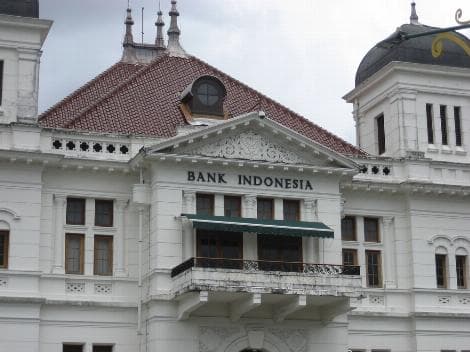
Indonesia's parliament on Thursday approved financial sector legislation that expands the mandate of Bank Indonesia and introduces new governance provisions affecting the central bank and other financial regulators, Reuters reported the same day.Under the legislation, the central bank's policy objectives will be broadened to include supporting "an economic environment conducive to real-sector growth and job creation." The law also introduces a new mechanism concerning the removal of members of Bank Indonesia's board of governors, according to the report.In addition, the legislation grants parliament a greater role in overseeing independent financial regulators. Lawmakers will be able to evaluate bodies such as Bank Indonesia, the Financial Services Authority (OJK) and the Indonesia Deposit Insurance Corp. (LPS), and issue recommendations that are binding, the news outlet reported.The legislation also establishes a legal framework for the planned demutualization of the Indonesian Stock Exchange, sets rules for the development of an exchange for minerals and other strategic commodities, and sets rules for the proposed creation of an international financial center in the country, Reuters reported.The full text of the legislation had not been publicly released, according to the report.(Market Chatter news is derived from conversations with market professionals globally. This information is believed to be from reliable sources but may include rumor and speculation. Accuracy is not guaranteed.)

^JKSE
Asia

Market Chatter: Bank Indonesia Introduces US Dollar Buying Limit

Bank Indonesia introduced a new cap on the purchase of US dollars, in a bid to make the rupiah less dependent on the US dollar, The Jakarta Globe reported Wednesday.Individuals and entities will, effective Tuesday, June 2, only be permitted to buy up to $25,000 per month, according to the report.Another measure in the same direction includes facilitating cross border transactions in local currencies, Bank Indonesia spokesperson Ramdan Denny Prakoso told the news outlet."The cooperation has currently been established with China, Japan, Malaysia, Thailand, South Korea, and the United Arab Emirates," Ramdan reportedly said.(Market Chatter news is derived from conversations with market professionals globally. This information is believed to be from reliable sources but may include rumor and speculation. Accuracy is not guaranteed.)

^JKSE
Asia

Market Chatter: Weakening Rupiah Not Due to Indonesian Govt Fiscal Policies, Finance Minister Says

The weakening of the Indonesian currency toward 18,000 rupiah per U.S. dollar does not reflect worsening government finances, The Jakarta Globe reported Thursday, citing Finance Minister Purbaya Yudhi Sadewa.Purbaya dismissed concerns that the government's recent fiscal policies were reckless while speaking to reporters.He supported his claim with state budget figures, stating that the budget deficit dropped to roughly 0.7% of GDP and tax revenue increased over 22% from a year prior, the newswire reported.The deterioration of the rupiah has instead been a result of market sentiment and speculation, Purbaya reportedly said.He also pushed back on rumored instructions to banks to carry out stress tests if the currency goes below the 18,000 rupiah per U.S. dollar mark, the report said.(Market Chatter news is derived from conversations with market professionals globally. This information is believed to be from reliable sources but may include rumor and speculation. Accuracy is not guaranteed.)

^JKSE
Asia

Moody's Gives Baa2 Issuer Rating to Danantara Investment Management

Moody's assigned a Baa2 issuer rating to Danantara Investment Management on Wednesday, according to a same-day release by the ratings agency.The rating is aligned with the Baa2 sovereign rating of the Indonesian government.The company's senior unsecured global medium-term note program was also given a provisional (P)Baa2 rating.The outlook on all ratings is negative.

^JKSE
Asia

Market Chatter: Bank Indonesia Vows Continued Support for Rupiah After Fresh Record Low

Indonesia's central bank said it will continue to take steps to support to rupiah as the local currency dropped to an all-time low on Wednesday, Reuters reported the same day, citing spokesperson Ramdan ​Prakoso.USD/IDR reached 18,037 earlier in the day but was trading at 17,966.5 as of 3:59 a.m. ET, according to Bloomberg data.The central bank will pull all levers at its disposal to maintain stability in the foreign exchange market amid ongoing global uncertainties, the report quoted Prakoso as saying.(Market Chatter news is derived from conversations with market professionals globally. This information is believed to be from reliable sources but may include rumor and speculation. Accuracy is not guaranteed.)

^JKSE
Asia

Several Asian Countries Face Additional US Tariffs Over Forced-Labor Trade Practices

Several Asian countries could soon face additional duties on some of their exports to the U.S. following Washington's probe into imports produced using forced labor, the Office of U.S. Trade Representative (USTR) said Tuesday.The USTR said Bangladesh, Cambodia, China, Hong Kong, India, Japan, Malaysia, the Philippines, Singapore, South Korea, Sri Lanka, Taiwan, Thailand, Indonesia, Pakistan, and Vietnam are among the 54 economies that have failed to impose and effectively enforce a forced-labor import ban.The USTR proposed a 10% additional tariff for economies that have partially enforced bans on the importation of certain forced-labor goods and a 12.5% tariff for the rest.

^BSE^HNX^HOSEHang Seng^JKSEFTSE Bursa Malaysia KLCIKOSPINikkei 225^NSE^PSEI^SETShanghai Composite^STI^SZSETaiwan Weighted
Asia

S&P Gives Danantara Investment Management BBB Long-Term and A-2 Short-Term Credit Ratings

S&P Global Ratings assigned BBB long-term and A-2 short-term issuer credit ratings to Danantara Investment Management, according to a Wednesday release.The outlook is stable, reflecting that on the rating agency's sovereign credit rating on Indonesia, the release said.The ratings reflect S&P Global's almost certain likelihood of sufficient extraordinary support from the Indonesian government for the firm in times of need.

^JKSE
Asia

USTR Flags 60 Economies Over Forced Labor Import Gaps, Proposes New Tariffs

The U.S. Trade Representative has concluded that 60 economies failed to properly ban or enforce restrictions on imports linked to forced labor, calling the practices harmful to fair global trade, the US Executive Office announced Tuesday.Among the Southeast Asian countries named are the Philippines, Thailand, Vietnam, Malaysia, Indonesia, Cambodia and Singapore. Taiwan is also included separately among the economies cited.The findings are part of a broader review of many economies. Officials said the gaps create unfair competition by helping producers who use forced labor.USTR has proposed additional tariffs of 10% to 12.5% on affected imports and is seeking public comments before finalizing any action, with hearings scheduled for July 2026.

^HNX^HOSE^JKSEFTSE Bursa Malaysia KLCI^SET^STITaiwan Weighted
Asian Banking Sector Surges Past Automobiles to Lead May Activity Growth, S&P Global Survey Finds
US Markets

Asian Banking Sector Surges Past Automobiles to Lead May Activity Growth, S&P Global Survey Finds

Most Asian business sectors expanded in May, with banking overtaking the automobile industry, according to the S&P Global Asia Sector PMI released on Wednesday.Leading the upturn for the first time in seven months, the banking sector expanded at its second-steepest rate in over five and a half years. The growth follows a previous S&P Global forecast warning that credit losses in the Asia-Pacific banking sector could surge by approximately $180 billion due to the ongoing conflict in the Middle East.The automobile sector, last month's top performer, slipped to second place, though its pace of growth remained historically high.Of the 18 sectors monitored, only forestry and paper products, alongside construction materials, recorded a contraction in new orders; however, these declines were softer than in the previous month. In contrast, the transportation sector posted the strongest surge in new orders, despite looming concerns over U.S.-Iran negotiations.Volatility persists in the energy and oil industries due to the precarious state of U.S.-Iran talks aimed at ending the Middle East conflict."Oil prices received a boost yesterday as talks between the US and Iran appeared to break down -- again. This has become a common pattern in recent months, and there are still plenty of mixed messages," ING'S Warren Patterson and Ewa Manthey said in a Tuesday note. "As a result, oil prices continue to be whipsawed by quickly changing headlines."Operating expenses increased across all 18 sectors. S&P Global highlighted that real estate recorded a renewed rise in input prices, while the chemicals sector posted the sharpest cost inflation rate.All sectors increased their selling prices except for the consumer services sector.

ASX 200^BSE^HNX^HOSEHang Seng^JKSEKOSPINikkei 225^NSENifty 50^SETShanghai Composite^SZSETaiwan Weighted
International

Banking Sector Growth Fastest Among 18 Broader Asian Sectors in May, S&P Data Shows

Banking sector growth was the fastest among the 18 broader Asian sectors in May, with activity expanding at the strongest pace in seven months, S&P Global said in a Wednesday release.Output growth was recorded across 16 of the 18 monitored Asian sectors last month, which was unchanged from April. Only the forestry and paper products, and construction materials sectors incurred declines from April, along with lower new orders received, S&P said.New orders rose across the remaining 16 sectors last month, led by the transportation sector.Employment increased in 10 of 18 sectors, with software & services and technology equipment experiencing the strongest hiring, while insurance witnessed a cutdown in employed staff.

^BSE^HNX^HOSEHang Seng^JKSEFTSE Bursa Malaysia KLCIKOSPINikkei 225^NSE^PSEI^SETShanghai Composite^STI^SZSETaiwan Weighted
ASEAN Manufacturing Scene Strong in May: PMI Report
US Markets

ASEAN Manufacturing Scene Strong in May: PMI Report

Despite Persian Gulf troubles, ASEAN manufacturers logged stronger new orders and boosted production in May, reported S&P Global on Tuesday.The ASEAN manufacturing purchasing managers index (PMI) posted at 51.5 in May, up from 50.7 in April, and striking above the 50-mark that separates growth from contraction, reported S&P Global, citing its monthly surveys.The ASEAN PMI logged in positive territory for the 11th-straight month, as stronger domestic demand offset sluggish export orders.The S&P Global ASEAN PMI is a composite of national reports from 2,100 manufacturers in Indonesia, Malaysia, Myanmar, the Philippines, Singapore, Thailand and Vietnam.After somewhat lagging in the three previous months, ASEAN manufacturers reported a "solid rise in new orders" in May, although "export sales declined for a third consecutive month," explained S&P Global.Despite improving orders and rising production, ASEAN factory managers kept a tight rein on payrolls in May. Factory sector employers "remained cautious about expanding employment, with May showing a slight decline in jobs," noted S&P Global.Manufacturers also faced rising costs in May, and responded by raising charges on customers. Both "cost burdens and charges rose at substantial and historically marked rates," said S&P Global.With orders improving, ASEAN factory managers in May were more confident in their year-ahead outlooks. Business "confidence regarding output over the coming 12 months improved further to a four-month high, suggesting that firms anticipate continued production growth," said S&P Global.But global events still tempered views. "However, ongoing trade disruptions and inflationary pressures, driven by the current war, will continue to act as headwinds to growth," advised S&P Global.ASEAN survey responses were collected by S&P Global from May 12 through May 20.

^HNX^HOSE^JKSEFTSE Bursa Malaysia KLCI^PSEI^SET^STI^YSX
Indonesia's Trade Surplus Narrows to $89 Million in April; Exports Rebound Sharply
US Markets

Indonesia's Trade Surplus Narrows to $89 Million in April; Exports Rebound Sharply

Indonesia's trade surplus narrowed to $89.1 million in April, as strong growth in both exports and imports left the external balance positive, according to data released Tuesday by Statistics Indonesia.The consensus estimate was for a surplus of $1.50 billion, according to Investing.com.Exports rose 22% year over year to $25.3 billion in April, recovering from the 3.1% drop in March, and beating the consensus forecast for an 8.8% growth. Non-oil and gas exports increased 23.4% to $24.2 billion.Imports climbed 22.5% from a year earlier to $25.2 billion, significantly faster than the 1.51% increase in March, and against the consensus estimate for a 3.25% rise. Non-oil and gas imports rose 14.1% to $20.6 billion.The April surplus was supported by a $3.53 billion surplus in non-oil and gas trade, which offset a $3.44 billion deficit in the oil and gas sector.During the first four months of 2026, exports increased 5.5% year over year to $92.2 billion, while non-oil and gas exports rose 6.3% to $87.7 billion.Imports rose 13.4% from a year earlier to $86.5 billion in January-April, with non-oil and gas imports increasing 12.7% to $73.58 billion.Higher palm oil exports boosted manufacturing shipments during the period, while lower coal exports weighed on mining and other products.China remained Indonesia's largest non-oil and gas export market during January-April, accounting for $22.8 billion of shipments, followed by the United States at $10.2 billion and India at $6.14 billion.The trade data comes as Indonesia presses ahead with plans to centralize exports of key commodities under a new state-backed entity, a move that has raised concerns among natural resource producers over potential regulatory uncertainty.Coordinating Economic Minister Airlangga Hartarto said coal, palm oil, and ferroalloy producers will begin submitting export-related documents to PT Danantara Sumberdaya Indonesia from June 1.The company, a unit of sovereign wealth fund Danantara, is expected to assume specific export functions as early as September and no later than Jan. 1, 2027.Danantara Chief Operating Officer Dony Oskaria said the new entity would operate transparently and accountably, including in the benchmarking of commodity prices during the transition."We will ensure that this company will be run transparently and can be monitored by everyone in Indonesia," Oskaria said, according to Reuters.Indonesia is the world's largest exporter of thermal coal, palm oil, and nickel, with exports of the three commodities exceeding $65 billion last year.The government has said the initiative is intended to strengthen oversight and coordination of strategic commodity exports.

^JKSE
Indonesian Inflation Accelerates to 3.08% in May, Topping Forecasts
US Markets

Indonesian Inflation Accelerates to 3.08% in May, Topping Forecasts

Indonesian inflation rose to 3.08% in May following a surge in food, beverage, tobacco, and personal care prices during the month, according to data from Statistics Indonesia published Tuesday.Analysts polled by Reuters estimated a rise of 2.97%. The latest print rebounded from an eight-month low of 2.42% recorded in April.Prices of food, beverages, and tobacco jumped 4.94% during the month, the statistics department, known officially as Badan Pusat Statistik, said.The commodities that helped raise food prices include fresh fish at 0.22%, rice at 0.18%, broiler chicken meat at 0.15%, as well as machine-rolled and hand-rolled clove cigarettes and white cigarettes.Prices of mineral water, oranges, and cucumbers, among others, helped contribute to the upward movement.Food and beverage services and restaurant prices jumped 2.24% year over year during the month. Rice meals with a side dish saw higher prices.Personal care services jumped 10.35% year over year during the month, driven by a 26.31% rise in other personal effects prices. according to the statistics department.Transport prices grew 2.3%, with airfares contributing a 0.14% rise, the department said.Information, communication, and financial services saw prices rise 0.97%, while health prices jumped 1.7%.On a monthly basis, consumer inflation was up 0.28%, compared with 0.13% a month earlier.The country's annual core component inflation rate was 2.59%, compared with the prior reading of 2.44%. Month over month, core consumer prices rose 0.22%, against the previous 0.23% increase.Indonesia's inflation data comes as economists doubt the robust growth narrative being pushed by President Prabowo Subianto, Bloomberg reported on May 29.Economists questioned what they called an unexpected jump in the archipelago's gross domestic product by 5.6%, calling the statistic an overstatement, the news outlet said.

^JKSE
International

Indonesia's Trade Surplus Shrinks to $89 Million in April; Exports Jump 22%

Indonesia's trade surplus fell sharply to $89.1 million in April from $3.32 billion in the previous month, according to government data published Tuesday.The consensus estimate was for a $1.50 billion surplus, according to Investing.com.Exports jumped 22% to $25.30 billion, recovering from the 3.1% drop in March. Imports surged 22.5% to $25.21 billion, significantly faster than the 1.51% increase in March.

^JKSE
International

Correction: Indonesia's Annual Inflation Rate Rises to 3.08% in May

(Corrects the month in the headline to May)Indonesia's annual inflation rate increased to 3.08% in May from 2.42% in April, according to data from Statistics Indonesia published Tuesday.On a monthly basis, consumer inflation was up 0.28%, compared with 0.13% a month earlier.Meanwhile, the country's annual core component inflation rate was 2.59%, compared with the prior reading of 2.44%. Month over month, core consumer prices rose 0.22%, against the previous 0.23% increase.

^JKSE
International

Indonesia's Annual Inflation Rate Rises to 3.08% in April

Indonesia's annual inflation rate increased to 3.08% in May from 2.42% in April, according to data from Statistics Indonesia published Tuesday.On a monthly basis, consumer inflation was up 0.28%, compared with 0.13% a month earlier.Meanwhile, the country's annual core component inflation rate was 2.59%, compared with the prior reading of 2.44%. Month over month, core consumer prices rose 0.22%, against the previous 0.23% increase.

^JKSE

Showing 21-40 of 184

^JKSE News | FINWIRES