FINWIRES · TerminalLIVE
FINWIRES

Indonesia Sees Improved Retail Sales Performance in May

By
Indonesia Sees Improved Retail Sales Performance in May

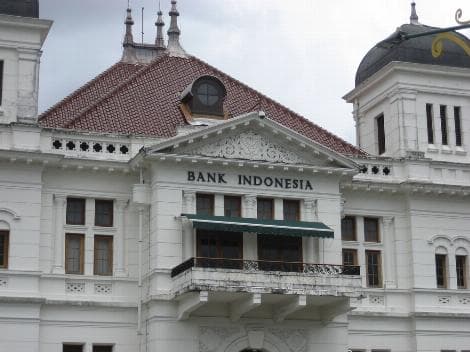
Indonesia's retail sales are expected to remain stable in May despite a monthly decline, supported by demand during several religious holidays.

On a month-on-month basis, retail sales are forecast to decline 0.9% in May, improving from the 11.6% contraction recorded in April, according to data released by Bank Indonesia on Thursday.

The country's Real Sales Index is projected at 225 in May, with annual growth driven mainly by sales of spare parts and accessories, other household equipment, and miscellaneous goods.

"In terms of prices, inflationary pressure over the next three months, namely July 2026, is forecast to remain relatively stable whilst over the next six months, namely October 2026, it is forecast to rise," Bank Indonesia said.

The central bank attributed the improved monthly performance to holiday-related demand during the Ascension Day, Eid al-Adha, and Vesak periods.

The retail sales data comes as Bank Indonesia continues to balance support for domestic demand with efforts to maintain currency stability.

In a rare move outside its regular policy schedule, the central bank raised its benchmark interest rate by 25 basis points earlier this week, saying the currency had weakened more than anticipated and that additional tightening was needed to preserve stability.

The move also came as inflationary pressures showed signs of building.

Indonesia's consumer prices rose 3.08% year over year in May, accelerating from 2.42% in April and topping economists' expectations of 2.97%, according to a Reuters poll.

Attention now turns to next week's policy meeting, with the rupiah under mounting pressure after sliding about 8% this year and 7% since the Iran conflict erupted, leaving it among the world's weakest-performing currencies.


Related Articles

South Korea's Unemployment Rate Steady in May Amid Cost Pressures
US Markets

South Korea's Unemployment Rate Steady in May Amid Cost Pressures

South Korea's unemployment rate held steady at 2.9% in May, unchanged from April, amid rising inflationary pressures.On a year-over-year basis, the latest print was up 0.1 percentage point, according to the Ministry of Data and Statistics' Economically Active Population Survey published Thursday.The jobless count in May climbed 25,000 to 878,000 from the prior month, and up 3% from 853,000 in May 2025.The seasonally adjusted unemployment rate also steadied at 2.8% for a second straight month. The print was in line with the median forecast by analysts polled by Trading Economics.The economically active population fell 815,000 from April to 29.998 million, and was down 14,000 year over year. The labor force participation rate dropped 0.4 percentage point to 65.2% from 64.9% in April, and was down 0.4 percentage point from a year earlier.Total employed persons fell to 29.120 million from 28.961 million in April. Year over year, employment was down by 40,000, or 1%.The employment-to-population ratio for those aged 15 and over rose to 63.3% in May from 63.0% in April, but was down 0.5 percentage points from a year prior. The ratio for those aged 15 to 64 edged up slightly to 70.2% from 70% in April.The data comes amid rising price pressures in South Korea. Consumer prices rose 3.1% in May from a year earlier, the sharpest jump since March 2024, driven by petroleum product prices that were 24.2% up year over year.Core inflation, which strips out volatile food and energy prices, accelerated to 2.5% from 2.2% in April, marking its fastest pace since February 2024.The Bank of Korea left its benchmark interest rate unchanged at 2.50% at its latest policy meeting on May 28."Inflationary pressure has increased due to the Middle East war, growth has increased more than previously expected, supported by strong exports, and financial stability risks have still remained," the central bank said.At the time, the BOK noted that employment continued its upward trend, and is expected to improve further, supported by a strong semiconductor sector.

^KOSDAQKOSPI
Oracle Fourth-Quarter Results Top Estimates Amid Cloud Infrastructure Demand
US Markets

Oracle Fourth-Quarter Results Top Estimates Amid Cloud Infrastructure Demand

Oracle's (ORCL) fiscal fourth-quarter results surpassed Wall Street's estimates, driven by rising demand for cloud infrastructure amid an artificial intelligence boom.Revenue increased 21% year-on-year to $19.18 billion during the three months through May, above the FactSet-polled consensus of $19.1 billion. Adjusted earnings per share rose to $2.11 from $1.70 a year earlier, compared with the Street's $1.96 view.Oracle's remaining performance obligations -- future commitments arising from contractual relationships -- soared 363% year-on-year to $638 billion. The metric rose $85 billion from the end of the third quarter."The large increases in Oracle's RPO and revenue are driven by the growing demand for cloud infrastructure for AI training and inferencing," the cloud computing company said late Wednesday.Cloud sales advanced 47% to $9.91 billion, driven by a 93% jump in infrastructure to $5.79 billion. The software segment edged 2% lower to $6.82 billion.Oppenheimer recently projected Oracle's cloud infrastructure revenue to grow 96% to $5.87 billion in the fourth quarter, compared with the consensus estimate that the brokerage put at 92%.Oracle plans to to raise about $40 billion via debt and equity issuances in fiscal 2027, including its previously announced $20 billion stock sale. That follows $43 billion raised in debt and $5 billion in equity financing in the just-ended year."Oracle's capital investment program supports the pursuit of unprecedented opportunities in AI cloud infrastructure," the company said Wednesday.It does not expect to issue additional debt in calendar year 2026.Shares were down 6.3% in after-hours trading. The stock gained 3.3% so far this year through Wednesday close.The company expects reported revenue to grow by 27% to 29% in the first quarter, with cloud sales seen rising 58% and 64%. Non-GAAP EPS is expected to grow between 17% and 20%, reaching $1.72 to $1.76. Markets expect adjusted EPS of $1.68 on consolidated revenue of $19.05 billion.Oracle maintained its fiscal 2027 revenue outlook at $90 billion and raised non-GAAP EPS guidance to $8.05. Analysts expect $88.78 billion and $8.02, respectively.

$ORCL
Update: Nasdaq, S&P 500 Hit 5-Week Lows Amid Re-Escalation in Middle East
US Markets

Update: Nasdaq, S&P 500 Hit 5-Week Lows Amid Re-Escalation in Middle East

(Updates with market moves at the end of the day.)The Nasdaq Composite and the S&P 500 fell to the lowest levels in about five weeks on Wednesday as renewed tensions between the US and Iran pushed oil prices higher.The Nasdaq fell 2% to 25,169.5, its lowest close since May 4. The S&P 500 lost 1.6% to 7,267, the lowest finish since May 5. The Dow Jones Industrial Average shed 1.9% to settle at 49,918.8, the lowest since May 19.Most sectors were in the red, led by industrials' 3.4% slump, while consumer staples paced the gainers.West Texas Intermediate crude oil was up 2.6% at $90.46 a barrel in late-afternoon trade, while Brent rose 2.2% to $93.42.Iran will have to "pay the price" for taking too long to agree to a peace deal, US President Donald Trump said in a social media post Wednesday.The US will resume attacks on Iran Wednesday, CNN reported, citing Trump.US forces launched airstrikes Tuesday against Iran after Tehran shot down an American Apache helicopter, Central Command said. Iran struck American military bases across Jordan, Kuwait, and Bahrain, media reports showed."With no imminent deal in sight and with the global oil market tightening significantly every day, we see upside to prices, particularly if these disruptions linger into the third quarter, a period of seasonally stronger oil demand," ING Bank said in a report Wednesday.US Treasury yields were mixed, with the 10-year rate up 2.3 basis points at 4.55% and the two-year rate little changed at 4.14%.In economic news, US annual inflation accelerated to the highest in about three years last month, fueling expectations that the Federal Reserve will keep interest rates on hold for some time."US inflation continues to vault higher on the back of swiftly rising energy prices and four months of closure of the Strait of Hormuz," BMO Chief US Economist Scott Anderson said in a report.Monthly headline and core inflation measures, however, eased."The milder rise in core (consumer price index) inflation in May will buy the Fed some time to wait a bit longer before taking any action on raising interest rates."Markets widely expect the Fed to leave interest rates unchanged next week, which would mark its fourth straight pause, according to the CME FedWatch tool.In company news, Super Micro Computer (SMCI) shares slid 28%, the worst performer on the S&P 500, as the company announced a series of concurrent equity and equity-linked financing transactions amounting to $7 billion.Casey's General Stores (CASY) shares surged 20%. Late Tuesday, the convenience store operator logged better-than-expected fiscal fourth-quarter results.Gold was down 4.2% at $4,105.10 per troy ounce, while silver fell 2.2% to $63.82.

Dow JonesNasdaq CompositeS&P 500$CASY$SMCI