FINWIRES · TerminalLIVE
FINWIRES

HKG:1810

9 stories mentioning HKG:1810

Every FINWIRES story that references HKG:1810, newest first.

WeChat's Tie-Up With Smartphone Makers Threatens Apple's China Market Share, Jefferies Says
US Markets

WeChat's Tie-Up With Smartphone Makers Threatens Apple's China Market Share, Jefferies Says

Tencent Holdings' (HKG:0700) recent move to integrate WeChat with China's major smartphone manufacturers via an agent-to-agent (A2A) capability poses a risk to Apple's market position in China, according to Jefferies analysts.The tech company recently confirmed that it is partnering with smartphone makers Huawei, Honor, Xiaomi (HKG:1810), OPPO and vivo to roll out A2A features, according to Jefferies."The collaboration is ongoing, and those capabilities will be rolled out gradually," WeChat was quoted by Nikkei Asia as saying.The first device to support the feature is the Honor 500 Pro smartphone, Jefferies said.The integration works by allowing a smartphone's AI assistant to take verbal instructions, then convert them into a text message and send it to WeChat."The WeChat agent will interact with its mini programs' agents to execute a transaction on the cloud. The benefit to [smartphone] OEMs is [a] faster upgrade cycle and potential [revenue] share," said Jefferies.However, Jefferies warned that "it may not meet [Apple's] privacy focus, but iPhone could risk lagging behind in China."The investment bank noted that the integration "will revolutionize the app-centric eCommerce ecosystem today, as consumers do not have to give specific merchant choice. AI could choose for them."Jefferies said this would turn smartphone makers into a "user intent distributor," making them gatekeepers to which e-commerce players the consumers pick to make purchases."It would give [smartphone] OEMs bargaining power that did not exist before," Jefferies said.However, the bank said Apple could lag behind in China as Tencent has not partnered with the US company on A2A. Jefferies cited Apple's existing agreement with Alibaba Group (HKG:9988) as a potential reason. Apple teamed up with Alibaba to deploy the Chinese tech and e-commerce company's AI model for Apple Intelligence in China.WeChat's A2A also involves limited on-device AI, as transactions would likely take place in the public cloud, said Jefferies."Therefore, it may not meet [Apple's] privacy requirements. However, as this ecosystem grows, iPhone could risk market share loss to local brands."Apple's share of the smartphone market in China had shrunk to 19% in the first quarter of 2026 from 22% in the fourth quarter of 2025, according to Counterpoint Research.However, it still ranked second overall in the three-month period, next to Huawei.Counterpoint said Apple continued to benefit from the strong demand for the iPhone 17 series earlier this year.

HKG:0700HKG:1810HKG:9988
Chinese EV Makers Report Strong Sales Despite Domestic Headwinds
US Markets

Chinese EV Makers Report Strong Sales Despite Domestic Headwinds

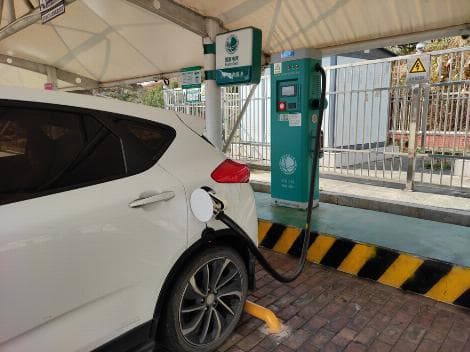
Chinese electric carmakers increased their output in May, but sales of electric vehicles at home could continue their downturn in the month.XPeng (HKG:9868) logged a 4% increase in its deliveries to 32,158 vehicles during the month, according to a Monday press release.The electric vehicle company's deliveries in the first five months of the year are seen to reduce greenhouse gases by 2 million tons compared with internal combustion engine units, supplanting the equivalent of carbon absorption of 33.2 million young trees, the report said.NIO's (HKG:9866; SGX:NIO) deliveries surged 62% to 37,705 vehicles in May, according to a separate press release.Deliveries of the NIO brand comprised 20,013 units, while that of its ONVO brand reached 12,029 vehicles, and its Firefly brand reached 5,663.Year-to-date deliveries for NIO reached 150,526, up 69% year over year.Xiaomi's (HKG:1810) deliveries topped 30,000, EV news website CNEV Post reported, citing the automaker.The tech company, which also made its foray into electric vehicles, did not share exact figures of deliveries, according to the news outlet.SAIC Motors' (SHA:600104) joint venture with General Motors and Guangxi Automobile, saw global sales reach 126,087 vehicles, according to Chinese news site Internet Info Agency.SAIC-GM-Wuling's Red Label saw sales of 45,224 units, while its Silver Label logged 46,026 units.The rise in deliveries contrasts with the performance of domestic car sales as companies may have moved past its "golden era," Reuters reported separately Thursday, citing NIO CEO William Li.Sales may not likely rebound despite strong exports, the report said.

Shanghai Composite^SZSEHKG:1810HKG:9866;SGX:NIOHKG:9868SHA:600104
Chipmaker CXMT Wins Approval for China's Largest IPO Since 2022
US Markets

Chipmaker CXMT Wins Approval for China's Largest IPO Since 2022

ChangXin Memory Technologies has received approval from the Shanghai Stock Exchange to proceed with an initial public offering, targeting 29.5 billion yuan in proceeds, which would make it the largest IPO in China in four years.The Shanghai bourse's Listing Review Committee on Wednesday noted that CXMT "meets the issuance conditions, listing conditions, and information disclosure requirements" for an IPO.The chipmaker plans to list 10.6 billion shares on the STAR Market board, accounting for at least 10% of its share capital post-issuance.CXMT has agreed to grant underwriters an overallotment option to issue up to an additional 15% of the shares in the offering.China International Capital Corporation and CITIC Securities are serving as lead underwriters.Based on its IPO target size, the deal would mark the largest in China since CNOOC's (SHA:600938, HKG:0883) 32.3 billion yuan Shanghai IPO in 2022. It would also be the biggest in Asia since Contemporary Amperex Technology or CATL's (SHE:300750, HKG:3750) HK$41 billion Hong Kong IPO last year.CXMT describes itself as the world's fourth-largest supplier of dynamic random access memory (DRAM). The company competes with South Korea's Samsung Electronics (KRX:005930) and SK Hynix (KRX:000660), and US-based Micron Technology. They collectively control 90% of the DRAM market, according to The Wall Street Journal.DRAM is a chip that serves as a key component for processors, including those used for artificial intelligence models.The company supplies its products to domestic clients like Alibaba Holdings (HKG:9988), ByteDance, Tencent Holdings (HKG:0700) and Xiaomi (HKG:1810).Of the total proceeds, CXMT plans to use 13 billion yuan to upgrade its DRAM technology, 9 billion yuan for DRAM research and development, and 7.5 billion yuan to upgrade its production line."After years of development, the company has broken through key core technologies in DRAM and successfully achieved independent R&D, design, and commercial mass production of its products, filling a long-standing gap in the global market for DRAM products from mainland China," according to a translated text of CXMT's IPO prospectus.The IPO comes as CXMT continues to bank on the strong global demand for chips amid the AI boom. For the first quarter ended March 31, CXMT swung to an attributable net profit of 24.8 billion yuan from an attributable net loss of 1.56 billion yuan a year earlier. Revenue surged 719% to 50.8 billion yuan from 6.2 billion yuan.The company expects to book up to 57 billion yuan in attributable profit for the first half of 2026, versus an attributable net loss of 2.33 billion yuan a year prior. Revenue is forecast to jump by up to 677% from a year earlier to up to 120 billion yuan.Ao Fei, managing director at Beijing Xinhan Capital, told Bloomberg that CXMT's "position in the industry and its strategic importance to the nation speaks for itself.""CXMT is the reason China has been able to get a foothold in DRAM, arguably the most critical memory segment powering the AI revolution.""This is a national champion that has catalyzed China's entire semiconductor supply chain, serves as a training ground for the next generation of talent, and has elevated the industry to a new frontier," Ao reportedly said."You could argue that ChangXin today occupies the same pivotal position that CATL held at the time of its listing."Meanwhile, Dong Shaopeng, a senior research fellow at the Chongyang Institute for Financial Studies, Renmin University of China, told China's Global Times that the Shanghai bourse's approval of CXMT's listing follows the outcome of policy guidance, industrial efforts and coordinated support from the financial system."Against this backdrop, continued breakthroughs in China's semiconductor industry could bring structural adjustments to the global chip market landscape," Dong was quoted by the Global Times as saying.CXMT's Shanghai IPO also comes amid an influx of new listings in mainland China and Hong Kong. Total funds raised from A-share IPOs in the first quarter of 2026 rose 8% year over year to 27.4 billion yuan, according to data from KPMG.

Shanghai CompositeHKG:0700HKG:0883HKG:1810HKG:3750HKG:9988KRX:000660KRX:005930SHA:600938SHE:300750
Research

Jefferies Downgrades Xiaomi to Underperform From Hold, Adjusts Price Target to HK$25.49 From HK$26.98

Xiaomi (HKG:1810) has an average rating of overweight and mean price target of HK$40.35, according to analysts polled by FactSet.(covers equity, commodity and economic research from major banks and research firms in North America, Asia and Europe. Research providers may contact us here: https://www..com/contact-us)

HKG:1810
Xiaomi's Q1 Profit Plunges 57% on Higher Component Costs; Launches HK$20 Billion Share Buyback
US Markets

Xiaomi's Q1 Profit Plunges 57% on Higher Component Costs; Launches HK$20 Billion Share Buyback

Xiaomi (HKG:1810) reported a sharp decline in first-quarter profit as surging memory and component prices and weaker smartphone shipments weighed on its earnings.Net profit plunged 56.5% year over year to 4.73 billion yuan in the quarter ended March 31, from 10.89 billion yuan, according to an after-market Hong Kong bourse filing on Tuesday.Earnings per share likewise slipped to 0.18 yuan from 0.42 yuan.The Beijing-based tech company's revenue slumped 10.9% to 99.14 billion yuan from 111.29 billion yuan in the first quarter of 2025.The company attributed the decline to lower smartphone shipments, reduced national subsidies for IoT products in China, and intensifying industry competition."Looking ahead to the next five years in the short term, we face the challenge of a triple cycle of cost, demand, and competition," Xiaomi Partner and President William Lu said during the company's earnings call.Smartphone shipments in Q1 declined 19.2% year over year to 33.8 million units, which Xiaomi attributed to the optimization of its product portfolio and reduced shipments of its mid-range and low-end smartphones.However, the company said, citing data from research firm Omdia, that it maintained its ranking as the world's third-largest smartphone vendor for the 23rd straight quarter."We proactively controlled shipments of mid to low-end products and channel inventory. While our smartphone shipment declined, our ASP reached [a] record high," Lu added.Lu described the cycle of memory cost increase as "very long.""When it comes to cost increase and also cost for a smartphone, this is a very big challenge. Besides, it is not going to end here. This is a very long cycle. I think we have to look towards 2027 and 2028 in Q3," Lu told analysts.Analysts from Jefferies said in a note to clients on Monday, "We believe AIoT in 2026 would see more-than-expected headwind, owing [to] a very high base (driven by nationwide gov subsidies starting in 1Q25) and weak appliances demand.""The impact of sharply higher memory costs would expand in the next few quarters, given [a] one-quarter lag in cost recognition and smartphone price hikes starting in late 1Q26."Gross margin for the company's smartphone segment contracted to 10.1% from 12.4% last year, weighed down by higher component costs.Lu said the 10.1% margin "reflects the operational resilience brought about by our own capabilities."Revenue from smartphone sales declined to 44.3 billion yuan from 50.6 billion yuan a year prior."Our industry checks suggest Xiaomi's China smartphone sell-through fell ~30% [year-over-year] in [April], [versus the] 17% fall in 1Q26. In [March] 2026, we forecast [Xiaomi's] smartphone [volume] would fall 55% in 2026, based on our top-down framework," analysts at Jefferies added.Elsewhere, Xiaomi's IoT and lifestyle products segment saw revenue slide to 24.7 billion yuan from 32.3 billion yuan. Lu said the decline was due to the high base of national subsidy last year.Revenue from Xiaomi's smart electric vehicles, AI and other new initiatives rose to 19.9 billion yuan from 18.6 billion yuan. The company delivered 80,856 vehicles in Q1, up 6% year over year.However, the segment's gross margin shrank to 20.1% from 23.2% last year as it incurred an operating loss of 3.1 billion yuan.Separately on Tuesday, Xiaomi announced a new on-market share repurchase program, committing to buy back up to HK$20 billion worth of shares over the next 12 months."Since the beginning of 2026, our share buyback amount has reached about HK$8.4 billion, exceeding the total amount for the entire previous year, demonstrating the company's confidence in our long-term development," said Xiaomi Vice President and Chief Financial Officer Alain Lam during the company's earnings call.

HKG:1810
Asia

Xiaomi Eyes HK$20 Billion Share Buyback

Xiaomi (HKG:1810) is launching a new share repurchase program effective June 2 to buy back up to HK$20 billion of class B shares over the next 12 months, according to a Tuesday Hong Kong bourse filing.The tech giant will subsequently cancel the repurchased shares.The buyback is subject to shareholder approval.

HKG:1810
Asia

Xiaomi's Profit Plunges in Q1

Xiaomi (HKG:1810) recorded a decline in attributable profit for the first quarter of 2026 to 4.72 billion yuan from 10.9 billion yuan a year prior, according to a Tuesday filing with the Hong Kong bourse.Earnings per share were 0.18 yuan in the period, down from 0.42 yuan in the previous fiscal year.The tech giant's revenue slipped 11% to 99.1 billion yuan from 111.3 billion yuan in the year-ago period.

HKG:1810
Asia

Jefferies Adjusts Xiaomi's Price Target to HK$26.98 from HK$30.45, Keeps at Hold

Xiaomi (HKG:1810) has an average rating of overweight and mean price target of HK$40.97, according to analysts polled by FactSet.(covers equity, commodity and economic research from major banks and research firms in North America, Asia and Europe. Research providers may contact us here: https://www..com/contact-us)

HKG:1810
Asia

Zephirin Adjusts Xiaomi's Price Target to HK$25 from HK$27, Keeps at Sell

Xiaomi (HKG:1810) has an average rating of overweight and mean price target of HK$41.59, according to analysts polled by FactSet.(covers equity, commodity and economic research from major banks and research firms in North America, Asia and Europe. Research providers may contact us here: https://www..com/contact-us)

HKG:1810