FINWIRES · TerminalLIVE
FINWIRES

^JKSE

185 stories mentioning ^JKSE

Every FINWIRES story that references ^JKSE, newest first.

International

Indonesia's Consumer Confidence Edges Higher in April

Indonesia's Consumer Confidence Index stood at 123 in April, up from 122.9 in the previous month, remaining in optimistic territory, according to the latest Consumer Survey released by Bank Indonesia.Bank Indonesia said consumer confidence remained strong, supported mainly by improved perceptions of current economic conditions.The Current Economic Conditions Index rose to 116.5 from 115.4 in March, while the Consumer Expectations Index stood at 129.6, slightly lower than 130.4 in the previous month, the central bank said.

^JKSE
Asia

Market Chatter: Indonesia Finance Minister to Activate Bond Stabilization Fund to Defend Rupiah

Indonesia's Finance Minister Purbaya Yudhi Sadewa is planning to activate a bond stabilization fund in a bid to support the rupiah and protect the bond market from global pressures, The Jakarta Globe reported Thursday.The deployment of the fund aims to steady the securities (SBN) market amid increasing yields that can lead to falling bond prices and an increased likelihood of capital losses, the report said.By using the fund, the size of which has not been disclosed, to acquire SBN in the secondary market as required, the government can reportedly boost market confidence and control foreign outflows.The program will be under full control of the Finance Ministry, Purbaya said and The Jakarta Globe reported.(Market Chatter news is derived from conversations with market professionals globally. This information is believed to be from reliable sources but may include rumor and speculation. Accuracy is not guaranteed.)
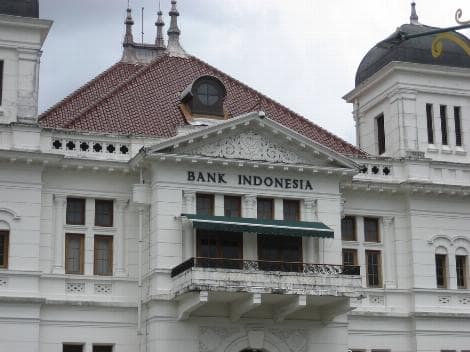

^JKSE
International

Indonesia's Property Prices Rise Softly in Q1

Indonesia's residential property prices in the primary market posted slower growth in the first quarter, with the Residential Property Price Index rising 0.62% annually, slower than the 0.83% growth in the previous quarter, according to Bank Indonesia's Residential Property Price Survey released Friday.Residential property sales in the primary market fell 25.7% year on year during the quarter, reversing from 7.83% growth recorded in the fourth quarter of 2025.Sales growth was mainly seen in mid-range housing units, while demand for small and large homes remained weak, according to the central bank.The survey showed developers mainly used internal funds for financing, accounting for 80.66% of total funding needs, while mortgages made up 69.87% of home purchases, Bank Indonesia said.

^JKSE
International

Indonesia's Foreign Exchange Reserves Drop in April

Indonesia's official reserve assets position at the end of April stood at $146.2 billion, down from $148.2 billion at the end of the previous month, Bank Indonesia said on Friday.The decline reflected tax and service revenues, as well as proceeds from global government bond issuance amid external debt repayments, and the central bank's rupiah stabilization measures in response to heightened global financial market uncertainty.The reserve position was equivalent to financing 5.8 months of imports, or 5.6 months of imports and government external debt servicing, remaining well above the international adequacy standard of around three months of imports, the central bank said.

^JKSE
US Markets

Indonesia Foreign Reserves Decline on Currency Stabilization Efforts

Indonesia's foreign-exchange reserves declined to the lowest level in April in nearly two years, as Bank Indonesia sustained interventions to defend the nation's currency, the rupiah.Indonesia's foreign-exchange reserves fell to $146.2 billion last month, down from $148.2 billion in March, marking the lowest level of the international financial buffer since July 2024, reported Bank Indonesia. The reserve has fallen by $10.27 billion this year.Bank Indonesia cited its "rupiah stabilization policy" in April, that is ongoing intervention in the foreign-exchange markets, for the shrinking foreign reserve position, with several other factors.In general, Bank Indonesia has been spending US dollars in its foreign exchange reserve to buy and hold Indonesian rupiahs, thus increasing demand for the rupiah and the currency's relative scarcity, with the goal of undergirding the rupiah's value.The Indonesian rupiah, which has been declining against the US dollar for several years, has lost 5% of its exchange rate against the greenback in the last 12 months, despite Bank Indonesia market interventions.Indonesia's foreign-exchange reserves also slipped in April due to lower tax and services receipts, external debt repayments, as well as national government bond sales, added Bank Indonesia.Although declining, Indonesia's foreign-exchange reserves remain adequate cover nearly six months of imports, which is above the benchmark of three months promoted by the International Monetary Fund (IMF).Foreign-exchange reserves are assets held by a nation's central bank, generally denominated in US dollars or euros, including cash and non-domestic government bonds. Central bank gold hoards are also regarded as foreign reserves.In addition to managing currency-exchange rates, an ample amount of foreign reserves can help a central bank buttress a nation's financial stability, by allowing national government to manage economic shocks and fund necessary imports in times of stress, such as oil.Nations largely accrue foreign reserves by running trade surpluses, by inflows of money from offshore investments, by direct inward foreign direct investment, and by remittances sent home by offshore workers.

^JKSE
Asia

Market Chatter: Indonesia-EU Trade Pact Set for 2027 Launch; Exporters Raise Concerns

Indonesia and the European Union are on track to launch their Comprehensive Economic Partnership Agreement (CEPA) in 2027, The Jakarta Globe reported Friday.The trade pact is currently undergoing a legal review expected to be completed this month, following which it will formally be approved in the second half.However, despite zero tariffs on most exports, Indonesian exporters will have to adhere to stringent environmental compliance rules, the report said, citing Indonesian Employers Association (Apindo) chair Shinta Kamdani.Carbon-intensive imports will be subject to levies under the Carbon Border Adjustment Mechanism, while exports of palm oil and other commodities must ensure no link to deforested land, according to the report.The majority of small palm oil exporters may reportedly fail to comply, while exporters of iron and steel, a major export from Indonesia to the EU, may also face financial troubles switching to a low-carbon production mode.Shinta believes industry-specific incentives will be needed to help exporters comply with the new standards.(Market Chatter news is derived from conversations with market professionals globally. This information is believed to be from reliable sources but may include rumor and speculation. Accuracy is not guaranteed.)

^JKSE
Asia

Indonesia Issues Regulation Clarifying Investmen, Savings Products Under Sharia Banking

Indonesia's financial services regulator issued a regulation that clarifies the separation of investment products from savings, deposits and current accounts in Islamic banking.The Otoritas Jasa Keuangan said Thursday the regulation, which took effect April 29, aims to strengthen the foundation of the sharia banking industry by distinguishing between third-party funding and investment products.Banks with existing Islamic banking investment products were given up to two years to comply with the updated policy.

^JKSE
Asia

Indonesia's Debt Capital Market to Reach $800 Billion by End-2026, Fitch Says

Indonesia's debt capital market could come to $800 billion outstanding by end-2026, supporting the country's status as a major emerging market debt issuer and one of the world's largest sukuk markets, Fitch Ratings said in a recent release.The country's debt market is mainly sovereign-linked, while onshore corporate issuance will likely grow, Fitch said.However, pressure from domestic market volatility given governance worries and the impact of the Iran war on oil prices could shape issuance dynamics , the rating agency said.Foreign investors' holdings of tradeable domestic government securities declined to below 13% by mid-April, entailing a risk-off sentiment, Fitch's global head of Islamic finance Bashar Al Natoor said.The country's debt capital market was at $755 billion outstanding at the end of the first quarter, growing 5% year over year and with sukuk having a 17.5% share, Fitch said.Debt issuance in the quarter reached about $47 billion, down 6% annually due to macroeconomic volatility and a large rise in borrowing from the previous quarter, according to Fitch.

^JKSE
Asia

Market Chatter: Indonesia Eyes Up to 7.5% GDP Growth in 2027

Indonesia is targeting 5.9% to 7.5% GDP growth in 2027, Reuters reported Thursday, citing planning minister Rachmat Pambudy.The country aims to support economic growth with ​investment and a boost in productivity.The nation's economic growth target for 2026 is 5.4%, with the possibility of reaching 6% under optimal conditions.(Market Chatter news is derived from conversations with market professionals globally. This information is believed to be from reliable sources but may include rumor and speculation. Accuracy is not guaranteed.)

^JKSE
Asia

Market Chatter: Indonesia Tests CNG as Alternative to LPG in Households

Indonesia is testing compressed natural gas (CNG) as a possible substitute for liquefied petroleum gas (LPG) in household cooking, in a move aimed at reducing import dependence and easing state subsidy costs, the Jakarta Globe reported Thursday.Energy Minister Bahlil Lahadalia said the program is still in the trial phase. Authorities are currently evaluating 3-kilogram (kg) CNG cylinders, focusing on safety standards and design suitability for domestic use. The government hopes the shift could ease pressure from the country's heavy reliance on imported LPG, reportedly.Indonesia brings in about 8.6 million tonnes of LPG annually, creating a significant fiscal burden. While CNG is already used in larger 12 kg to 20 kg cylinders, adapting it for household-scale use remains the key challenge, the news outlet said.(Market Chatter news is derived from conversations with market professionals globally. This information is believed to be from reliable sources but may include rumor and speculation. Accuracy is not guaranteed.)

^JKSE
US Markets

Asian Industry Sustains Expansion in April: PMI Report

Despite headwinds from Persian Gulf turmoils, Asia's business sectors largely expanded in April, led by the automobile industry, reported S&P Global on Wednesday."Output growth was recorded across 16 of the 18 monitored Asian sectors in April. This figure was up from 15 in March, as metals & mining production returned to growth," said S&P Global, citing its surveys of regional economies.Showing strength in April was the automotive industry. "Leading the rankings for the first time in nearly two years was the automobiles & auto parts sector. The pace of output expansion in the sector quickened to the steepest since May 2024 and was rapid overall," explained S&P Global.Among the broader categories, consumer products did generally well in April."Consumer goods outperformed the other six tracked areas, with growth also supported by strong and accelerated expansions in output across the beverages & food and household & personal use products segments," added S&P Global.The tech and industrial sectors followed consumer goods on the upside, while the slowest expanding sectors were basic materials, financials and healthcare.In contrast to the general regional expansion, the forestry & paper products and construction materials sectors experienced softening in April, reported S&P Global.However, Asian business managers also reported rising and accelerating costs of operation in April."On the prices front, the latest data indicated that cost burdens rose in 17 of the 18 monitored sectors in April. Notably, the majority of these saw expenses increase at a stronger pace than in March," said S&P Global.Of the 18 monitored industries, only banks and real estate lowered output charges, said the credit-rating agency.The Asia Sector PMI indices were compiled by S&P Global from surveys received from 6,000 Asian private-sector companies.

ASX 200^BSE^HNX^HOSEHang Seng^JKSEKOSPINikkei 225^NSE^SETShanghai CompositeTaiwan Weighted
Asia

Market Chatter: Indonesia Cuts Dollar Buying Limit, Explores Currency Swaps to Strengthen Rupiah

Indonesia is putting several measures in place to support the rupiah after it weakened to a record low on Tuesday, The Jakarta Globe reported Wednesday.Firstly, the country slashed the amount of US dollars people can buy from the market without supporting documents to $50,000 per month from $100,000.Bank Indonesia is reportedly looking to further cut the limit to $25,000 per month and ensuring compliance by closely monitoring institutions with heavy dollar demand and working with the Financial Services Authority to enforce the rules on site.Separately, the central bank is working with banks on currency swap arrangements with China, Japan and South Korea, the news outlet reported, citing Chief Economic Minister Airlangga Hartarto.Airlangga did not provide any more details while speaking at a press conference in Jakarta, but clarified that the scheme is different from local currency transactions, according to the report.(Market Chatter news is derived from conversations with market professionals globally. This information is believed to be from reliable sources but may include rumor and speculation. Accuracy is not guaranteed.)

^JKSE
Asia

Market Chatter: Indonesian Central Bank Steps In as Rupiah Depreciates to Record Low

Bank Indonesia stepped into foreign-exchange markets after the rupiah weakened 0.2% to a record low of 17,422 per dollar, Bloomberg reported Tuesday.The intervention efforts by the central bank included offshore and onshore non-deliverable forwards, spot transactions, and secondary-market bond purchases, according to the report, citing a text message by Erwin Hutapea, executive director of monetary and securities management.Hutapea reassured that the central bank will continue taking measures to stabilize the rupiah, the report said.(Market Chatter news is derived from conversations with market professionals globally. This information is believed to be from reliable sources but may include rumor and speculation. Accuracy is not guaranteed.)

^JKSE
Asia

Market Chatter: Ex-Pertamina Executives Handed Sentences in LNG Corruption Case

Two former executives of Indonesian state-owned oil and natural gas company Pertamina were sentenced to jail by Central Jakarta District Court over an LNG purchase case, The Jakarta Globe reported Monday.Pertamina's former gas director Hari Karyuliarto was sentenced to 4.5 years in prison, while former vice president for strategic planning and business development Yenni Andayani received a 3.5-year term.The LNG procurement from US firm Corpus Christi Liquefaction between 2011 and 2014 reportedly resulted in state losses of $113.8 million.Amid an LNG surplus and subdued demand, Pertamina was forced to offload the cargoes in international markets at a loss at the time.Under a broader corruption case linked to the same transaction, Pertamina's CEO was sentenced to 13 years in prison in February 2025, the report said.(Market Chatter news is derived from conversations with market professionals globally. This information is believed to be from reliable sources but may include rumor and speculation. Accuracy is not guaranteed.)

^JKSE
Asia

Japan, Indonesia Sign Agreement on Defense Equipment Transfers

Japan and Indonesia have reached a deal involving more equipment transfers from Tokyo, according to a recent press release from Japan's Ministry of Defense.The new equipment transfer system will create a working group that will discuss matters such as defense equipment and technology cooperation, according to a press conference from Defense Minister Shinjiro Koizumi.The nations also came up with a defense dialog mechanism that improves cooperation and will have advanced conversations on how to protect military data, the release said.Indonesia has also expressed interest in sourcing used submarines from Japan.The new defense agreement expands on a previous defense understanding signed in 2015.

^JKSENikkei 225
Asia

Market Chatter: Indonesia Hikes High-Grade Diesel Prices, Holds Subsidized Fuel Prices Steady

Indonesia has lifted prices for high-grade diesel to their highest levels in years, while leaving subsidized fuels unchanged in a bid to balance market costs with consumer protection.State-owned Pertamina raised its premium diesel, Pertamina Dex, by 16.7% to 27,900 rupiah per liter, the highest since its launch. Its Dexlite variant also climbed to 26,000 rupiah per liter from 23,600 rupiah, reportedly.Gasoline saw milder adjustments, with Pertamax Turbo edging up, while key mainstream fuels and subsidized products including Pertalite and Biosolar remained unchanged. The company said the move reflects efforts to manage business sustainability without straining public purchasing power, the news outlet said.(Market Chatter news is derived from conversations with market professionals globally. This information is believed to be from reliable sources but may include rumor and speculation. Accuracy is not guaranteed.)

^JKSE
International

ASEAN Manufacturing Growth Slows to Nine-Month Low in April, S&P Global Says

ASEAN's manufacturing sector expanded at a slower pace in April, with growth easing to a nine-month low as price pressures intensified, according to data released by S&P Global on Tuesday.The S&P Global ASEAN Manufacturing Purchasing Managers' Index fell to 50.7 in April from 51.8 in March, marking the weakest reading since July but extending the current expansion streak to nine months.New order growth slowed to an eight-month low, while production growth eased further and moved close to stagnation. New export orders declined for a second straight month at the fastest pace since last July.Firms cut employment for the first time in eight months, while purchasing activity increased.On the price front, input cost inflation surged to its highest level since March 2022, while output prices rose at the fastest pace in 49 months, reflecting stronger cost pass-through by firms.Despite challenges and weak historical levels, business confidence stayed positive in April, with manufacturers expecting production to grow over the next year, the report said.

^HNX^HOSE^JKSEFTSE Bursa Malaysia KLCI^PSEI^SET^STI^YSX
International

Indonesia's Economy Grows Faster in Q1

Indonesia's economy grew 5.61% year on year in the first quarter, faster than 5.39% in the preceding quarter, according to data from Statistics Indonesia on Tuesday.Quarterly, the Southeast Asian country's GDP contracted 0.77%.From the production side, the accommodation and food and beverage services sector posted the strongest growth at 13.14%, while from the expenditure side, government consumption expenditure surged 21.8%.However, on a quarterly basis, the mining and quarrying sector recorded the deepest contraction at 8.2%, while government consumption also saw the sharpest decline on the expenditure side at 30.1%, the data showed.

^JKSE
US Markets

Indonesia's Manufacturing Activity Shrinks in April

Indonesia's factory activity contracted in April as the Middle East conflict brought pressure on prices and supply, bringing cost inflation to its highest in four years.S&P Global Indonesia Manufacturing Purchasing Managers' Index or PMI dropped to 49.1 from 50.1 in March, according to a press release from the think tank on Monday.The decline in production volumes during the month was the fastest since May 2025. Firms attributed the diminishment of output to increasing raw material prices, supply shortages and a slowdown in customer demand, despite manufacturers reporting a slight uptick in new order intakes.The slowdown in output reflected the impact of the Iran war in various goods, especially in oil and crude. Indonesia's inflation growth weakened to 2.42% in April, according to data from the Central Statistics Agency."Indonesia's manufacturing sector saw intensifying inflationary pressures start to bite in the midst of the war in the Middle East," S&P Global Market Intelligence economist Usamah Bhatti said. "Firms recorded a solid contraction in output in April, with anecdotal evidence largely pointing to the impact of higher raw material prices and supply shortages on production."Indonesia was among the countries that felt the impact of the oil price shock brought by the war in Iran. State-owned oil and gas enterprise Pertamina raised the prices of non-subsidized fuel products in April, such as those from Pertamax Turbo, Dexlite, and Pertamina Dex.As of Monday, the price of Pertamina Dex's oil in Jakarta is 27,900 Indonesian rupiah per liter, while Dexlite's oil price is 26,000 rupiah per liter. Pertamax Turbo's price on gasoline for the city is at 19,900 rupiah per liter, according to Pertamina's webpage.Meanwhile, manufacturers reduced employment at the start of the second quarter to meet production requirements, S&P Global said.Businesses also remained optimistic that production volumes would rise in the next 12 months."A positive sign was a slight uptick in new orders. However, survey evidence suggested that this was often due to clients making advanced purchases ahead of further potential disruption from the conflict," Bhatti said. "Moreover, optimism eased to a five-month low amid uncertainty regarding the length of the war."

^JKSE
Asia

Market Chatter: Indonesia Bourse Flags 15 IPO Candidates Across Key Sectors

The Indonesia Stock Exchange (IDX) said 15 firms are in the process of launching IPOs on the bourse as of April 30, The Jakarta Globe reported May 3.Of the companies, 11 are large-scale firms with assets exceeding 250 billion Indonesia rupiah in value, The Jakarta Globe reported citing IDX Corporate Valuation Director Gede Nyoman Yetna.The other four are reportedly medium-sized companies with between 50 billion Indonesia rupiah and 250 billion Indonesia rupiah in assets.The prospective issuers belong to a variety of niches, including energy, finance, healthcare, infrastructure, and technology, according to the report.(Market Chatter news is derived from conversations with market professionals globally. This information is believed to be from reliable sources but may include rumor and speculation. Accuracy is not guaranteed.)

^JKSE

Showing 101-120 of 185