FINWIRES · TerminalLIVE
FINWIRES

US Dollar Rises Early Wednesday Ahead of Current Account, New Home Sales Data

By

The US dollar rose against its major trading partners early Wednesday before the release of current account data for Q1 at 8:30 am ET and new home sales activity for May at 10:00 am ET.

Weekly crude oil stocks data are due to be released at 10:30 am ET.

Earlier Wednesday, the Mortgage Bankers Association said that mortgage applications increased in the week ended June 19, led by higher refinancing applications that were partially offset by a drop in purchase applications. Mortgage rates declined slightly.

A quick summary of foreign exchange activity heading into Wednesday:

EUR/USD fell to 1.1340 from 1.1381 at the Tuesday US close and 1.1402 at the same time Tuesday morning. There are no Eurozone data on Wednesday's schedule. The next European Central Bank meeting is scheduled for July 23.

GBP/USD fell to 1.3157 from 1.3197 at the Tuesday US close and 1.3221 at the same time Tuesday morning. There are no UK data on Wednesday's schedule, but Bank of England policy board member Swati Dhringa is due to speak at 11:00 am ET, followed by policy board member Huw Pill at 12:30 pm ET. The next Bank of England meeting is scheduled for July 30.

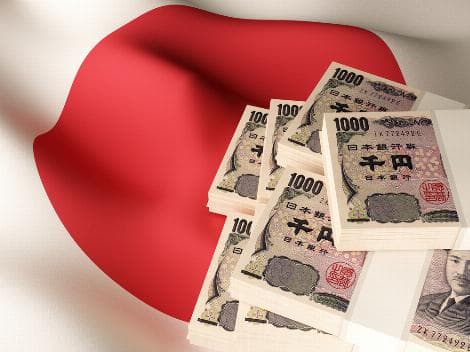
USD/JPY rose to 161.6998 from 161.5620 at the Tuesday US close and 161.4620 at the same time Tuesday morning. May Japanese corporate services price growth was in line with the previous month, according to data released overnight. Bank of Japan Governor Kazuo Ueda is due to speak at 4:00 pm ET. The next Bank of Japan meeting is scheduled for July 30-31.

USD/CAD rose to 1.4227 from 1.4208 at the Tuesday US close and 1.4187 at the same time Tuesday morning. Canadian manufacturing sales for May are due to be released at 8:30 am ET. The next Bank of Canada meeting is scheduled for July 15.
Related Articles

International

Foreign Tourist Arrivals in South Korea in 2026 Exceed 10 Million

The number of foreign tourists that arrived in South Korea has exceeded 10 million as of the third week of June, the Ministry of Culture, Sports and Tourism said in a Wednesday release.Ministry of Culture, Sports and Tourism Choi Hwi-young said that this milestone was achieved about a month earlier than last year, when the 10 million mark was surpassed in mid-July.The number of foreign tourists visiting South Korea jumped 19.4% to 1.95 million in May from 1.63 million a year earlier. Total foreign arrivals in the country in the first five months of 2026 rose 21% to 8.72 million from 7.21 million in the same period last year, the tourist ministry said.

^KOSDAQKOSPI
BOJ Board Warns Crude Oil Price Hikes Could Spread to Consumer Items, June Minutes Show
International

BOJ Board Warns Crude Oil Price Hikes Could Spread to Consumer Items, June Minutes Show

Bank of Japan board members said the impact of rising crude oil prices was already spreading to midstream business-to-business prices and warned that this could affect prices of a wider range of consumer items."In this situation, more concern is warranted about the risk that this could lead to a rise in prices, given that firms' price-setting behavior is becoming more active," according to a summary of opinions from the June 15-16 Monetary Policy Meeting released Wednesday.At the meeting, the board voted 7-1 to raise the policy interest rate by 25 basis points to 1.00%, the highest level since 1995.The board cited the risk that underlying CPI inflation could deviate upward to a level about the 2% price stability target. The decision marked the BOJ's first rate hike since December, when the board lifted the rate to 0.75% from 0.5%.Members also pointed to the rise in inflation expectations, as indicated by the break-even inflation rate and the widening spread between short- and long-term interest rates."Import prices have also been driven up by exchange rate developments. Such price increases are considered to place a burden on the business of a considerable number of firms, including small and micro firms," according to the minutes.The board said it had become "more appropriate than before" to adjust the degree of monetary accommodation.Members added that even if crude oil prices dropped in the future, it was "highly possible" that upward price deviation would spill to items other than petroleum-related goods.The board said this reflects demand shocks stemming from overseas developments, particularly the global expansion of AI-related demand.Japan's annual headline inflation rose to 1.5% in May from 1.4% in April, while core inflation, which strips out volatile items, held steady at 1.4%."Government measures have the effect of influencing households' perceived inflation by adjusting the price levels of specific goods and services," according to the June minutes.However, the board noted that such factors need to be excluded when assessing underlying inflation levels.Beyond rates, the board agreed to halt the reduction of its Japanese government bond purchase amounts from April 2027.The board acknowledged that it will likely take some time for Japanese investors to beef up their government bond holdings.Additionally, the board said Japan's economy has been developing in line with the baseline scenario according to the April 2026 Outlook for Economic Activity and Prices.The BOJ expects Japan's real GDP to grow by about 0.5% in fiscal 2026, according to the April outlook."[T]he projected real GDP growth rate for fiscal 2026 is lower, and the projected year-on-year rate of increase in the CPI (all items less fresh food) for fiscal 2026 is significantly higher, both reflecting the rise in crude oil prices," the BOJ said at the time.Meanwhile, ING Think Senior Economist Min Joo Kang said they expect a majority of BOJ board members to support another rate hike if geopolitical risks to growth subside further."[T]he timing of the next rate hike will likely depend on how quickly energy supply disruptions are resolved. The focus seems to be on the possible impact on growth rather than on inflation," the economist said.

Nikkei 225
International

Australia's Inflation Increases 4% in Year to May

Australia's consumer price index (CPI) rose 4% in the 12 months to May, down from a 4.2% increase in the year to April, the Australian Bureau of Statistics reported Wednesday.The largest contributor to annual inflation was housing, which rose 6.5%, followed by food and non-alcoholic beverages and transport, both up 3.3%.Annual housing inflation was primarily driven by rising costs for electricity, new dwellings, and rents, while food inflation was mainly influenced by higher prices for meals out and takeaway food."Electricity costs are 21.1% higher than 12 months ago as Commonwealth and State government rebates that reduced electricity costs for households are no longer in place," said Rachael McCririck, the bureau's head of prices statistics.Trimmed mean annual inflation was 3.6% in the 12 months to May, up from 3.4% in the 12 months to April.Annual goods inflation fell to 4.2% in the year to May from 4.7% in April, while services inflation rose to 3.7% from 3.5%, per the report.Automotive fuel prices fell nearly 12% in May, after a 7% decline in April."These monthly falls include the impacts of the halving of the fuel excise on April 1 and lower world oil prices in recent weeks," McCririck added.The CPI declined by 0.1% in seasonally adjusted terms during the month of May.

ASX 200