FINWIRES · TerminalLIVE
FINWIRES

Update: TotalEnergies Advances 1.5-GW, EUR4.5 Billion Wind Project in France

By
Update: TotalEnergies Advances 1.5-GW, EUR4.5 Billion Wind Project in France

(Updates to add information)

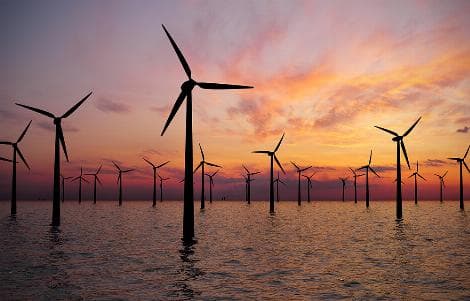
French energy major TotalEnergies (TTE.PA, TTE.L) is moving forward with plans to develop a 1.5-gigawatt wind farm off the coast of Normandy, France, the largest renewables project in the country.

TotalEnergies said Thursday its wholly owned project company Centre Manche Energies submitted the application for single authorization of the project, which was initially awarded by the state in September 2025 to TotalEnergies and RWE (RWE.F). The German utility later exited the consortium.

The application includes technical and environmental studies, a preliminary design for the wind farm, and the proposed installation program. Once completed, the project is expected to produce six terawatt-hours of electricity annually, enough to power more than 1 million homes.

The three-year project is expected to require an investment of 4.5 billion euros and create 2,500 jobs during the construction phase. TotalEnergies said it plans to tap the local workforce, which possesses expertise in the offshore wind sector.

In addition, TotalEnergies plans to source wind turbines and electric cables from European suppliers, a move expected to provide further support to regional industry and manufacturing.

Centre Manche Energies will pursue consultations with local authorities, environmental groups, seafarers, and the public to ensure the project is integrated into the regional economy and community, TotalEnergies said.

TotalEnergies shares rose 4% in early trading in London, while the stock posted a modest gain in Paris.


Related Articles

TotalEnergies Advances 1.5-GW, EUR4.5 Billion Wind Project in France
US Markets

TotalEnergies Advances 1.5-GW, EUR4.5 Billion Wind Project in France

French energy major TotalEnergies (TTE.PA, TTE.L) is moving forward with plans to develop a 1.5-gigawatt wind farm off the coast of Normandy, France, the largest renewables project in the country.TotalEnergies said Thursday its wholly owned project company Centre Manche Energies submitted the application for single authorizaiton of the project, which was initially awarded by the state in September 2025 to TotalEnergies and RWE (RWE.F). The Gernan utility later exited the consortium.The application includes technical and environmental studies, a preliminary design for the wind farm, and the proposed installation program. Once completed, the project is expected to produce six terawatt-hours of electricity annually, enough to power more than 1 million homes.The three-year project is expected to require an investment of 4.5 billion euros and create 2,500 jobs during the construction phase. TotalEnergies said it plans to tap the local workforce, which possesses expertise in the offshore wind sector.In addition, TotalEnergies plans to source wind turbines and electric cables from European suppliers, a move expected to provide further support to regional industry and manufacturing.TotalEnergies shares rose 4% in early trading in London, while the stock posted a modest gain in Paris.

$RWE.F$TTE.L$TTE.PA
Australia First-Quarter Capital Outlays Rise on Data Center Building
US Markets

Australia First-Quarter Capital Outlays Rise on Data Center Building

Boosted by construction and installation of data centers, Australia's private-sector capital outlays in the first quarter rose to the highest level in nearly 12 years, reported the Australia Bureau of Statistics (ABS) on Thursday.The nation's private-sector capital outlays struck a seasonally A$52.6 billion in the the first quarter, up 6.5% from the fourth quarter, and up 14.6% on year, said the ABS.In general, private-sector capital outlays refer to expenditures in business buildings, plant and equipment, but also refer to items such as software or patent acquisition. This spending creates or amplifies a business asset, increasing overall operational capacity or efficiency.Higher capital outlays are considered a positive, a sign of business confidence and promise for greater productivity in the private sector.As in many other economies, private-sector capital outlays in Australia in the first quarter rose on the back of higher expenditures on data centers.The jump in overall capital outlays was the result of "investment in data center equipment, specifically server racks and processing equipment, significantly boosting overall investment figures," said an ABS official, in a prepared statement.Australian first quarter private-sector investment in information media and telecommunications rose 96.1% from the fourth quarter, reaching a new sector record-high level, and the largest surge of any industry grouping, reported ABS.Australian enterprises also expect to continue to boost capital outlays in the seasons ahead."Businesses revised their expected capex (capita expenditures) for 2026-27 to be up by 9.9% on the first estimate last quarter," said the ABS, largely citing planned spending on data centers.The ABS also reported that total all-industry capital outlays in plant and equipment rose 18.1% in the first quarter from the fourth, and gained 31% on year, while outlays on buildings declined 3.8% on quarter, but were still up 0.8% on year.Australia's first-quarter capital outlays were the highest on record excepting levels posted in 2012, during the peak of a mining and oil-and-gas resources investment boom.

$^AXJO
Australian Household Spending Falls 1.1% in April Amid Travel Pullback
US Markets

Australian Household Spending Falls 1.1% in April Amid Travel Pullback

Household spending in Australia dropped in April as people scaled back on travel amid the Middle East crisis.Spending fell 1.1%, representing a downturn from the 1.6% rise recorded in March, according to data published by the Australian Bureau of Statistics (ABS) on Thursday.The decline was steeper than the market's estimate of a 0.5% drop, but smaller than the 1.3% and 1.4% decreases forecasted by ANZ and the Commonwealth Bank, respectively.The downturn was largely attributed to a 4.7% drop in transport spending, with air travel being the biggest contributor. Consumers reduced their travel due to uncertainties surrounding the conflict in Iran, which drove up airfares and jet fuel costs.However, fuel spending eased compared with March after the Federal Government halved the fuel excise duty, a measure that took effect on April 1."The fuel excise discount provided some immediate relief to household budgets. We also saw spending on public transport ease in states offering free travel, particularly Victoria and Tasmania," ABS head of business statistics Tom Lay said.The ABS noted that "a rise in new vehicle sales provided a partial offset to the broader transport decline.""Our broader view remains that consumers have been broadly resilient to the fuel shock and rising interest rates so far, but there are emerging signs of softness," Commonwealth Bank economist Harry Ottley said in a note."The weakness in spending - we estimate the ex-fuel spend over the past six months to be only around 1% higher - does sit reasonably consistently with the weakness in consumer confidence, the low level of auction clearance rates and slightly better than expected inflation data for April. The latter suggests that firms might be struggling to pass price and cost increases through to consumers," Adam Boyton, ANZ's head of Australian economics, said in a separate note.Spending on other commodities also fell, with food and apparel dipping 1.3% and 2.2%, respectively, according to the ABS. Meanwhile, spending on services increased, with health, as well as hotels, cafes, and restaurants, each rising by 0.5%.

$^AXJO