
FINWIRES · TerminalLIVE
FINWIRES

Planet Fitness Growth Could Be Pressured Amid Rising High Volume, Low Price Competition, Deutsche Bank Says

By
Planet Fitness Growth Could Be Pressured Amid Rising High Volume, Low Price Competition, Deutsche Bank Says

Planet Fitness' (PLNT) growth and market share in the high volume, low price fitness space could take a hit in the coming years amid a projected rise in competition from new entrants and smaller, well-established companies, Deutsche Bank said Monday.

Although the fitness center operator continues to be the industry leader in terms of "sheer" size and scale, it is facing challenges from new companies, as well as smaller, well-established names in the high volume, low price -- or HVLP -- market, Deutsche Bank analyst Chris Woronka said in a note to clients.

"We expect this trend to accelerate which, if correct, has key implications for HVLP market share over the next several years," Woronka wrote, adding that Planet Fitness' same-store sales and net unit growth could take a hit from the projected development.

The company benefits from a massive footprint and a "generally stable" franchisee operator base, but growth could become much harder if gym-goers start prioritizing better workout experiences over low prices, according to the note.

HVLP fitness competitors are trying to lure members away with differentiated perks such as larger clubs, modern ambiance, connected fitness tracking and dynamic pricing models. This indicates budget-conscious gym-goers may be increasingly willing to pay a bit more for a premium experience, Deutsche Bank said.

While some investors are worried that Planet Fitness could see reduced net membership growth if thrifty consumers decide to cancel their memberships, "the real risk" is that an increasing number of consumers are seeking a more premium fitness experience, Woronka said.

"While difficult to prove at this time, we think the early evidence is in how newer entrants to the HVLP space are building their facilities, in terms of size, offerings, and flexibility," the analyst said. "If we are correct, a long-anticipated recovery of the value-seeking customer may not be much of a benefit at all to (Planet Fitness)."

The company's shares were down 4.8% in Monday late-afternoon trade, bringing its year-to-date losses to nearly 57%.

Last month, Planet Fitness cut its full-year adjusted earnings outlook to reflect higher interest expense. Separately, connected fitness company Peloton (PTON) forecast fiscal 2027 revenue below Wall Street's estimates following last year's subscription price hike.

Earlier this month, Morgan Stanley downgraded its rating on the Peloton stock, citing potential "structural" challenges that will likely impact its gross additions. "We believe this is a reflection of structural headwinds as consumers are shifting towards strength training and gyms," the brokerage said in a note to clients at the time.

Price: $47.16, Change: $-2.33, Percent Change: -4.71%
What else is happening in US Markets?

RBA's Research Finds International GDP Forecasts Often Fail Rationality Tests, Differ Little in Accuracy
US Markets

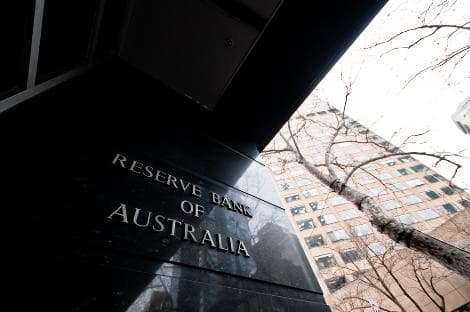
RBA's Research Finds International GDP Forecasts Often Fail Rationality Tests, Differ Little in Accuracy

Real gross domestic product growth forecasts by major international organizations frequently fail standard tests of forecast rationality, though differences in accuracy between the organizations are rarely statistically significant, according to a Monday research discussion paper by the Reserve Bank of Australia.The paper examined forecasts by four international organizations, the International Monetary Fund, the World Bank, the European Commission and the Organisation for Economic Co-operation and Development, alongside private-sector forecasts, noting that such projections influence policy decisions by governments and receive significant attention from markets.When comparing accuracy between organizations for individual economies, the researchers found that one forecaster almost always outperformed another over the sample period, but those differences were rarely statistically significant, meaning they could have been by chance rather than reflecting superior capability.By contrast, each forecaster showed statistically significant departures from forecast rationality for the majority of economies, meaning their forecasts did not minimize the chosen measure of forecast error given the information available at the time, the paper added.Common reasons included optimistic bias, overly large revisions and forecasts that were too extreme, with the researchers noting that accuracy would have improved had forecasts been slightly lower, revisions smaller and extremes avoided, though this does not mean the forecasts were irrational in the everyday sense, per the paper.The researchers explored two explanations particularly relevant to international organizations, the first being that forecasts are often conditional on assumed future outcomes for a set of explanatory variables, which can make them look irrational under the standard test.The second explanation is that organizations may produce modal forecasts, reflecting their view of the most likely outcome, while standard rationality tests assume a probability-weighted average forecast, with evidence suggesting the modal forecasts tend to run slightly higher, the paper added.The researchers said both practices are reasonable, and concluded that while failures of rationality tests may point to ways of improving accuracy, they could also reflect legitimate forecasting practices, making rigorous evaluation essential to interpreting performance and guiding better methods.

ASX 200
China Widens Online Travel Crackdown With Four New Probes After Trip.com Fine
US Markets

China Widens Online Travel Crackdown With Four New Probes After Trip.com Fine

China opened investigations into four online hotel and travel booking platforms, including units of Alibaba Group (HKG:9988) and Meituan (HKG:3690), over suspected "illegal practices" that may violate the country's antitrust laws.The targets of the investigation are Hangzhou Taomei Aviation Service, Tongcheng Network Technology, Tujia Online Information Technology (Tianjin), and Beijing Sankuai Information Technology, according to a Saturday statement from the Beijing Municipal Administration for Market Regulation on Weixin.The move extends a regulatory crackdown against the travel sector that led to a 5.18 billion yuan penalty against Trip.com Group (HKG:9961) in July.China's State Administration for Market Regulation fined Trip.com Group "for abusing its dominant market position and engaging in monopolistic practices." The penalty comprised 1.66 billion yuan in illegal gains and a fine of 3.52 billion yuan, equivalent to 7.5% of its 2025 domestic revenue in China, the regulator said at the time.Trip.com had accepted the decision and said it would adopt rectification measures.The probes follow a broader review of the online travel sector and a meeting of hotel and travel booking platform operators hosted by the SAMR and the Ministry of Culture and Tourism, according to state-run Xinhua News Agency.No penalties or findings against the four platforms have been announced.Xinhua said the platforms were urged to review past cases, carry out self-examinations and prevent practices such as exclusive partnerships and "lowest price across the entire network" arrangements. They were also told to strengthen compliance, improve long-term compliance mechanisms and protect consumers' rights.The newly targeted companies said they will cooperate, with separate statements issued following the market watchdog's notice, according to China News Service.The China Hospitality Association backed the investigations, urging transparency in platform algorithms, standardized fees and orderly competition, according to Jiemian.

HKG:3690HKG:9988
Update: Wall Street Wavers, Logs Mixed Weekly Performance
US Markets

Update: Wall Street Wavers, Logs Mixed Weekly Performance

(Updates with market moves at the end of the day, and other changes, if any.)US stocks struggled for direction on Friday as Wall Street turned in a mixed performance for the week, with traders pondering the path forward for inflation and interest rates.The Nasdaq Composite closed 0.4% higher at 26,522.54, while the S&P 500 advanced 0.2% to 7,650.50. The Dow Jones Industrial Average fell 0.2% to settle at 51,682.64. Among sectors, utilities led the laggards, while technology paced the gainers.This week, the Dow lost 1.7%, marking its third consecutive weekly decline. The Nasdaq gained 0.7%, while the S&P 500 ticked down 0.1%.Earlier in the week, the Federal Reserve raised its benchmark lending rate by 25 basis points in a unanimous vote to combat sticky inflation, marking its first hike since 2023. It signaled another increase later this year.Kansas City Fed President Jeffrey Schmid said Friday that energy prices are not the only factor driving inflation higher."Higher oil prices have been an important driver of elevated inflation, but it is important to acknowledge that our inflation problem is not just about energy," Schmid said. "Inflation excluding energy has also been running hot and a broad range of goods and services are showing price growth inconsistent with our price stability target."Higher oil prices have slowed the progress of US inflation toward the Fed's 2% target, Morgan Stanley said, as it raised its year-end projection for the central bank's preferred price gauge.Morgan Stanley expects two more Fed rate hikes of 25 basis points each, one in December and the other in March.Markets are now pricing in a 55% probability that the central bank will increase interest rates by 25 basis points in October, while the remaining odds point to a pause, according to the CME FedWatch tool.Treasury yields were higher, with the 10-year rate up 5.9 basis points at 5% and the two-year rate rising seven basis points to 4.76%.In other economic news, US industrial production unexpectedly held steady in August as manufacturing output fell after rising for seven straight months, Federal Reserve data showed.West Texas Intermediate crude oil was down 2.1% at $99.80 a barrel in Friday late-afternoon trade, while Brent dropped 1.6% to $103.19.In company news, Nucor (NUE) shares slumped 6.3%, the worst performer on the S&P 500, after the steelmaker overnight issued a downbeat earnings outlook for its fiscal third quarter.Apple (AAPL) shares edged down 0.3%. The tech giant's recently launched iPhone 18 is seeing "muted" initial wait times in major global markets, UBS Securities said in a note.Berkshire Hathaway (BRK.A, BRK.B) said Friday that Warren Buffett stepped down as chairman of the conglomerate, with his son Howard Buffett succeeding the 96-year old billionaire. The company's class A shares was flat, while its class B shares rose 0.1%.Spot gold advanced 0.9% to $4,379.66 per troy ounce, while silver gained 1.4% to $66.99 per ounce.

Dow JonesNasdaq CompositeS&P 500$AAPL$BRK.A$BRK.B$NUE