FINWIRES · TerminalLIVE
FINWIRES

RBA's Research Finds International GDP Forecasts Often Fail Rationality Tests, Differ Little in Accuracy

By
RBA's Research Finds International GDP Forecasts Often Fail Rationality Tests, Differ Little in Accuracy

Real gross domestic product growth forecasts by major international organizations frequently fail standard tests of forecast rationality, though differences in accuracy between the organizations are rarely statistically significant, according to a Monday research discussion paper by the Reserve Bank of Australia.

The paper examined forecasts by four international organizations, the International Monetary Fund, the World Bank, the European Commission and the Organisation for Economic Co-operation and Development, alongside private-sector forecasts, noting that such projections influence policy decisions by governments and receive significant attention from markets.

When comparing accuracy between organizations for individual economies, the researchers found that one forecaster almost always outperformed another over the sample period, but those differences were rarely statistically significant, meaning they could have been by chance rather than reflecting superior capability.

By contrast, each forecaster showed statistically significant departures from forecast rationality for the majority of economies, meaning their forecasts did not minimize the chosen measure of forecast error given the information available at the time, the paper added.

Common reasons included optimistic bias, overly large revisions and forecasts that were too extreme, with the researchers noting that accuracy would have improved had forecasts been slightly lower, revisions smaller and extremes avoided, though this does not mean the forecasts were irrational in the everyday sense, per the paper.

The researchers explored two explanations particularly relevant to international organizations, the first being that forecasts are often conditional on assumed future outcomes for a set of explanatory variables, which can make them look irrational under the standard test.

The second explanation is that organizations may produce modal forecasts, reflecting their view of the most likely outcome, while standard rationality tests assume a probability-weighted average forecast, with evidence suggesting the modal forecasts tend to run slightly higher, the paper added.

The researchers said both practices are reasonable, and concluded that while failures of rationality tests may point to ways of improving accuracy, they could also reflect legitimate forecasting practices, making rigorous evaluation essential to interpreting performance and guiding better methods.


What else is happening in US Markets?

Update: Wall Street Wavers, Logs Mixed Weekly Performance
US Markets

Update: Wall Street Wavers, Logs Mixed Weekly Performance

(Updates with market moves at the end of the day, and other changes, if any.)US stocks struggled for direction on Friday as Wall Street turned in a mixed performance for the week, with traders pondering the path forward for inflation and interest rates.The Nasdaq Composite closed 0.4% higher at 26,522.54, while the S&P 500 advanced 0.2% to 7,650.50. The Dow Jones Industrial Average fell 0.2% to settle at 51,682.64. Among sectors, utilities led the laggards, while technology paced the gainers.This week, the Dow lost 1.7%, marking its third consecutive weekly decline. The Nasdaq gained 0.7%, while the S&P 500 ticked down 0.1%.Earlier in the week, the Federal Reserve raised its benchmark lending rate by 25 basis points in a unanimous vote to combat sticky inflation, marking its first hike since 2023. It signaled another increase later this year.Kansas City Fed President Jeffrey Schmid said Friday that energy prices are not the only factor driving inflation higher."Higher oil prices have been an important driver of elevated inflation, but it is important to acknowledge that our inflation problem is not just about energy," Schmid said. "Inflation excluding energy has also been running hot and a broad range of goods and services are showing price growth inconsistent with our price stability target."Higher oil prices have slowed the progress of US inflation toward the Fed's 2% target, Morgan Stanley said, as it raised its year-end projection for the central bank's preferred price gauge.Morgan Stanley expects two more Fed rate hikes of 25 basis points each, one in December and the other in March.Markets are now pricing in a 55% probability that the central bank will increase interest rates by 25 basis points in October, while the remaining odds point to a pause, according to the CME FedWatch tool.Treasury yields were higher, with the 10-year rate up 5.9 basis points at 5% and the two-year rate rising seven basis points to 4.76%.In other economic news, US industrial production unexpectedly held steady in August as manufacturing output fell after rising for seven straight months, Federal Reserve data showed.West Texas Intermediate crude oil was down 2.1% at $99.80 a barrel in Friday late-afternoon trade, while Brent dropped 1.6% to $103.19.In company news, Nucor (NUE) shares slumped 6.3%, the worst performer on the S&P 500, after the steelmaker overnight issued a downbeat earnings outlook for its fiscal third quarter.Apple (AAPL) shares edged down 0.3%. The tech giant's recently launched iPhone 18 is seeing "muted" initial wait times in major global markets, UBS Securities said in a note.Berkshire Hathaway (BRK.A, BRK.B) said Friday that Warren Buffett stepped down as chairman of the conglomerate, with his son Howard Buffett succeeding the 96-year old billionaire. The company's class A shares was flat, while its class B shares rose 0.1%.Spot gold advanced 0.9% to $4,379.66 per troy ounce, while silver gained 1.4% to $66.99 per ounce.

Dow JonesNasdaq CompositeS&P 500$AAPL$BRK.A$BRK.B$NUE
Sneaker Maker On Partners With Kylian Mbappe as Football Star Parts Ways With Nike
US Markets

Sneaker Maker On Partners With Kylian Mbappe as Football Star Parts Ways With Nike

On Holding (ONON) has signed on soccer star Kylian Mbappe, marking the Swiss sportswear company's entry into the football market as Mbappe's relation with Nike (NKE) ended.On said Friday that the 2026 FIFA World Cup top goal scorer will be involved in the development of soccer footwear and apparel. Mbappe will also serve as a global ambassador for On, "extending the partnership beyond football into movement, performance, and contemporary design," according to the company."Football needs new ideas and a challenge to what is possible," On co-Chief Executive David Allemann said, describing Kylian as "the perfect partner to dream what football can become."Financial terms of the partnership weren't disclosed."I want to bring my experience and perspective into what we create, push what's possible through innovation, and always stay true to the joy of football," the Real Madrid player said in the company statement.Mbappe's contract with Nike ended in July, marking the end of their two-decade collaboration, according to news reports. Nike did not respond to' request for comment."We are proud of what we achieved together on and off the pitch," Nike said in a statement to CNBC. "As he moves into the next phase of his career, we wish him continued success for what comes next."Nike lost 2026 World Cup winner Spain's Lamine Yamal to Adidas more than two years ago.On said Friday it hired former French football player Thierry Henry as director of football."We are bullish on (On's) opportunity to utilize LightSpray to create innovative products while expanding brand awareness through such an important global sport," Truist Securities analyst Joseph Civello said in a note, referring to the company's fully-automated manufacturing technology.On's US-listed shares closed 0.3% lower on Friday, while Nike fell 2.3%.Last month, On tempered its full-year sales growth outlook as its second-quarter revenue fell short of market estimates.Price: $27.37, Change: $+0.04, Percent Change: +0.13%

$NKE$ONON
Share of Home Sales With Concessions in Quarter Through August Hits Highest for That Period Since At Least 2020, Redfin Says
US Markets

Share of Home Sales With Concessions in Quarter Through August Hits Highest for That Period Since At Least 2020, Redfin Says

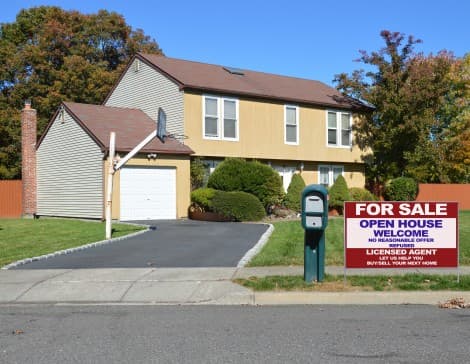
The share of US home sales in the quarter through August in which sellers gave concession to buyers reached the highest for that period since at least 2020, Redfin said Friday.Sellers gave concessions in 44.7% of deals during the three months ended Aug. 31, up from 42.6% a year earlier and marking the highest share for the period since at least 2020, the online real estate brokerage said.A concession is considered anything that a seller provides to help reduce a buyer's total cost of purchasing a home, but excludes a lower listed price or price reductions due to negotiations, according to Redfin.The period marked the strongest buyer's market since 2013, as a growing supply of homes met a shrinking pool of active buyers. Sellers are offering to handle closing costs, cover repair bills, or add extra incentives to close a deal, the report showed."Buyers know they can be picky. They're asking for every concession under the sun," said Amanda Peterson, a Redfin Premier agent in Dallas. "That's especially true for newly built homes. Builders are offering $10,000 or $20,000 in concessions, buying down mortgage rates and throwing in appliances."Eight of the 10 markets where concessions are most common were in the Sun Belt, led by Atlanta, where sellers offered concessions in 72.8% of the deals. Concessions were least common in strong housing markets like the Bay Area and New York, led by San Jose, California, where just 4.2% of sellers gave concessions, according to Redfin.Some 15.8% of US homes that sold in the three months through August had a price drop in addition to a concession, also the highest share for that period, the brokerage said.Separately, Zillow Group (Z, ZG) said Friday it now expects its count of existing home sales to drop 3.5% year over year in the fourth quarter, compared with its prior outlook of a 3.2% decrease. For the full-year, the firms expects sales to rise 1.2% from 2025, it said in its report.Earlier this week, the National Association of Home Builders and Wells Fargo said US homebuilder confidence this month hit its lowest level since September 2025 amid elevated mortgage rates and increasing material costs.Price: $30.04, Change: $-0.06, Percent Change: -0.20%

$Z$ZG