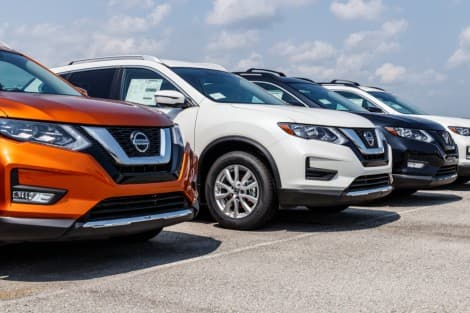
As electric vehicle (EV) sales begin rise in Japan, auto giants Mitsubishi Motors and Nissan have unveiled a demonstration project to allow battery-car owners to sell power back to the grid, reported Nikkei Asia on Thursday.
As envisioned, EV owners would charge their vehicles when grid-power was cheap, and sell power back at peak prices, which usually happens during late business hours on hot days.
The new plan may help boost EV sales in Japan, where consumers have not embraced battery cars, until recently.
In the first quarter of 2026, the nation's domestic EV sales surged 80% on year, reaching a record 26,959 units. However EV sales in the first quarter still made up just slightly more than a 2% market share in Japan, according to industry statistics.
EVs and plug-in hybrids accounted for a combined 3.2% of annual passenger car sales in 2025, according to the Japan Automobile Dealers Association.
In the Mitsubishi Motors-Nissan demonstration project, participants are able to remotely control the charging and discharging of power at their vehicles via a dedicated system, as long as their vehicles are plugged into the grid, through special hook-ups. The rates earned by selling surplus power are linked to market grid prices.
Power rates in Japan fluctuate significantly, through the 24-hour cycle.
On a single day in May, the highest price in Tokyo was 30 yen per kilowatt-hour at 6:30 pm, while the lowest was 0.7 yen per kWh at noon, reported Nikkei Asia.
Paradoxically, due to solar power inputs into Japan's grids, power rates are often lowest near noon when grids are "full," a situation that mirrors that in Europe, where some solar power-operators are forced to give away electricity during sunny days.
In a press statement, Nissan said it has extensive experience in vehicles-to-grid (V2G) power arrangements, with a total of 40 pilot projects conducted globally.
Nissan has announced it plans to start selling a bidirectional charger in 2028.
Toyota Motor and Honda Motor have also tested the waters of the EV-to-grid market, with Toyota conducting vehicle-to-grid demonstration tests in the US states of Maryland and Texas, reported Nikkei Asia.
Additionally, the US-based EV-manufacturer Tesla has introduced a system that allows Cybertruck owners to buy and sell electricity by connecting to the power grid.
There are challenges to the EV-to-grid power transfer scenarios, including the fact that batteries degrade in proportion to the frequency of charging and discharging power. In other words, more charging and discharging of EV batteries would cut battery lifetimes.
In addition, the special equipment to allow the two-way transfer of power is relatively expensive, reported Nikkei Asia.