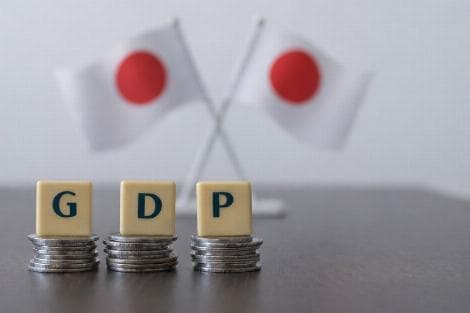
Japan's economy performed better than the government initially estimated in the second quarter of 2026, with businesses pulling back on spending by less than initially reported.
The economy grew at an annualized rate of 1.4% in the second quarter, versus the initial 1.1% estimate, according to figures from the Cabinet Office on Tuesday.
While the latest print beat the consensus forecast of 1.1%, according to Trading Economics, it still softened from the revised 1.8% growth in the first quarter.
The improvement came as capital expenditure fell at a softer rate than previously estimated at 0.9% versus 1.2%.
Overall private consumption was flat, matching the earlier estimate, while public consumption fell 0.8%, also unchanged from the previous data.
Trade also did its part to keep the headline number positive, contributing 0.5% to the overall annualized GDP growth. Exports of goods and services rose 0.4% in Q2, softer than the preliminary estimate of 0.5%, while imports fell at a sharper-than-expected rate of 1.7% versus 1.5% previously.
Elsewhere, government spending was revised modestly higher at 1.7% from 1.6%, while public investment came in weaker than first reported, falling 0.5%, versus the previous 0.1% estimated decline.
The revised figures arrive over a week before the Bank of Japan's Sept. 17-18 policy meeting, with analysts expecting a 25 basis-point rate hike to 1.25%, according to Trading Economics.
At its July meeting, the central bank held its short-term policy rate steady at 1%, leaving borrowing costs at their highest point since September 1995 following a 25 basis-point hike earlier in June.
Last week, BOJ policy board member Hajime Takata urged the central bank to adopt a data-dependent approach to future interest rate hikes, calling on policymakers to assess domestic financial conditions and developments in overseas economies.