
FINWIRES · TerminalLIVE
FINWIRES

Investor Homebuying Activity Holds Steady in 2025 as Selling Eases for First Time in 2 Years, Realtor.com Says

By
Investor Homebuying Activity Holds Steady in 2025 as Selling Eases for First Time in 2 Years, Realtor.com Says

Investor homebuying activity held largely steady last year, while selling eased for the first time in two years as sales reached a multi-decade low, News Corp's (NWS, NWSA) Realtor.com said Tuesday.

Investors bought approximately 534,000 homes in 2025, a 0.7% year-over-year gain that raised their market share to 11.3% from 11% in 2024, according to the online real estate portal. Investors sold 442,000 properties last year, 1.5% fewer than the previous year and the lowest count since 2020.

"The 2025 data describes an investor market that has found a new floor rather than continuing to retreat," Realtor.com said, adding that the investor purchase share has now held above 11% for three straight years. "With small investors comprising two-thirds of all investor activity, that floor is unlikely to erode quickly even if financing conditions remain challenging."

The share of investor sellers held at 9.3% last year, matching its 2024 level, though the absolute count of investor sales fell to 442,000 from 448,000, the report showed.

Small investors, or corporate entities with fewer than 10 total purchases, saw their share of all investor purchases rise to about 63% in 2025, the highest concentration of small-investor activity in more than 15 years. Mega investors, or those with 350 or more purchases, accounted for only 7.5% of investor purchases by 2025, their smallest share since 2011, according to the report.

"Small investors are the stable floor beneath the more volatile institutional activity," Realtor.com Senior Economist Hannah Jones said. "They purchase at a median of $330,000 nationally -- about 25% below the overall market median of $440,000 -- meaning they are systematically active in the entry-level tier where first-time buyers are also competing.

Region-wise, the US Midwest and Sun Belt drove investor activity last year, the report showed.

"The composition shift away from mega investors removes one source of potential future surge, but it also removes the most likely source of large-scale market exit," Realtor.com said. "Absent a significant change in the rental economics that sustain small-investor returns, or policy intervention targeting corporate ownership at the local level, 2025's elevated-but-stable investor share appears to represent the new baseline."

Related Articles

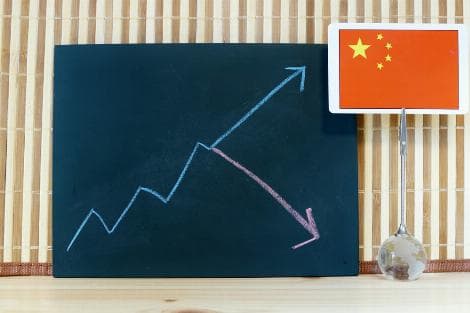
China Posts Wider Fiscal Deficit in First Five Months Despite Revenue Acceleration
US Markets

China Posts Wider Fiscal Deficit in First Five Months Despite Revenue Acceleration

China booked a general public budget deficit of 1.34 trillion yuan in the first five months of 2026, as national expenditure of 11.39 trillion yuan outpaced revenue of 10.05 trillion yuan despite an acceleration in tax collections.The deficit widened from 1.14 trillion yuan in the January-April period, with May alone adding about 1.71 trillion yuan in revenue against about 1.91 trillion yuan in spending, according to data from the Ministry of Finance on Sunday.This suggests a single-month deficit of about 200.7 billion yuan in May.The pace of expenditure growth, however, slowed to 0.8% year over year through May from 1.3% through April, suggesting the gap may begin to narrow in the coming months as revenue momentum builds.In March, Fitch Ratings forecast that China's fiscal deficit will slightly narrow as policy support for the economy is predicted to ease modestly in 2026."We expect China's fiscal deficit to decline slightly to 7.3% of GDP in 2026 on a like-for-like basis under Fitch's fiscal deficit measure, from 7.6% in 2025, but to remain elevated," Fitch said at the time.During the government's "Two Sessions" congress in March, authorities announced that China will aim to increase the government deficit by 230 billion yuan in 2026 over last year as part of its economic stimulus measures.China set a deficit-to-GDP ratio of around 4% this year, with total government deficit projected at 5.89 trillion yuan.General public budget revenue rose 4% year over year in the January-May period, accelerating from the 3.5% pace recorded through April.National tax revenue climbed 4.4% to 8.26 trillion yuan, outpacing the 2.2% rise in non-tax revenue to 1.78 trillion yuan.Among the main growth drivers were stamp duties, which jumped 35.8% year over year in the January-May period to 242.6 billion yuan, with securities transaction stamp duty alone surging 88.8% to 126.2 billion yuan.Value-added tax on imported goods and individual income tax also delivered strong gains, rising 10.4% and 12.2%, respectively, suggesting robust cross-border trade and wages.Vehicle purchase tax climbed 12.6% to 94.3 billion yuan amid increased adoption of new-energy vehicles. NEV sales in May alone accounted for 56.9% of overall new car sales in China, compared with 50.8% in 2025 and 40.9% in 2024, according to the China Association of Automobile Manufacturers.Domestic value-added tax jumped 6.2% to 3.28 trillion yuan, while corporate income tax inched up 0.2% to 2.19 trillion yuan.In terms of spending, China's total general public budget expenditure during the period was up 0.8% year over year to 11.39 trillion yuan.In breakdown, spending among central and local governments and the general public jumped 6.5% year over year to 1.68 trillion yuan, while spending among local governments inched down 0.1% to 9.71 trillion yuan.The latest data highlighted the ongoing financial strain faced by local governments.The South China Morning Post on Monday noted that local governments in China have faced worsening fiscal stress in recent years due to a prolonged property downturn that continues to weigh heavily on land-sales revenues, which previously served as a key revenue source.In the January-May period, while urban land use tax rose 3.6% to 122 billion yuan, farmland occupation tax fell 1.2% to 63.5 billion yuan.Earlier this month, China's State Council issued a plan to accelerate agricultural and rural modernization during the 15th Five-Year Plan through 2030. The plan includes speeding up the modernization of agriculture and rural areas.

Shanghai Composite^SZSE
Australian Business Activity Stabilizes in June, But Weak Confidence, Inflationary Pressures Continue to Weigh
US Markets

Australian Business Activity Stabilizes in June, But Weak Confidence, Inflationary Pressures Continue to Weigh

Australia's manufacturing sector accelerated its growth in June, according to preliminary estimates, even as new orders continued on a downward trajectory amid high market uncertainty.The S&P Global Flash Australia Manufacturing Purchasing Managers' Index clocked in at 51.2 for June, up from a reading of 50.7 in May, while the Flash Services PMI Business Activity Index improved to 49.9 from 48.7 in May but remained below the 50 mark that separates growth from contraction, the index provider said Tuesday.The Flash Composite PMI Output Index, which combines data from both the manufacturing and services industries, rose to 49.8 in June from 48.7 in the previous month, pointing to a near-stabilization of business activity.The latest readings come as business confidence in Australia declined to the lowest since March 2020. Excluding that pandemic-affected month, sentiment was at its weakest level since S&P began collecting the data just over a decade ago.Manufacturing production continued to fall with the Flash Manufacturing PMI Output Index edging lower to 48.9 from 49 in May. New orders have declined continuously since March, and new export orders were also lower at the end of the second quarter.Following a decline in May, the country saw a renewed increase in employment in June, with modest gains in staffing levels in both the manufacturing and service sectors. A larger workforce amid falling new orders meant that businesses were able to deplete backlogs again, S&P Global said.Although inflationary pressures remain relatively elevated as input costs surged in June, the rate of inflation eased for the second straight month and was at the lowest level since March. This trend could continue as oil prices drop following a peace deal between the US and Iran, said Andrew Harker, economics director at S&P Global Market Intelligence."Any improvement in shipping flows through the Strait of Hormuz would also help to alleviate the severe supply-chain disruption still impacting manufacturers," Harker said, adding that the latest PMI data paints "a mixed picture" for Australian businesses.

ASX 200
Update: Equities Mixed, Oil Drops as US-Iran Talks Move Forward
US Markets

Update: Equities Mixed, Oil Drops as US-Iran Talks Move Forward

(Updates with market moves at the end of the day.)US benchmark equity indexes closed mixed Monday, and oil prices fell as markets evaluated the impact of the latest talks between Washington and Iran.The Nasdaq Composite dropped 1.3% to 26,166.6, and the S&P 500 fell 0.4% to 7,472.8. The Dow Jones Industrial Average rose 0.3% to 51,712.7.Among sectors, communication services posted the biggest drop, while real estate paced the gainers.Brent crude oil fell 2.9% to $78.20 a barrel in late-afternoon trade, while West Texas Intermediate dropped 2.2% to $74.20.Iran has agreed to admit International Atomic Energy Agency inspectors into the country, news outlets reported, citing US Vice President JD Vance."That is a major milestone for the American people, and the first step in permanently denuclearizing or permanently ending a nuclear weapons program in Iran, and that's exactly what we wanted to do," Vance reportedly said."Everybody is fully aware that Iran will agree to have major weapons inspections in order to ensure 'nuclear honesty' long into the future," US President Donald Trump said in a social media post.On the status of the Strait of Hormuz, Vance said the crucial waterway is open, and negotiations with Iran are focused on setting up a "coordination mechanism" for demining and resuming trade, CNN reported."Recent developments show that moving towards a more permanent deal will be challenging, with very real risks of a flare-up in hostilities during the 60-day ceasefire," ING Bank said in a report. "For energy markets, the key factor is still whether oil and LNG flows from the Persian Gulf continue to recover, despite all the rhetoric."US Treasury yields rose in late-afternoon trading, with the two-year rate last seen up 5.1 basis points at 4.23% and the 10-year rate gaining 5.8 basis points to 4.51%.In company news, Super Micro Computer (SMCI) shares jumped 16%, the top performer on the S&P 500. The AI-server maker is launching a high-performance computing data center offering based on Nvidia's (NVDA) Vera Rubin NVL4 platform.Space Exploration Technologies (SPCX) fell 16%. The company agreed to grant Reflection AI access to its computing infrastructure for up to $6.3 billion, CNBC reported.Separately, SpaceX launched its first offering of senior unsecured notes to repay outstanding bridge loan debt and cover general corporate expenses.Micron Technology (MU) shares rose 6.8%. The company signed an agreement with Anthropic that includes memory and storage supply, while the semiconductor manufacturer announced an investment in the AI chatbot Claude maker.Gold fell 0.9% to $4,206.80 per troy ounce, while silver dropped 1.4% to $65.89 per ounce.

Dow JonesNasdaq CompositeS&P 500$MU$SMCI$SPCX