FINWIRES · TerminalLIVE
FINWIRES

Indonesia's Trade Surplus Narrows to $89 Million in April; Exports Rebound Sharply

By
Indonesia's Trade Surplus Narrows to $89 Million in April; Exports Rebound Sharply

Indonesia's trade surplus narrowed to $89.1 million in April, as strong growth in both exports and imports left the external balance positive, according to data released Tuesday by Statistics Indonesia.

The consensus estimate was for a surplus of $1.50 billion, according to Investing.com.

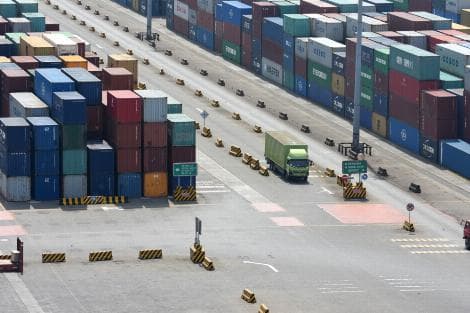
Exports rose 22% year over year to $25.3 billion in April, recovering from the 3.1% drop in March, and beating the consensus forecast for an 8.8% growth. Non-oil and gas exports increased 23.4% to $24.2 billion.

Imports climbed 22.5% from a year earlier to $25.2 billion, significantly faster than the 1.51% increase in March, and against the consensus estimate for a 3.25% rise. Non-oil and gas imports rose 14.1% to $20.6 billion.

The April surplus was supported by a $3.53 billion surplus in non-oil and gas trade, which offset a $3.44 billion deficit in the oil and gas sector.

During the first four months of 2026, exports increased 5.5% year over year to $92.2 billion, while non-oil and gas exports rose 6.3% to $87.7 billion.

Imports rose 13.4% from a year earlier to $86.5 billion in January-April, with non-oil and gas imports increasing 12.7% to $73.58 billion.

Higher palm oil exports boosted manufacturing shipments during the period, while lower coal exports weighed on mining and other products.

China remained Indonesia's largest non-oil and gas export market during January-April, accounting for $22.8 billion of shipments, followed by the United States at $10.2 billion and India at $6.14 billion.

The trade data comes as Indonesia presses ahead with plans to centralize exports of key commodities under a new state-backed entity, a move that has raised concerns among natural resource producers over potential regulatory uncertainty.

Coordinating Economic Minister Airlangga Hartarto said coal, palm oil, and ferroalloy producers will begin submitting export-related documents to PT Danantara Sumberdaya Indonesia from June 1.

The company, a unit of sovereign wealth fund Danantara, is expected to assume specific export functions as early as September and no later than Jan. 1, 2027.

Danantara Chief Operating Officer Dony Oskaria said the new entity would operate transparently and accountably, including in the benchmarking of commodity prices during the transition.

"We will ensure that this company will be run transparently and can be monitored by everyone in Indonesia," Oskaria said, according to Reuters.

Indonesia is the world's largest exporter of thermal coal, palm oil, and nickel, with exports of the three commodities exceeding $65 billion last year.

The government has said the initiative is intended to strengthen oversight and coordination of strategic commodity exports.

Related Articles

Indonesian Inflation Accelerates to 3.08% in May, Topping Forecasts
US Markets

Indonesian Inflation Accelerates to 3.08% in May, Topping Forecasts

Indonesian inflation rose to 3.08% in May following a surge in food, beverage, tobacco, and personal care prices during the month, according to data from Statistics Indonesia published Tuesday.Analysts polled by Reuters estimated a rise of 2.97%. The latest print rebounded from an eight-month low of 2.42% recorded in April.Prices of food, beverages, and tobacco jumped 4.94% during the month, the statistics department, known officially as Badan Pusat Statistik, said.The commodities that helped raise food prices include fresh fish at 0.22%, rice at 0.18%, broiler chicken meat at 0.15%, as well as machine-rolled and hand-rolled clove cigarettes and white cigarettes.Prices of mineral water, oranges, and cucumbers, among others, helped contribute to the upward movement.Food and beverage services and restaurant prices jumped 2.24% year over year during the month. Rice meals with a side dish saw higher prices.Personal care services jumped 10.35% year over year during the month, driven by a 26.31% rise in other personal effects prices. according to the statistics department.Transport prices grew 2.3%, with airfares contributing a 0.14% rise, the department said.Information, communication, and financial services saw prices rise 0.97%, while health prices jumped 1.7%.On a monthly basis, consumer inflation was up 0.28%, compared with 0.13% a month earlier.The country's annual core component inflation rate was 2.59%, compared with the prior reading of 2.44%. Month over month, core consumer prices rose 0.22%, against the previous 0.23% increase.Indonesia's inflation data comes as economists doubt the robust growth narrative being pushed by President Prabowo Subianto, Bloomberg reported on May 29.Economists questioned what they called an unexpected jump in the archipelago's gross domestic product by 5.6%, calling the statistic an overstatement, the news outlet said.

$^JKSE
Thailand's Factory Activity in May Logs Weakest Growth in 12 Months
US Markets

Thailand's Factory Activity in May Logs Weakest Growth in 12 Months

Thailand's manufacturing activity growth slowed to a 12-month low in May as consumer confidence remained fragile amid domestic and external pressures.The headline S&P Global Thailand Manufacturing Purchasing Managers' Index (PMI) slipped to 52.6 from 52.7 in April, S&P Global reported Tuesday.While the figure remains above the neutral 50 mark separating expansion from contraction, it represents the slowest pace of improvement since July 2025.The slowdown was largely driven by sluggish output volumes, which expanded at their weakest rate in a year. Although new orders accelerated slightly compared with the prior month, firms noted persistent consumer hesitancy regarding spending.According to a survey conducted by the University of the Thai Chamber of Commerce, the country's consumer confidence slumped to 50.6 in April from 51.8 in the previous month, the lowest in eight months.Similarly, data provider Ipsos reported that consumer confidence in the first half of the year plunged to near-pandemic lows. The decline was driven by mounting economic pressures and geopolitical tensions, particularly the outbreak of war in Iran, which has disrupted global supply chains."Rising energy prices, cost-of-living concerns and declining confidence are changing consumer behavior in profound ways. As concerns shift, spending, saving and brand choices change as well. Businesses and brands must adapt quickly," said Pimtai Suwannasuk, Ipsos' senior client officer.The Ipsos report, published in May, also highlighted that political corruption remains the absolute top concern among Thai consumers.Consumers face even more pressure as manufacturers pass on elevated raw material and transportation costs, S&P Global noted. As a result, factory gate charges increased even as overall input cost inflation stabilized.External uncertainties continued to strain business capacity, leading to a 10th consecutive month of backlog accumulation, yet manufacturers remain cautious about hiring additional staff.Despite these headwinds, business owners are broadly optimistic, with 21% of survey respondents forecasting a rise in production over the coming year."There were some positive signals for the near-term outlook. Manufacturers anticipate a rise in their output levels during the year ahead, with confidence the highest since February," S&P Global Market Intelligence economic director Tim Moore said.

$^SET.BK
Indonesia's Manufacturing Holds Steady in May Amid Supply Strains, S&P Global Says
US Markets

Indonesia's Manufacturing Holds Steady in May Amid Supply Strains, S&P Global Says

Indonesia's manufacturing sector stabilized in May as stronger domestic demand offset persistent supply disruptions and rising input costs, according to data released Tuesday by S&P Global.The S&P Global Indonesia Manufacturing Purchasing Managers' Index rose to 50.0 in May from 49.1 in April.New orders increased for a second consecutive month and at the fastest pace since February, supported largely by stronger domestic demand.Some manufacturers said customers accelerated purchases to build inventories amid rising prices and supply concerns, S&P Global said.Despite improved demand, production fell for the third consecutive month as higher raw material prices and limited availability of inputs weighed on output."Indonesia's manufacturing economy remained under pressure during May, as production was held back by rising raw material prices and limited input availability," Usamah Bhatti, economist at S&P Global Market Intelligence, said."While firms noted a stronger rise in sales, this often reflected efforts by clients to build stock amid price and supply disruption," he added.Average supplier delivery times lengthened for an eighth straight month as shipping disruptions and shortages linked to the Middle East conflict continued to affect supply chains.Input cost inflation accelerated to its second-highest level on record, prompting manufacturers to raise selling prices at the fastest pace since October 2013."Cost inflation accelerated sharply midway through the second quarter and was the sharpest since the series record set in September 2013," Bhatti said."This pushed firms to raise selling prices at the fastest pace for just over 12-and-a-half years."Supply shortages and elevated costs also weighed on purchasing activity, inventories, and employment. Manufacturers reduced purchasing activity and drew down raw material stocks, while staffing levels fell for a third consecutive month.Manufacturers remained optimistic that output would increase over the coming year, although business confidence remained below the long-run survey average amid uncertainty over raw material prices and supply conditions.The survey's elevated cost readings come as Indonesia's inflation outlook becomes more challenging.Economists surveyed by Reuters expect annual inflation to accelerate to 2.97% in May, driven by higher prices for non-subsidized fuel, air travel, and cooking oil.Bank Indonesia raised its benchmark interest rate by an outsized 50 basis points in May, stepping up efforts to stabilize the rupiah and keep inflation within its target range.The rupiah has also come under sustained pressure, repeatedly touching record lows against the dollar as concerns over the economic fallout from the Iran war added to investor worries about fiscal policy, central bank independence, and capital market transparency.Meanwhile, the government has expanded fuel subsidies following the conflict in Iran, helping cushion households from the impact of higher global energy prices.

$^JKSE