FINWIRES · TerminalLIVE
FINWIRES

Boeing Trails Airbus in August Deliveries, Orders

By
Boeing Trails Airbus in August Deliveries, Orders

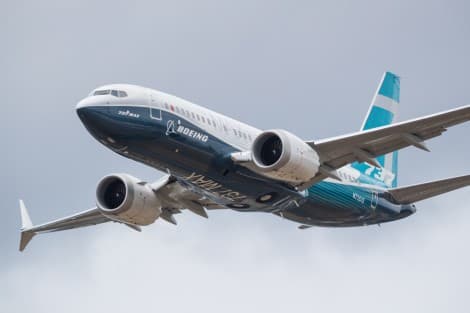
Boeing's (BA) commercial aircraft deliveries fell in August, while the US planemaker trailed European rival Airbus in overall shipments and orders for the month.

Boeing delivered 51 commercial jets last month, including 41 737 Max aircraft. The August tally was lower than overall deliveries of 53 the month prior and 57 a year earlier. Airbus delivered 57 aircraft last month to 31 customers, data on the companies' respective websites showed Tuesday.

Boeing booked orders for 15 jets in August, down from 38 the previous month and 26 a year earlier. Airbus book 67 gross orders last month.

In the year through August, Boeing has delivered 418 aircraft versus Airbus' tally of 475, according to the companies' data.

Boeing's unfilled orders at the end of August reached 6,755.

On Sunday, an Amazon (AMZN) Prime Air cargo plane overran a runway at Miami International Airport, killing at least five people and injuring a few others, news outlets reported. The Amazon Air Flight 7598 was a Boeing 767-300 freighter operated by 21 Air that had reportedly arrived from San Juan, Puerto Rico.

Amazon will cooperate with the National Transportation Safety Board and any other investigating authorities while also continuing to coordinate with flight operator 21 Air, Amazon spokesperson Kelly Nantel said in a statement e-mailed toTuesday. Boeing didn't respond to requests on the matter.

In late July, Boeing reported a second-quarter loss that exceeded Wall Street's estimates amid a drag from its Air Force One program, while the aircraft manufacturer's free cash flow turned positive.

Last month, the company received the US Federal Aviation Administration's clearance for its 737 Max 7, paving the way for the model's launch after nearly a decade of regulatory review.

Price: $211.65, Change: $-0.60, Percent Change: -0.29%

Related Articles

Fears of Another Interest Rate Hike Batter Australian Consumer Confidence
US Markets

Fears of Another Interest Rate Hike Batter Australian Consumer Confidence

Fears over a further increase in borrowing costs are unnerving Australians, with a decline in two measures of consumer confidence reflecting those concerns in addition to continued cost-of-living pressures.The Westpac-Melbourne Institute consumer sentiment index fell to 84.4 in September from 88.9 in the previous month, taking views back toward "deeply pessimistic" territory seen earlier this year, Westpac said Tuesday.A Westpac index tracking consumer interest rate expectations rose more than 7% to 170.4 in September, as around 64% of consumers now believe mortgage rates will rise further over the next 12 months, up from 59% in August, Westpac said.Higher fuel costs also weighed on sentiment, as Australian pump prices again rose above AU$2 per liter for the first time since April following the end of a temporary measure that halved fuel excise tax. The bank's survey further pointed to unease over job security, particularly among construction and hospitality workers.A separate gauge from ANZ-Roy Morgan mirrored some of those findings, showing consumer confidence falling 3 points last week to 71.9, the lowest level since late July.Both surveys follow a stronger-than-expected monthly consumer price index reading in July and more recent gross domestic product data that showed Australia's economy growing slightly below potential. The prospect of another rate hike this year combined with the GDP data may have contributed to weaker sentiment, ANZ said.ANZ still expects the Reserve Bank of Australia to raise its official cash rate by 25 basis points in November. While Westpac also acknowledged the increased likelihood of a future rate hike, it said the central bank is unlikely to move at its September meeting based on one monthly inflation read alone, especially as the next inflation update is due a day after that meeting.

ASX 200
Japan Upgrades Second-Quarter GDP Growth to 1.4% on Milder CapEx Decline
US Markets

Japan Upgrades Second-Quarter GDP Growth to 1.4% on Milder CapEx Decline

Japan's economy performed better than the government initially estimated in the second quarter of 2026, with businesses pulling back on spending by less than initially reported.The economy grew at an annualized rate of 1.4% in the second quarter, versus the initial 1.1% estimate, according to figures from the Cabinet Office on Tuesday.While the latest print beat the consensus forecast of 1.1%, according to Trading Economics, it still softened from the revised 1.8% growth in the first quarter.The improvement came as capital expenditure fell at a softer rate than previously estimated at 0.9% versus 1.2%.Overall private consumption was flat, matching the earlier estimate, while public consumption fell 0.8%, also unchanged from the previous data.Trade also did its part to keep the headline number positive, contributing 0.5% to the overall annualized GDP growth. Exports of goods and services rose 0.4% in Q2, softer than the preliminary estimate of 0.5%, while imports fell at a sharper-than-expected rate of 1.7% versus 1.5% previously.Elsewhere, government spending was revised modestly higher at 1.7% from 1.6%, while public investment came in weaker than first reported, falling 0.5%, versus the previous 0.1% estimated decline.The revised figures arrive over a week before the Bank of Japan's Sept. 17-18 policy meeting, with analysts expecting a 25 basis-point rate hike to 1.25%, according to Trading Economics.At its July meeting, the central bank held its short-term policy rate steady at 1%, leaving borrowing costs at their highest point since September 1995 following a 25 basis-point hike earlier in June.Last week, BOJ policy board member Hajime Takata urged the central bank to adopt a data-dependent approach to future interest rate hikes, calling on policymakers to assess domestic financial conditions and developments in overseas economies.

Nikkei 225
Beijing Unveils 360 Billion Yuan Funding Plan in 'Clear Policy Focus' to Bolster Financial System
US Markets

Beijing Unveils 360 Billion Yuan Funding Plan in 'Clear Policy Focus' to Bolster Financial System

Major state-owned financial institutions in China announced plans to raise or receive 360 billion yuan in total, a move that analysts said should boost the country's financial system resilience.Xinhua reported Monday that eight central financial companies are included in the plan. In separate Sunday filings, Agricultural Bank of China (HKG:1288, SHA:601288) said it is targeting up to 160 billion yuan, Industrial and Commercial Bank of China (HKG:1398, SHA:601398) will raise no more than 100 billion yuan, and People's Insurance Company or PICC (HKG:1339, SHA:601319) is looking at a maximum of 15 billion yuan."China's planned capital injection into several financial institutions owned by the central government underscores ongoing state support for the financial sector and a clear policy focus on strengthening financial-system resilience," Fitch said in a note."The Ministry of Finance-led support should help improve capital buffers, enhance loss-absorption capacity and reinforce these institutions' ability to fund policy priorities and support broader economic growth."Others that will receive funding under the latest support package also include The Export-Import Bank of China, China Export & Credit Insurance, China Life Insurance (HKG:2628, SHA:601628), China Taiping Insurance Group, and China Reinsurance (Group), the rating agency noted.AgBank, ICBC and PICC said the general mandates will see China's Ministry of Finance enter into separate share subscription agreements with a five-year lock-up period. New shares will be issued and listed in Shanghai.While insurance group PICC said proceeds will be used solely for capital replenishment, the two banking majors earmarked the funds to be raised to bolster their common equity tier 1 capital. The proposed transactions remain subject to certain conditions and approvals.

HKG:1288HKG:1339HKG:1398SHA:601288SHA:601319SHA:601398