FINWIRES · TerminalLIVE
FINWIRES

SHA:601728

8 stories mentioning SHA:601728

Every FINWIRES story that references SHA:601728, newest first.

China Threatens Retaliation After Pentagon Adds Alibaba, Baidu, BYD to Military Blacklist
US Markets

China Threatens Retaliation After Pentagon Adds Alibaba, Baidu, BYD to Military Blacklist

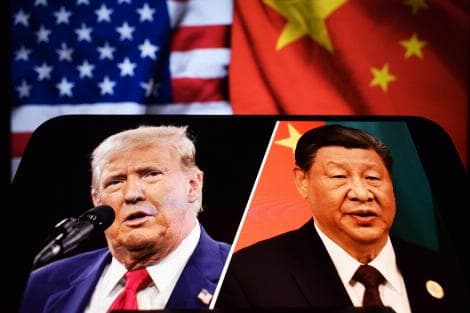
China's Ministry of Commerce on Saturday threatened to retaliate after the US Defense Department added a number of Chinese companies, including Alibaba (HKG:9988), Baidu (HKG:9888) and BYD (HKG:1211, SHE:002594), to its list of firms it deems linked with the Chinese military."China will resolutely and forcefully retaliate, and the US will bear full responsibility for the consequences," a spokesperson for the Ministry of Commerce said over the weekend, adding that "China expresses its strong dissatisfaction and firm opposition" to the designations.The Pentagon published its updated Section 1260H list on June 8, which supersedes an earlier version from January 2025. The updated roster now also includes electric-vehicle maker Nio (HKG:9866), pharmaceutical research and manufacturing services provider WuXi AppTec (HKG:2359, SHA:603259), AI robotics company Robosense Technology (HKG:2498), and Unitree Robotics, which is currently pursuing an initial public offering in Shanghai. Nvidia recently said it plans to collaborate with Unitree to build robots.The list also names telcos China Mobile (HKG:0941, SHA:600941), China Telecom (HKG:0728, SHA:601728), and China Unicom (HKG:0762), as well as chipmaker Semiconductor Manufacturing International (HKG:0981, SHA:688981), Huawei Technologies, Contemporary Amperex Technology (SHE:300750, HKG:3750) and Tencent (HKG:0700), most of which were added in January.The June update also reinstated ChangXin Memory Technologies and Yangtze Memory Technologies on the list after they were withdrawn from the February version. Both companies are among China's leading memory chipmakers and are currently pursuing public listings.As the Pentagon noted, being on the list means an entity is identified as a contributor to China's "Military-Civil Fusion strategy," supporting the modernization goals of the People's Liberation Army "by ensuring it can acquire advanced technologies and expertise developed by PRC companies, universities, and research programs that appear to be civilian entities."While these Chinese companies face no formal sanctions under the list, the Pentagon is prohibited from entering into, renewing or extending contracts with them or acquiring their products starting June 30, 2026.Several newly listed companies pushed back, with Alibaba saying it is "not a Chinese military company nor part of any military-civil fusion strategy." The company warned that it will take "all available legal action against attempts to misrepresent the company."Baidu said there was "no justification" for its inclusion, adding that it does not expect the designation to impact its business.BYD, which recently toppled Tesla as the world's top electric vehicle seller, echoed Alibaba and Baidu's statements, adding that the move will not impact its business.Meanwhile, analysts from Jefferies said the update was largely anticipated, noting that an earlier version of the list had briefly appeared in February before being withdrawn without explanation.Jefferies also noted on June 9 that while the Defense Department is prohibited from procurement of goods and services from entities in the list, "it does not restrict US citizens from engaging in trading activity with the listed companies."In a separate Jefferies note on June 9, analysts from the bank said 10 companies were removed from the list, including, most notably, CNOOC (HKG:0883, SHA:600938)."The immediate implication for companies on the 1260H list is that they are prohibited from providing any goods or services to the US military directly or via contractors. We believe the final decision-maker is the US president," said Jefferies."President Trump has just concluded his China trip, and, in our view, the US-China relationship is moving in an incrementally positive direction. In our view, President Trump is largely occupied with Iran, the high oil price (thus higher inflation risk), and the upcoming mid-term election, implying there will be less motivation for the US to escalate geopolitical tension with China."

Shanghai Composite^SZSEHKG:0700HKG:0728HKG:0762HKG:0883HKG:0941HKG:0981HKG:1211HKG:2359HKG:2498HKG:3750HKG:9866HKG:9888HKG:9988SHA:600938SHA:600941SHA:601728SHA:603259SHA:688981SHE:002594SHE:300750
Asia

Market Chatter: China Finalizing 2 Trillion Yuan Plan to Build AI Data Centers

The Chinese government is finalizing plans to invest 2 trillion yuan for the construction of AI data centers across the country over the next five years, Bloomberg reported Tuesday, citing people familiar with the matter.The plan could see China Mobile (HKG:0941, SHA:600941) and China Telecom (HKG:0728, SHA:601728) operate the network of inter-connected computing hubs across the country, the report said.The blueprint also calls on the supply of 80% of technology for the data centers from local vendors, including Huawei Technologies.(Market Chatter news is derived from conversations with market professionals globally. This information is believed to be from reliable sources but may include rumor and speculation. Accuracy is not guaranteed.)

Shanghai Composite^SZSEHKG:0728HKG:0941SHA:600941SHA:601728
Asia

Market Chatter: China Earmarks 2 Trillion Yuan in Nationwide AI Push

The Chinese government is set to spend 2 trillion yuan over the next five years to build artificial intelligence data centers, Bloomberg reported Tuesday, citing people familiar with the matter.The National Development and Reform Commission will set up interconnected hubs across China, while state-owned telcos China Mobile (HKG:0941, SHA:600941) and China Telecom (HKG:0728, SHA:601728) will operate the data centers, according to Bloomberg.China will then get its AI chips from local suppliers such as Huawei, according to Bloomberg.The plan is seen to be China's most aggressive effort for AI aimed at surpassing U.S. technology, according to the newswire.National Development and Reform Commission, China Mobile and China Telecom did not immediately respond to' request for comments.(Market Chatter news is derived from conversations with market professionals globally. This information is believed to be from reliable sources but may include rumor and speculation. Accuracy is not guaranteed.)

Shanghai Composite^SZSEHKG:0728HKG:0941SHA:600941SHA:601728
Asia

Market Chatter: US Moves to End China's Role in Electronics Testing

The U.S. Federal Communications Commission voted unanimously to advance a proposal banning all Chinese labs from testing U.S.-bound electronic devices such as smartphones and computers, Reuters reported Thursday.Currently, about 75% of U.S. electronics are tested in China, according to the report. The plan would fast-track approval for devices tested in U.S. labs or allied nations.In a separate vote, the FCC moved to bar China Mobile (SHA:600941, HKG:80941), China Telecom (SHA:601728, HKG:0728) and China Unicom (HKG:0762) from operating U.S. data centers, Reuters wrote.The agency is also considering blocking interconnection with companies linked to national security risks, including Huawei and ZTE (SHE:000063, HKG:0763), according to the report.(Market Chatter news is derived from conversations with market professionals globally. This information is believed to be from reliable sources but may include rumor and speculation. Accuracy is not guaranteed.)

Shanghai Composite^SZSEHKG:0728HKG:0762HKG:0763HKG:80941SHA:600941SHA:601728SHE:000063
Asia

China Telecom Adds 12.3 Million 5G Users in Q1

China Telecom (HKG:0728, SHA:601728) saw a rise of nearly 12.3 million in 5G package subscribers in the first quarter of 2026, bringing its 5G user base to 314.1 million, according to a Thursday Hong Kong bourse filing.The telecom company's mobile subscribers increased by 1.9 million to 440.6 million over the three months.The firm added 440,000 wireline broadband subscribers in the quarter, bringing the total to 201.6 million as of the end of the reporting quarter.

HKG:0728SHA:601728
Asia

China Telecom's Profit Slides 17% in Q1

China Telecom (SHA:601728, HKG:0728) recorded an attributable profit of 7.35 billion yuan in the first quarter of 2026, down 17% from a year prior, according to a Thursday Hong Kong bourse filing.The telco's earnings per share stood at 0.08 yuan in the three months.Operating revenue slid 2.6% in the quarter to 132 billion yuan.

HKG:0728SHA:601728
US Markets

Unicom's Q1 Profit, Revenue Slip Despite 5G Tech Boost

China Unicom (Hong Kong) (HKG:0762) recorded a drop in its first-quarter profit and operating revenue, despite accelerating its 5G technology, according to an earnings report published Tuesday on the Hong Kong Stock Exchange.The company's shares fell less than 2% during Wednesday's afternoon trade.The telecom company's net profit attributable to shareholders fell 18% to 4.89 billion yuan from 5.93 billion yuan a year earlier.Operating revenue slipped 0.5% to 102.8 billion yuan from 103.4 billion yuan in the prior year.However, revenue from the computing power business grew 8.3% year on year to 15.4 billion yuan, including revenue from data centers, which climbed 12 from a year earlier.The company said the 5G market is growing, with a total number of nearly 242 million 5G users in the first quarter. The total number of users of Internet-of-Things terminal connections amounted to 755.1 million in the same quarter.The growth in artificial intelligence and 5G technology indicates the increasing demand for these technologies.The number of 5G base stations in China reached nearly 5 million, while the number of passive optical networks amounted to 32 million as of the end of March, government officials said at a press conference with the State Council Information Office (SCIO) on Tuesday.The 5G-Advanced technology has been rolled out in 330 Chinese cities, and terminal users of mobile Internet of Things reached 2.95 billion, the SCIO said.Unicom said the group developed more than 53,000 5G commercial projects and established more than 9,800 5G factories. Its international business revenue climbed by almost 15% year on year.Despite the global popularity of the technology, the company is at risk of being barred from operating in the U.S. due to national security concerns. The U.S. Federal Communications Commission is set to vote on the possible ban on the big three Chinese telecoms, namely, Unicom, China Mobile (HKG:0941), and China Telecom (HKG:0728, SHA:601728), on April 30.Unicom was first added to the U.S. Federal Communications Commission's list of communications equipment and services that are believed to be a threat to national security in 2022.

HKG:0728HKG:0762HKG:0941SHA:601728
Asia

US FCC Could Bar Top Chinese Telcos From Operating US Data Centers

The U.S. Federal Communications Commission said it could bar three big Chinese telecommunications firms from operating data centers in the U.S. and ban U.S. interconnections with the three companies.The commission said it has tentatively concluded there are national security concerns regarding U.S. telecommunication companies connecting with companies identified in the U.S. government's "covered list."The FCC will have to seek comment regarding interconnections with the companies, among them China Mobile (HKG:0941), China Telecom (HKG:0728, SHA:601728), and China Unicom (HKG:0762), Reuters reported separately.The FCC could disallow U.S. telecommunications companies from connecting with companies that use equipment from the list, among them ZTE (HKG:0763, SHE:000063), the newswire said.The commission will vote on the possible ban on April 30.

HKG:0728HKG:0762HKG:0763HKG:0941SHA:600941SHA:601728SHE:000063