FINWIRES · TerminalLIVE
FINWIRES

Warsh Unlikely to Address Bond Market Intervention at Jackson Hole Event, Morgan Stanley Says

By
Warsh Unlikely to Address Bond Market Intervention at Jackson Hole Event, Morgan Stanley Says

Federal Reserve Chair Kevin Warsh's upcoming Jackson Hole speech is unlikely to help clear up investor confusion over the Treasury Department's bond market intervention, Morgan Stanley said in a note sent Monday.

Warsh's debut speech as Fed chief at the annual economic policy symposium on Friday comes as investors figure out the implications of the Treasury Department's surprise announcement of an expanded debt buyback plan last week.

Morgan Stanley economists view the expansion in bond buybacks as evidence that the Treasury had become uncomfortable with a rise in long-term interest rates.

"The announcement raises more questions than answers about the relationship between Treasury debt management and Federal Reserve policy and the degree of coordination between the two institutions," Morgan Stanley Chief US Economist Michael Gapen said.

Fed policy statements have become significantly shorter under Warsh's leadership, removing forward guidance.

Warsh will likely remain silent on the near-term outlook for monetary policy, including the expansion of the buyback program, Gapen said. "We expect (Warsh) to stay the course, say less, and diminish the importance of events like Jackson Hole in the Fed's communication apparatus," Gapen said.

The Treasury's announcement on Wednesday came two days after the 30-year Treasury yield pushed above 5.3% to the highest level since 2007. The yield was down five basis points at 5.23% intraday Monday, while the 10-year yield fell 4.2 basis points to 4.7%.

Warsh has effectively endorsed higher long-end interest rates as a mechanism for tightening financial conditions and restoring price stability, according to Gapen.

"If the Treasury has become more sensitive to increases in long-term borrowing costs and higher term premiums are viewed by the Fed as needing to reduce inflation, then expanding buybacks may increase the probability that the Fed needs to raise short-term interest rates to achieve price stability," Gapen said.

Markets are pricing in a 58% chance that the Fed will keep its benchmark rate steady in September, with the remaining odds in favor of a 25-basis-point hike, according to the CME FedWatch tool.


Related Articles

Sinopec's First-Half Profit Jumps 19% as Refining Margin Growth Offsets Low Fuel Demand
US Markets

Sinopec's First-Half Profit Jumps 19% as Refining Margin Growth Offsets Low Fuel Demand

China Petroleum & Chemical (SHA:600028, HKG:0386), or Sinopec, reported a double-digit jump in net profit in the first half of the year, as the growth in its refining margin offset a sharp downturn in fuel demand.Attributable net profit jumped 19% to 25.6 billion yuan, or 0.212 yuan per share, according to a Hong Kong bourse filing late Friday.Revenue rose modestly by 2% to 1.437 trillion yuan. Sinopec attributed the soft rise in revenue to weak demand for domestic refined oil products and chemicals amid high oil prices brought about by geopolitical conflicts.Sinopec's refining segment became the company's second-strongest profit engine during the first half after booking a 381.5% year-over-year jump in operating profit to 17.02 billion yuan, surpassing the company's marketing and distribution segment, which previously was the second-largest.The company's refining margin was 453 yuan per tonne in the first half, up 44% year over year. Sinopec attributed the growth to significant improvements in the margins of products like kerosene, naphtha and refining by-products. These offset the impact of higher purchase premiums and freight costs of imported crude oil.Demand for natural gas, however, slowed in the first half due to high oil prices and as customers turned to new energy products, Sinopec said. Refined oil products consumption slipped 8.6% year over year, with gasoline consumption falling 7.9% and diesel purchases falling 11.5%.For the second half, Sinopec expects demand for natural gas to rise. In contrast, it projects a drop in demand for chemical products and refined oil products amid the transition into alternative energy."Given the impacts of geopolitics and changes in the global supply, demand and inventory, there will be greater uncertainties in international crude oil prices," Sinopec said.Sinopec declared an interim dividend of 0.105 yuan per share payable in cash on or before Oct. 14 to shareholders on record as of Sept. 29.

HKG:0386SHA:600028
Update: Wall Street Trims Weekly Losses With Friday's Gains
US Markets

Update: Wall Street Trims Weekly Losses With Friday's Gains

(Updates with market moves at the end of the day, and other changes, if any.)US stocks rose Friday, trimming losses for the week on Wall Street, as bond yields continued to march higher.The Dow Jones Industrial Average climbed 1% to 53,277.01. The S&P 500 and the Nasdaq Composite each rose 0.4% to close at 7,674.37 and 26,180.46, respectively. Most sectors were in the green, led by materials, while utilities saw the steepest decline.The three indexes dropped to their lowest levels in more than two weeks on Thursday.This week, the Nasdaq shed 2.1%, while the S&P 500 lost 1.4%, with both indexes logging their first weekly declines following three consecutive weekly advances. The Dow saw a loss of 0.9%, marking its second consecutive weekly fall.US Treasury yields were higher, with the two-year yield increasing 4.9 basis points to 4.23% and the 10-year rate gaining 3.4 basis points to 4.73%. The 30-year rate was up 3.6 basis points at 5.27%.The Treasury Department on Wednesday surprised markets with an announcement that it will at least double the size of its buybacks for longer-dated Treasuries, to $4 billion per operation.The 10-year yield fell on Wednesday, but "the market pushed back on this 'mini twist' idea on Thursday and Friday," Jefferies said in a note.Treasury Secretary Scott Bessent told CNBC on Thursday that the planned buybacks could be worth more than $4 billion per issue."Despite Bessent's threat to ramp up buybacks further on Thursday, the move mostly glosses over the fundamental problem of too much debt and could complicate the (Federal Reserve's) efforts to rein in inflation," Scott Anderson, chief US economist at BMO, said in a report. "Bond investors will be looking toward Kevin Warsh's first Jackson Hole speech as Fed chair next week to bring more clarity on his view of inflation and plans for monetary policy."West Texas Intermediate crude oil was down 0.2% at $86.67 a barrel in Friday late-afternoon trade, while Brent edged up 0.1% to $93.91. The benchmarks were on track to log their second consecutive weekly gains.In economic news, US private-sector output growth hit a 52-month high amid a surge in services activity, while price pressures eased and employment rose sharply, S&P Global's (SPGI) flash purchasing managers' index showed.In company news, Ross Stores (ROST) jumped 4.4% as the off-price apparel and home fashion chain lifted its full-year earnings outlook on the back of stronger-than-expected fiscal second-quarter results.BJ's Wholesale Club's (BJ) fiscal second-quarter results came in ahead of Wall Street's estimates, prompting the warehouse club operator to lift its full-year earnings outlook. The stock advanced 5.6%.Spot gold advanced 2.2% to $4,617.45 per troy ounce, while silver climbed 1.9% to $70.21 per ounce.

Dow JonesNasdaq CompositeS&P 500$BJ$ROST$SPGI
Share of Home-Purchase Cancellations Hit Highest Since November 2023, Redfin Says
US Markets

Share of Home-Purchase Cancellations Hit Highest Since November 2023, Redfin Says

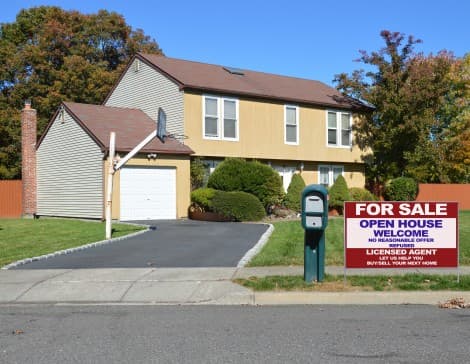
The share of home-purchase cancellations in the US reached the highest reading in almost three years in July, in what is largely seen as a buyers' market, Redfin.com said Friday.Roughly 14% of sale agreements that went under contract last month fell through, up from 13.7% in June and marking the highest share since November 2023, according to the online real estate brokerageHomes that fell out of contract in a given month didn't necessarily go under contract that same month, Redfin said.The number of homebuyers hit an all-time low in July, while the market had a near-record 51% more sellers than buyers, according to the report."That gives house hunters more options and makes them more likely to walk away if an inspection uncovers problems, an appraisal comes in low or the seller doesn't agree to concessions," Redfin said.Buyers' woes are also compounded by elevated home prices and mortgage rates, the report showed."An unexpected repair, a change in financing costs or simply second thoughts about taking on a large monthly payment can be enough to derail a deal -- especially when buyers feel confident another home will come along," Redfin said. "Some house hunters are also changing their minds due to economic uncertainty."Nearly 20% of home-purchase agreements were canceled in Atlanta last month, the highest share among the 50 most populous US metros. Contract cancellations were least common in Nassau County, New York, with only 3.5% of homebuying deals falling through, according to the report."Home-purchase cancellations are most prevalent in buyer-friendly Southern markets, where a lot of inventory and fewer buyers are giving house hunters more confidence to walk away from deals," Redfin said.Earlier this month, data from the National Association of Realtors showed that existing home sales in the US declined more than expected in July as rising prices and mortgage rates continued to weigh on homebuying activity.