FINWIRES · TerminalLIVE
FINWIRES

Update: Equity Markets Mixed Intraday Ahead of Micron Results; Oil Sinks

By
Update: Equity Markets Mixed Intraday Ahead of Micron Results; Oil Sinks

(Updates with latest market prices and developments.)

US benchmark equity indexes were mixed intraday as markets awaited Micron Technology's (MU) latest quarterly results, while oil prices tumbled as tankers continued to move through the Strait of Hormuz.

The Nasdaq Composite was down 0.4% at 25,479.2 after midday Wednesday, while the S&P 500 fell 0.2% to 7,347.6. The Dow Jones Industrial Average rose 0.2% to 51,767.7. Among sectors, energy saw the biggest drop, while consumer discretionary paced the gainers.

Ahead of its results -- due after the closing bell Wednesday -- Micron shares were down 2.6%, following a 13% slump in the previous session amid a sell-off in chip-related stocks.

Trip.com (TCOM), Jefferies Financial (JEF) and H. B. Fuller (FUL) are also scheduled to report after the markets close.

KB Home (KBH) shares surged 17% after the homebuilder released its results. Builders FirstSource (BLDR) shares jumped 10%, the top gainer on the S&P 500.

Paychex (PAYX) issued a fiscal 2027 outlook that implies slower growth in both profit and revenue. The human resources software provider's shares were down 1.5% intraday.

West Texas Intermediate crude oil was down 4.2% at $70.17 a barrel, while Brent dropped 4.3% to $73.75, both off session lows.

The price declines came as tankers continued to move through the crucial Strait of Hormuz after being trapped in the Persian Gulf due to the US-Israel war with Iran that started at the end of February.

Three stranded tankers carrying about 5 million barrels of crude oil were exiting the narrow waterway Wednesday, with two heading to Asia, Reuters reported, citing shipping data.

"With shipping traffic steadily improving through the Strait of Hormuz, traders are increasingly focused on a growing queue of cargoes waiting to move," Saxo Bank said in a report.

US President Donald Trump, in a social media post, criticized oil companies for "not dropping their prices at the pump commensurate with the sharply lower prices they are paying for oil." Trump said he had instructed the Department of Justice "to immediately start looking into this."

Last week, the US and Iran signed a memorandum of understanding to end the war and reopen the Strait of Hormuz, a crucial chokepoint for crude flows that connects the Persian Gulf with the Gulf of Oman and the Arabian Sea.

US Secretary of State Marco Rubio is in the Persian Gulf region, seeking to sell the US-Iran deal to the Bahrain, Kuwait, and the United Arab Emirates, which are expected to be among its biggest skeptics, CNN reported Wednesday.

US Treasury yields were lower intraday, with the 10-year rate down 9.8 basis points at 4.40% and the two-year rate falling 5.1 basis points to 4.15%.

In economic news, new-home sales in the US unexpectedly declined last month as prices moved higher, government data showed.

"New home sales were much weaker than expected in May, but we think the pace of sales in May probably marks the bottom of what will be a noisy range over the next few months rather than the start of a more sustained decline," Oxford Economics said in a note. "We expect sales to improve later in the year based on our forecast for mortgage rates to move lower."

Gold was down 3.5% to $4,004.30 per troy ounce, while silver slumped 6.9% to $57.78 per ounce.
Related Articles

Australia's Headline Inflation Rate Cools in May as Fuel Prices Moderate
US Markets

Australia's Headline Inflation Rate Cools in May as Fuel Prices Moderate

A moderation in fuel prices helped ease Australia's annual headline inflation in May, although the rate remains above the central bank's target range amid elevated housing costs.Australia's consumer price index rose 4% on year in May, down from the 4.2% rate posted in April, data from the Australian Bureau of Statistics showed on Wednesday. On a monthly basis, the CPI fell 0.1% in seasonally adjusted terms.The annual result is better than the 4.1% forecast from the Commonwealth Bank of Australia and Westpac's expectation of a 4.4% increase.Housing was the largest contributor to annual inflation in May, with a jump of 6.5% as electricity costs surged after the end of government rebate programs. Transport price growth eased to 3.3% in annual terms from a 6.6% rise in the year through April.The annual price increase for goods slowed in May, as did tradables inflation, with both declines reflecting a cooling of automotive fuel price growth to 7.7% in May from 18.6% in April, the ABS said.The latest data follows the Reserve Bank of Australia (RBA) pausing its policy-tightening cycle last week. The bank held its cash rate at 4.35% after three consecutive rate hikes, but left the door open to further increases due to persistently high inflation.The central bank has a 2% to 3% annual inflation target. As of Tuesday, the RBA Rate Tracker tool pegged the odds of another hike to borrowing costs at 28%.

ASX 200
After WuXi AppTec, Alibaba Sues Pentagon to Contest Chinese Military Company Designation
US Markets

After WuXi AppTec, Alibaba Sues Pentagon to Contest Chinese Military Company Designation

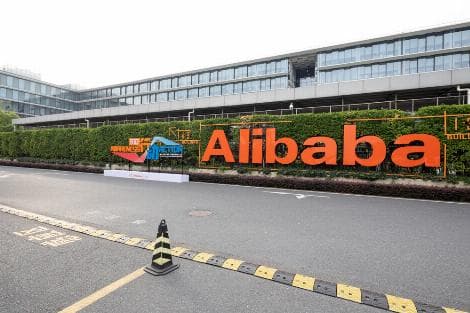
Alibaba Group (HKG:9988) has sued the US Department of Defense on Tuesday, seeking to overturn its designation as a "Chinese military company" and accusing the Pentagon of acting without factual basis or fair process in branding it as a threat to national security.The lawsuit was filed in the US District Court for the Northern District of California in San Jose, also naming Secretary of Defense Pete Hegseth, Deputy Secretary Stephen Feinberg, and Assistant Secretary for Industrial Base Policy Michael Cadenazzi as defendants."The determinations have no basis in fact or law... To label Alibaba a 'Chinese military company' is to brand it an instrument of the Chinese military and a threat to US national security," Alibaba wrote.The Pentagon added Alibaba and several other Chinese companies to its Section 1260H list on June 8, tagging the e-commerce and tech company as "a military-civil fusion contributor to the Chinese defense industrial base because it is affiliated with" the Ministry of Industry and Information Technology.Prior to the lawsuit, Alibaba had denied this designation, calling it "a mistake," according to a June 9 Hong Kong bourse filing."There is no basis to conclude that Alibaba Group should be placed on the CMC List. Alibaba Group is not a Chinese military company nor part of any military-civil fusion strategy."Alibaba at the time warned that it would "take all available legal action against attempts to misrepresent the company."In its lawsuit, Alibaba said it is owned by a broad, public shareholder base, and since early 2025, the only investors to hold 5% or more of its stock are three American financial institutions: JPMorgan, Citigroup, and BlackRock."No individual shareholder controls the company, and no state-owned entity has ever controlled the company," Alibaba argued.The company also stressed that it "has no affiliation with MIIT, SASAC, or the [People's Liberation Army]."SASAC, or the State-owned Assets Supervision and Administration Commission, acts as the state's investor and manages the country's non-financial state-owned enterprises.Alibaba's complaint also noted that it held talks with the Department of Defense prior to the designation. Alibaba said it met with Pentagon officials on Jan. 21 to present information and answer any concerns.The company said it then submitted additional evidence on Jan. 30, detailing its longstanding cooperation with the US government, including a letter from the Director of the National Intellectual Property Rights Coordination Center, part of the US Department of Homeland Security.However, on Feb. 13, the Pentagon posted an updated 1260H list, designating Alibaba as a Chinese military company before withdrawing it within an hour, citing a need to review "the most recent information available."Alibaba said the Department declined to disclose to the company what information it was relying on.Starting June 30, 2026, the Pentagon will be prohibited from "enter[ing] into, renew[ing], or extend[ing] a contract for the procurement of goods, services, or technology" from companies on the designated list.Effective June 30, 2027, the ban extends to the procurement of goods or services that "include goods or services produced or developed by" companies on the list.A spokesperson for the Pentagon declined to comment to, saying the Department does not comment on ongoing litigation.China's Ministry of Commerce had already threatened to retaliate after the Pentagon added Alibaba, Baidu (HKG:9888), BYD (HKG:1211, SHE:002594), Nio (HKG:9866), WuXi AppTec (HKG:2359, SHA:603259) and Robosense Technology (HKG:2498) to the list.The updated list supersedes an earlier version from January 2025, and reinstated ChangXin Memory Technologies and Yangtze Memory Technologies on the list after they were withdrawn from the February version. Both companies are among China's leading memory chipmakers and are currently pursuing public listings.Alibaba is not the first Chinese company to contest the 1260H designation. WuXi AppTec filed its own suit against the Pentagon on June 11, describing its inclusion as "the product of political pressure."In January 2021, Xiaomi (HKG:1810) also sued the US after it was designated as one of several "Communist Chinese military companies" (CCMC) under the National Defense Authorization Act of 1999.The smartphone maker was then removed from the list in May 2021, with the US District Court for the District of Columbia issuing a final order vacating the Pentagon's designation of Xiaomi as a CCMC.Alibaba has also asked the court in California to vacate the designation as "arbitrary and capricious."

HKG:1211HKG:1810HKG:2359HKG:2498HKG:9866HKG:9888HKG:9988SHA:603259SHE:002594
Update: Nasdaq Posts Sharpest Drop in 2 Weeks as Chip Stocks Slide
US Markets

Update: Nasdaq Posts Sharpest Drop in 2 Weeks as Chip Stocks Slide

(Updates with market moves at the end of the day.)The Nasdaq Composite fell the most in more than two weeks on Tuesday amid a sell-off in chip-related stocks, including Nvidia (NVDA) and Micron Technology (MU).The tech-heavy Nasdaq dropped 2.2% to 25,587, the sharpest decline since June 5. The S&P 500 fell 1.4% to 7,365.5, the biggest loss since June 10. The Dow Jones Industrial Average eased 0.1% to 51,665.8.Among sectors, tech posted the largest decline, shedding 3.7%, while consumer staples led the gainers.Nvidia shares slumped 4.1%, the biggest drop on the Dow. Sandisk (SNDK) tumbled 14%, the largest decline on the S&P, followed by Micron, down 13%. On Semiconductor (ON) and Marvell Technology (MRVL) also slumped.Tech stocks may face spillover impact from the recent sharp sell-off in South Korea, though the decline appears to be a "pullback/breather" in a market that almost doubled this year, Wedbush Securities said in a note.With Micron set to report earnings Wednesday, Wedbush cited "some added nervousness on the important memory chip trade.In company news, IBM (IBM) shares rose 5%, the biggest gain on the Dow. The computer maker joined the OpenAI Daybreak Cyber Partner Program and launched a new application-security service that uses OpenAI's models.Korn Ferry (KFY) reported higher fiscal fourth-quarter results, though the consulting firm issued an outlook calling for lower earnings in the current quarter. The shares jumped 5.8%.West Texas Intermediate crude oil slipped 0.7% to $73.31 a barrel, while Brent lost 1.1% to $77.08.US Secretary of State Marco Rubio arrived in the Gulf region, aiming to sell the Iran deal to three countries -- the United Arab Emirates, Bahrain and Kuwait -- that are likely to be among the biggest skeptics, CNN reported.US Treasury yields were lower, with the two-year rate last down 3.2 basis points at 4.21% and the 10-year rate falling two basis points to 4.50%.In economic news, US private-sector output rose in June at the fastest pace in five months amid a solid expansion in the manufacturing sector, S&P Global (SPGI) said."Brighter news out of the Middle East has helped restore some confidence among US businesses in June, though the overall rate of economic growth signaled by the flash PMI survey remains relatively sluggish compared to that seen earlier in the year in the lead up to the conflict," S&P Global said.Manufacturing activity in the US Mid-Atlantic region fell more than projected in June, with shipments, new orders and employment all weakening, data from the Federal Reserve Bank of Richmond showed.Gold was down 1.5% at $4,139.80 per troy ounce, while silver slumped 6% to $61.64 per ounce.

Dow JonesNasdaq CompositeS&P 500$IBM$KFY$MRVL$MU$NVDA$ON$SNDK$SPGI