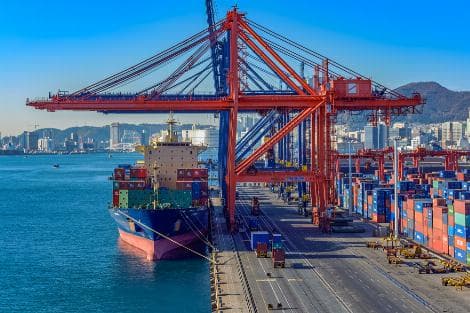
South Korea's manufacturing sector logged its strongest activity in May since March 2021.
The seasonally adjusted S&P Global South Korea Manufacturing Purchasing Managers' Index (PMI) rose to 54.8 from 53.6 in April, marking the strongest reading in five years, according to S&P Global's release on Monday.
The data indicated a robust improvement in the sector's health, driven by higher demand and a surge in new orders that grew at the fastest pace since June 2021.
"Both new orders and production growth hit the highest for around five years, but anecdotal evidence from respondents often linked expansions to stock building efforts as the war in the Middle East continued to cause price increases and disrupt supply conditions for the manufacturing economy," said S&P Global Market Intelligence economist Usamah Bhatti.
The surge in new orders drove production output higher, prompting manufacturers to expand their workforces. As a result, employment rose at the sharpest rate in over 13 years.
Official data is expected to reflect this employment growth for May. In April, the unemployment rate ticked up to 2.8% from 2.7% the previous month, with the number of jobless individuals rising to 816,000 from 799,000. However, the total number of employed people also increased, reaching 28.96 million from 28.77 million.
S&P Global noted that input costs remained under pressure, as the conflict in the Middle East drove up raw material prices, particularly oil.
Bank of Korea data showed that producer prices increased for the eighth consecutive month in April, jumping 6.9% compared to a 4.1% rise in the previous month. South Korea remains vulnerable to global supply chain disruptions caused by the Middle East conflict.
However, Min Joo Kang, ING's senior economist for South Korea and Japan, said overall activity in South Korea may start recovering in May.
"Both consumer and business sentiment are improving. We believe that the government's cash payouts should provide some buffer against a decline in consumption. For business sentiment, semiconductor performance remains strong," Kang said in a Friday note.
Meanwhile, Jefferies predicted that the central bank may begin hiking rates in July due to an improving economic outlook and persistent inflation concerns.
"The headline numbers [in April] were weak, reflecting the Middle East conflict and some payback from the previous month's strong gains. The weakness was led by non-semiconductors such as autos, refining and durable goods consumption, while semiconductors continued to expand," Jefferies said in a note.
The BoK held its key interest rate steady at 2.50% last week.