FINWIRES · TerminalLIVE
FINWIRES

Software, Consulting Firms Not Facing Doom Still Likely to See Pain From AI Spending

By
Software, Consulting Firms Not Facing Doom Still Likely to See Pain From AI Spending

Software and consulting companies aren't facing the doom-and-gloom scenario expected earlier this year after Anthropic released its Claude AI plugins that some investors thought would render firms such as Workday (WDAY) and Accenture (ACN) obsolete.

Fundamentals for such companies remain on solid ground, and firms are finding ways to protect margins, Steve Koenig, the US head of software and services research at Macquarie, said in a note to clients. Companies in the bank's growth software index increased annual recurring revenue in March and April as they had in previous quarters, he said.

At least so far, Koenig said in his note, there's little evidence of disruptions to software business models. Twenty-three out of the 40 companies in Macquarie's growth software index said they accelerated their annual recurring revenue on a yearly basis, which is well within the historical range.

"Our industry conversations suggest demand conditions remain intact," he said. "Software company hiring has trended downward year to date as many firms restructure their workforces or slow hiring to protect their margins, as token expenses mount for coding -- but turned up slightly in May."

Anthropic at the end of January released a suite of plugins for its Claude Cowork AI agent that automates several tasks including data entry, marketing and others that investors feared would render traditional software companies irrelevant. Shares of software and consulting firms plunged in the days after the release but have traded in a range since.

While software and consulting companies may not be facing pending doom, they certainly are feeling some pain that's likely to continue as clients spend more on AI.

Shares of such companies have dropped since the beginning of the year, with Workday down 38% and Accenture down 51% since the start of 2026, mainly after Anthropic released its plugins. Salesforce (CRM), Thomson Reuters (TRI), and other large incumbents also suffered hits to their share prices after the plugins were released.

Workday said subscription revenue grew by 14% year over year in the first quarter of fiscal 2027. While that's roughly in line with levels seen in the first quarter of 2026, it's down from growth of 17% in 2025, 19% in 2024, and almost 23% in 2023. Accenture's total sales growth averaged 4.8%, and consulting revenue was up 0.7% over the past three fiscal years after overall sales and consulting revenue surged by 26% and 22%, respectively, in 2022.

"Enterprises, Fortune 2000 companies, have limited budgets, and with that budget they need to figure out what to do with it," Bloomberg Intelligence Senior Technology Analyst Anurag Rana said in an interview. "And if they're allocating more toward AI-related activities, that money has to come out of somewhere. It comes out of consulting revenue, old hardware, and new software licenses."

Peers such as ServiceNow (NOW) and Salesforce (CRM) have seen similar declines in revenue growth in recent years.

Morgan Stanley's first-quarter chief investment officer survey indicated "disappointing" services budget growth of 2% year over year in 2026, slightly down from 2.1% in 2025. Faster services budget growth is core to the bank's overweight thesis on Accenture, Morgan Stanley said.

Total IT budget growth is roughly flat year over year despite the growing emphasis on AI, "suggesting pilots have yet to demonstrate meaningful returns, while rapid model advancement pressures leaders to keep investing at the expense of discretionary spend," Morgan Stanley Analyst James Faucette said in a separate note.

Also of concern to software firms, which use per-seat pricing models, is a run of dismal jobs reports showing their clients aren't hiring at the same pace they were in years past.

"They're adding no more seats," Bloomberg Intelligence's Rana said. "If you're not adding more seats, you're not going to be able to sell more seats."

Rana said there's no evidence indicating a near-term rebound, as IT clients add fewer employees and ultimately reduce software spending.

"The need to invest heavily in AI-related products and infrastructure is shifting corporate budgets away from software subscriptions and consulting projects," he said. "We aren't anticipating a significant change in 2H revenue-growth rates for most large vendors, with potentially greater pressure on smaller companies."

Software and consulting firms have also received good news on the macroeconomic and geopolitical fronts in recent weeks. The US economy added 172,000 jobs in May, topping expectations, and the US and Iran, despite ongoing skirmishes, recently reached a preliminary peace deal.

Those positive vibes were diminished Thursday after the Bureau of Labor Statistics said nonfarm payrolls rose by just 57,000 in June, well below the median analyst estimate of 113,000, while May's total was revised down to 129,000.

Firms that can adopt AI will likely fare better than those that avoid it, Rana said.

"The system-of-record software companies that sell into the enterprises and are able to add AI capabilities will likely generate more sales in the future," he said.

Tim Weatherhead

Related Articles

Australia's Perpetual Turns Down AU$2.45 Billion EQT Buyout Bid
US Markets

Australia's Perpetual Turns Down AU$2.45 Billion EQT Buyout Bid

Australian investment fund Perpetual (ASX:PPT) has turned down a takeover approach from Swedish private equity firm EQT AB, saying the proposal undervalued the financial services company, according to a Wednesday press release.Under the proposal, EQT-controlled Windflower Pte Limited offered to acquire all of Perpetual's shares for AU$21.64 apiece in cash, valuing the company at about AU$2.45 billion."The indicative proposal was highly conditional and did not adequately represent fair value for Perpetual shareholders in the context of a change of control transaction," the company said in a statement.The approach comes after Perpetual terminated an AU$2.2 billion deal with private equity firm KKR in 2025 to sell its wealth management and corporate trust businesses.The transaction was scrapped after an independent expert concluded it was not in the best interests of shareholders following an adverse tax ruling.Perpetual said it would instead pursue a separate sale of its wealth management business.The investment manager subsequently agreed to sell its wealth management business to Bain Capital for an upfront cash payment of AU$500 million, with additional performance-linked payments of up to AU$50 million.The company said the proceeds would be used to reduce debt and support growth in its asset management and corporate trust businesses.The latest proposal adds to a string of takeover attempts for the investment manager.Perpetual rejected an AU$1.7 billion bid from a consortium that included Regal Partners in 2022, before turning down an AU$3.1 billion offer from its largest shareholder, Washington H. Soul Pattinson, the following year.

ASX:PPT
Update: Alibaba, US Payments Partner to Pay $600 Million in Drug-Import Probe
US Markets

Update: Alibaba, US Payments Partner to Pay $600 Million in Drug-Import Probe

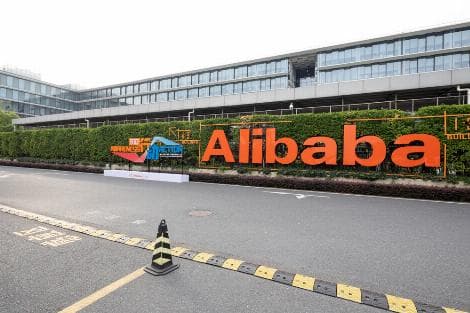
(Updates to remove the seeking comment line in the 9th paragraph, as Alibaba has since responded)Alibaba Group (HKG:9988) and its US payments processor, AUS Merchant Services, agreed to pay a combined $600 million to resolve an investigation by the US Justice Department into illegal pharmaceutical sales on the company's e-commerce platforms.The Chinese tech and e-commerce firm admitted that between January 2016 and December 2024, it failed to prevent roughly 80,000 product sales on Alibaba.com and AliExpress.com that involved unlawful imports of pharmaceuticals, controlled substances, listed chemicals and pill presses, according to a Wednesday notice from the Justice Department.In a statement issued to, Alibaba described the settlement as a "mutually satisfactory resolution with U.S. regulators.""This settlement reflects a thorough regulatory process with Alibaba's full cooperation and our commitment to best-in-class standards of control, policies, and measures against non-compliant product sales."The products involved in the investigation have a combined gross merchandise value exceeding $200 million, the DOJ said, adding that federal agents made more than 40 undercover purchases of illegal drugs and counterfeiting equipment during the probe.Separately, AUS admitted that from January 2020 to December 2023, it accepted US dollar-denominated wire and credit-card payments on behalf of overseas Alibaba merchants.Under a non-prosecution agreement, Alibaba will pay a $125 million criminal penalty and forfeit $200 million, while AUS, formerly known as Alipay US, will pay an $85 million penalty and forfeit $190 million.First Assistant U.S. Attorney Charles C. Calenda for the District of Rhode Island called it "the largest monetary settlement in the history of the District of Rhode Island."Assistant Attorney General Brett A. Shumate of the Justice Department's Civil Division, said, "Companies operating online marketplaces - whether based in the United States or abroad - must implement appropriate safeguards to prevent bad actors from exploiting their platforms. If they fail to do so, the Department will hold them accountable."The settlement marks the latest US action against Alibaba after the US Department of Defense in June added the company to its list of "Chinese military companies" under Section 1260H of the National Defense Authorization Act, alongside Baidu (HKG:9888), BYD (HKG:1211, SHE:002594), Nio (HKG:9866), WuXi AppTec (HKG:2359, SHA:603259), Robosense Technology (HKG:2498) and more.Last week, Alibaba sued the Pentagon, seeking to overturn the designation and accusing the department of acting without factual basis or fair process in branding it as a threat to national security."The determinations have no basis in fact or law... To label Alibaba a 'Chinese military company' is to brand it an instrument of the Chinese military and a threat to US national security," Alibaba wrote.

HKG:9988
Alibaba, US Payments Partner to Pay $600 Million in Drug-Import Probe
US Markets

Alibaba, US Payments Partner to Pay $600 Million in Drug-Import Probe

Alibaba Group (HKG:9988) and its US payments processor, AUS Merchant Services, agreed to pay a combined $600 million to resolve an investigation by the US Justice Department into illegal pharmaceutical sales on the company's e-commerce platforms.The Chinese tech and e-commerce firm admitted that between January 2016 and December 2024, it failed to prevent roughly 80,000 product sales on Alibaba.com and AliExpress.com that involved unlawful imports of pharmaceuticals, controlled substances, listed chemicals and pill presses, according to a Wednesday notice from the Justice Department.In a statement issued to, Alibaba described the settlement as a "mutually satisfactory resolution with U.S. regulators.""This settlement reflects a thorough regulatory process with Alibaba's full cooperation and our commitment to best-in-class standards of control, policies, and measures against non-compliant product sales."The products involved in the investigation have a combined gross merchandise value exceeding $200 million, the DOJ said, adding that federal agents made more than 40 undercover purchases of illegal drugs and counterfeiting equipment during the probe.Separately, AUS admitted that from January 2020 to December 2023, it accepted US dollar-denominated wire and credit-card payments on behalf of overseas Alibaba merchants.Under a non-prosecution agreement, Alibaba will pay a $125 million criminal penalty and forfeit $200 million, while AUS, formerly known as Alipay US, will pay an $85 million penalty and forfeit $190 million.First Assistant U.S. Attorney Charles C. Calenda for the District of Rhode Island called it "the largest monetary settlement in the history of the District of Rhode Island."Alibaba did not immediately respond to' request for comment.Assistant Attorney General Brett A. Shumate of the Justice Department's Civil Division, said, "Companies operating online marketplaces - whether based in the United States or abroad - must implement appropriate safeguards to prevent bad actors from exploiting their platforms. If they fail to do so, the Department will hold them accountable."The settlement marks the latest US action against Alibaba after the US Department of Defense in June added the company to its list of "Chinese military companies" under Section 1260H of the National Defense Authorization Act, alongside Baidu (HKG:9888), BYD (HKG:1211, SHE:002594), Nio (HKG:9866), WuXi AppTec (HKG:2359, SHA:603259), Robosense Technology (HKG:2498) and more.Last week, Alibaba sued the Pentagon, seeking to overturn the designation and accusing the department of acting without factual basis or fair process in branding it as a threat to national security."The determinations have no basis in fact or law... To label Alibaba a 'Chinese military company' is to brand it an instrument of the Chinese military and a threat to US national security," Alibaba wrote.

HKG:9988