FINWIRES · TerminalLIVE
FINWIRES

Signet Jewelers Raises Full-Year Earnings Outlook as Fiscal Second-Quarter Profit Tops Estimates

By
Signet Jewelers Raises Full-Year Earnings Outlook as Fiscal Second-Quarter Profit Tops Estimates

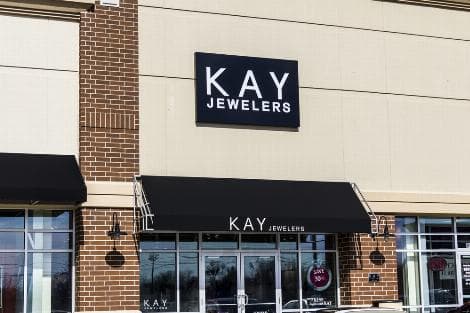
Signet Jewelers (SIG) lifted its full-year earnings outlook on Wednesday as the diamond jewelry retailer's bottom line exceeded market expectations in the fiscal second quarter amid comparable sales strength across all fine jewelry brands.

The Kay Jewelers owner now anticipates adjusted earnings to be in a range of $10.45 to $12.15 per share for fiscal 2027, up from the prior guidance of $9.20 to $11. The current consensus on FactSet is for non-GAAP EPS of $10.82.

The stock jumped 14% in the most recent premarket activity.

The improved earnings outlook reflects the company's operating performance so far this year, additional share buybacks, tariff refunds and a new consumer credit agreement, Chief Financial Officer Joan Hilson said in a statement.

Signet agreed to an extended partnership with Bread Financial (BFH) through December 2035 that will allow the retailer's customers to have consistent access to financing options, it said.

Same-store sales are now estimated to be flat to up 2.5% for the ongoing fiscal year, reflecting a higher bottom end than the previous forecast for a decline of about 0.8%. Sales are still projected to come in between $6.7 billion and $6.9 billion. The Street is looking for sales of $6.84 billion.

For the three months through Aug. 1, the retailer's adjusted EPS surged to $2.19 from $1.61, surpassing the average analyst estimate of $1.74. Sales ticked down to $1.53 billion from $1.54 billion, in line with the Street's view.

Same-store sales rose 2.2%. "We delivered another quarter of (comparable) sales growth with a positive comp performance in all fine jewelry brands," Chief Executive J.K. Symancyk said in the earnings release. "This includes high-single-digit unit growth at higher price points."

In a client note emailed on Tuesday, UBS Securities said that its industry checks pointed to a "decent quarter" for Signet, with results expected to produce a "modest EPS beat." The company has implemented initiatives over the last 5 years to boost its omnichannel capabilities, improve jewelry assortment, optimize its supply chain and enhance profitability, the brokerage said in the note.

North America revenue edged 0.1% higher to $1.43 billion, with comparable sales increasing 1.9%. International revenue gained 5.2% to $96.6 million, with same-store sales climbing 6%.

Signet expects sales to be in a range of $1.37 billion to $1.41 billion for the ongoing quarter, compared with the market's current forecast of $1.39 billion. Same-store sales are anticipated to be down 1% to up 2%.

"We are entering the back half of the year well-positioned to deliver compelling value throughout the holiday season for customers across a broad range of income levels," Symancyk said.


Related Articles

China's Consumer, Producer Inflation Pick Up on Upstream Cost Pressures
US Markets

China's Consumer, Producer Inflation Pick Up on Upstream Cost Pressures

China's consumer and producer prices strengthened in August, signaling firmer price pressures as higher commodity and input costs fed through the industrial sector.The consumer price index rose 0.8% year over year in August, according to data from the National Bureau of Statistics on Wednesday. The reading matched the 0.8% consensus forecast tracked by Investing.com and picked up from 0.5% in July.The CPI rose 0.4% month over month, rebounding after three consecutive months of declines and suggesting a firmer near-term price trend.The recovery, however, remained uneven. Food prices fell 1.4% year over year, while non-food prices rose 1.2%. Consumer goods prices increased 0.8%, matching the rise in services prices.Core inflation, which excludes food and energy, rose 1% year over year, pointing to somewhat firmer underlying price pressures than the headline CPI suggests.Producer prices delivered a stronger signal. The PPI rose 3.8% year over year in August, recovering from a three-month low of 3.5% in July and exceeding the 3.6% consensus forecast tracked by Investing.com.On a month-over-month basis, the PPI rose 0.4%, reversing two consecutive months of declines.The rebound was led by production inputs, with prices of means of production rising 5% year over year. Mining prices jumped 17.8%, while raw-material prices rose 6.7%.Higher commodity and industrial input costs remained a key source of pressure. Prices of non-ferrous metal materials and wires surged 19.8% year over year, while fuel and power prices rose 9.8% and chemical raw-material prices increased 9.5%.Taken together, the data suggest China's price environment is becoming firmer, although the recovery remains uneven.For the first eight months, consumer prices averaged 0.9% higher than a year earlier, compared with a 2% increase in producer prices.

Shanghai Composite^SZSE
Chip, Drug Makers to Drive Non-Residential Construction Rebound, UBS Says
US Markets

Chip, Drug Makers to Drive Non-Residential Construction Rebound, UBS Says

US non-residential construction is approaching a reacceleration, driven by semiconductor and pharmaceutical investments, UBS Securities said in a note emailed Tuesday.The brokerage expects manufacturing-related construction to rebound to more than $200 billion by the end of next year following a 25% drop to $186 billion in the last 12 months.Electric vehicle and battery plants, as well as semiconductor investments, drove the previous buildout cycle from 2021 to 2024, UBS analysts, including Steven Fisher, said."Our analysis and project tracking continues to suggest the drivers this cycle will be another round of semiconductor factories and pharmaceutical projects, in addition to some general industrial and defense related investments," Fisher wrote.UBS upgraded its 2027 growth outlook for non-residential construction to 6.7% from 6%, while lowering the 2026 view to show a 0.9% drop, all in nominal terms.The semiconductor industry has announced nearly $300 billion in year-to-date investments, according to the note. The CHIPS and Science Act, which became law in 2022, initially boosted capacity expansion, but companies have reassessed plans over the last one to two years."For some time, semiconductor manufacturers have remained relatively disciplined in their capacity expansion plans, preferring to add capacity in response to demand rather than build ahead of it," Fisher said. "That demand now appears firmly in place."Pharmaceutical companies have announced about $400 billion in new investments over the last two years, including a commitment of at least $20 billion from Eli Lilly (LLY), amid surging demand for weight loss drugs, the UBS note showed.Defense spending is also on the rise due to the evolving geopolitical situation."In addition to structural drivers discussed above, we think that cyclical drivers will add to growth," Fisher said.The Institute for Supply Management's purchasing managers' index has been expanding for eight months in a row following three years of sluggish performance, according to the brokerage. Separately, S&P Global (SPGI) said last week that manufacturing growth held steady sequentially in August.UBS said equipment rental firm United Rentals (URI) is the main beneficiary of the manufacturing capacity expansion.The brokerage is also positive on United Rentals' peer Equipmentshare.com (EQPT) and construction machinery names Oshkosh (OSK), Caterpillar (CAT), Deere (DE) and CNH Industrial (CNH).Materials providers like Martin Marietta Materials (MLM) and CRH (CRH) and some companies in the engineering and construction sector will also benefit from a pickup in factory activity, according to the note.

$CAT$CNH$CRH$DE$EQPT$LLY$MLM$OSK$SPGI$URI
Update: Equities Dip, Oil Jumps as Middle East Tensions Escalate
US Markets

Update: Equities Dip, Oil Jumps as Middle East Tensions Escalate

(Updates with market moves at the end of the day, and other changes, if any.)US stocks fell for a second consecutive session on Tuesday as heightened tensions in the Middle East drove oil prices higher.The Dow Jones Industrial Average closed 1.2% lower at 52,786.07, while the S&P 500 shed 0.6% to 7,673.52. The Nasdaq Composite dipped 0.3% to 26,421.41. US markets were closed Monday for the Labor Day holiday.Most sectors ended in the red, led by healthcare, while energy paced the gainers.West Texas Intermediate crude oil rose 2.4% to $93.71 a barrel in Tuesday late-afternoon trade, having hit a high of $94.73 earlier in the day. Brent crude climbed 1.9% to $98.79, after advancing earlier to reach an intraday peak of $99.46.Yemen's Iran-allied Houthi group struck civilian and economic sites in Saudi Arabia, injuring 73 people, the kingdom's Ministry of Foreign Affairs said Tuesday. The Houthi group targeted Saudi Aramco's facilities across Abha, Najran, and Jazan, Bloomberg News reported, citing the group's military spokesperson.US Central Command said Saturday that its forces targeted three Iranian oil tankers on Saturday in response to Tehran firing ballistic missile at two American Navy warships.Treasury yields were higher, with the two-year rate up 1.7 basis points at 4.4% and the 10-year rate rising 0.8 basis point to 4.79%.US consumers had mixed views on the inflation trajectory in August, seeing prices hold steady in the short- and long-term but expecting a drop over the next three years, a survey by the Federal Reserve Bank of New York showed Tuesday.The August consumer and producer price data for August, due out later this week, could serve as crucial data points for the Federal Open Market Committee, which begins its two-day policy meeting Tuesday next week.Markets are pricing in a 59% probability that the FOMC will raise the benchmark lending rate by 25 basis points on Sept. 16, with the remaining odds pointing to another Fed pause, according to the CME FedWatch tool.In company news, Boston Scientific (BSX) shares fell 5.9% after the medical device maker said it may not be able to meet its own guidance, citing a "material impact" from a recent cybersecurity incident.ABM Industries (ABM) tightened its full-year earnings outlook as the facility services provider's bottom line for the fiscal third quarter topped market estimates. The company's shares jumped 7.6%.S&P 500 companies' second-quarter earnings growth continues to outpace early forecasts as the reporting season draws to a close, Oppenheimer Asset Management said Tuesday.Cloud computing giant Oracle (ORCL) and photoshop maker Adobe (ADBE) are scheduled to report results later in the week.Spot gold dropped 1.1% to $4,357.46 per troy ounce, while silver edged down 0.4% to $66.50 per ounce.

Dow JonesNasdaq CompositeS&P 500$ABM$ADBE$BSX$ORCL