FINWIRES · TerminalLIVE
FINWIRES

SHEIN's Listing Odyssey Ends in Hong Kong After Years of Setbacks

By
SHEIN's Listing Odyssey Ends in Hong Kong After Years of Setbacks

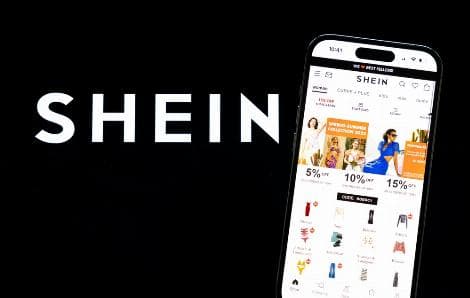
SHEIN Global (HKG:0625) opened flat in its Hong Kong trading debut on Tuesday, matching the offer price after the fast-fashion e-commerce company raised HK$13.2 billion in the city's listing.

The company priced 279.9 million H-shares at HK$48.56 each, just above the HK$48.55 midpoint of its HK$47.60 to HK$49.50 marketed range.

Cornerstone investors received about 61.9 million shares, or 22.1% of the IPO. They included Boyu, Tiger Global, General Atlantic, Tencent Holdings (HKG:0700), Greenwoods, Taikang Life and UBS Asset Management Singapore.

SHEIN plans to use the net proceeds mainly to enhance its technology capabilities, strengthen brand awareness and expand globally.

It will also invest in corporate responsibility initiatives, with the remainder for general corporate purposes.

The Hong Kong debut follows a years-long effort by SHEIN to access public markets.

In January 2022, SHEIN revived plans for a U.S. listing, with founder Chris Xu considering changing his citizenship to navigate tougher Chinese rules for offshore IPOs.

In February that year, the company paused the plans as capital markets became more volatile following Russia's invasion of Ukraine.

SHEIN announced in June 2024 that it had filed for a London IPO, but the plan drew criticism from human rights groups and policy researchers.

The London plans later faced regulatory hurdles in China. SHEIN was delayed in securing approval from the China Securities Regulatory Commission for a London listing and began considering Hong Kong as an alternative.

The company was also reported to be considering moving its headquarters back to China to win government support for a Hong Kong IPO.

In April 2025, the U.K. Financial Conduct Authority approved SHEIN's IPO prospectus, clearing a key hurdle for a London listing. However, the company continued to face scrutiny over its supply chain.

SHEIN also came under pressure from U.S. trade policy. In April 2025, it raised prices for U.S. customers following tariffs imposed by the Trump administration on goods imported from China.

The tariffs contributed to further delays, with Bloomberg News reporting in May 2025 that the listing plans had stalled.

After the setbacks surrounding its London plans, SHEIN ultimately turned to Hong Kong for its public-market debut.

As of midday Tuesday in Hong Kong, SHEIN's shares were down 4%.
Related Articles

Japan's Manufacturing PMI Climbs in August on Semiconductor Demand, S&P Says
US Markets

Japan's Manufacturing PMI Climbs in August on Semiconductor Demand, S&P Says

Japan's manufacturing sector growth accelerated in August, propelled by strong demand for semiconductors and artificial intelligence-related products,The final S&P Global Japan Manufacturing Purchasing Managers' Index (PMI) rose to 54.9 in August from 54.5 in July. While easing slightly from the flash estimate of 55.1, the reading marked the highest level since April and the second-steepest expansion since January 2022. A reading above 50 indicates improved sector performance, while anything below signals contraction.The increase in new business was the sharpest seen since January 2018 due to a rise in new orders, particularly from the technology sector, which saw the most significant increase in over eight and a half years, S&P said.New export orders surged the quickest since 2018 following demand coming from North America, Southeast Asia, and China, according to S&P.Employment also surged amid an expansion of operating capacity, with job creation rates accelerating the fastest since February 2018, S&P said.Despite the rise in demand, price pressures are still a "key concern" due to the tensions in the Middle East, with costs impacted by chokepoints in the Strait of Hormuz, but "there are tentative signs that delivery delays have eased somewhat over the past two months," S&P Global Market Intelligence Economics Associate Director Annabel Fiddes said in a note.Japan's manufacturing sector remained optimistic about output increases over the next year in August, with positive sentiments the highest in six months.Companies also expect further increases in customer demand for AI and semiconductors, according to S&P Global.

Nikkei 225
Private Survey Shows China's Manufacturing Activity Accelerates in August, Diverging From Government Data
US Markets

Private Survey Shows China's Manufacturing Activity Accelerates in August, Diverging From Government Data

China's manufacturing sector expanded at a faster pace in August, contrasting with official figures that showed broader factory activity remaining in contraction territory.The seasonally adjusted RatingDog China General Manufacturing Purchasing Managers' Index (PMI), compiled by S&P Global, rose to 51.5 in August from 50.9 in July, maintaining its position above the 50.0 neutral threshold that separates growth from contraction.The improvement was driven by an increase in new orders and demand, which elevated backlogs and created higher cost pressures for manufacturers. Meanwhile, employment remained relatively steady, and business confidence for the coming 12 months stayed positive."New export business rose at the fastest pace in six months, driven by strong growth in the consumer goods sector. Manufacturing output expanded for the ninth successive month, with the rate of growth reaching a three-month high, supported by stronger demand and capacity expansion," said RatingDog founder Yao Yu.In contrast, the official manufacturing PMI released by the National Bureau of Statistics on Monday came in at 49.8 for August. While improving from July's reading of 49.2 and beating the consensus market forecast of 49.5, the official index remained below the 50-point line for the second consecutive month.Analysts from ANZ noted that the data highlights an uneven economic transition within China."Exports are resilient, but the local service sector has not benefited much," ANZ economists Raymond Yeung, Zhaopeng Xing and Vicky Xiao Zhou said in a Monday note. They added that rising input and output price pressures reflect renewed tensions in the Middle East, which could point toward a firmer Producer Price Index print.

Shanghai Composite^SZSE
Australia's Manufacturing Sector Remains Flat in August Amid Mixed Performance
US Markets

Australia's Manufacturing Sector Remains Flat in August Amid Mixed Performance

Australia's manufacturing sector remained unchanged in August as the industry remained flat, with growth in new orders offset by a slight fall in production.The headline seasonally adjusted S&P Global Australia Manufacturing Purchasing Managers' Index (PMI) was unchanged at 52 in August, still above the 50-mark that signals expansion.Business confidence and new orders strengthened in August, supporting further job creation, though production fell slightly and purchasing was scaled back amid marked input costs and supply-chain pressures.New orders rose at the sharpest pace since January, with new export orders also returning to growth, while manufacturer confidence strengthened for the fourth consecutive month from April's recent low to reach its highest since February.Job creation helped firms reduce backlogs of work, which fell to their largest extent in just over a year, with staffing increases reflecting a mix of contract workers and longer-term hires linked to expansion plans.Input cost inflation quickened slightly in August, though it remained below levels typically seen since the start of the Middle East conflict, with higher freight and fuel costs widely cited, while output price inflation eased for the third consecutive month to its slowest since February.Supply chain disruptions linked to the Middle East conflict continued to weigh heavily on the sector, with supplier delivery times lengthening sharply and panellists noting international shipping delays and delivery consolidations by suppliers seeking to limit freight costs.

ASX 200