FINWIRES · TerminalLIVE
FINWIRES

Samsung, SK Hynix Lead KRW 392 Trillion Investment in South Korea's Chungcheong Region

By
Samsung, SK Hynix Lead KRW 392 Trillion Investment in South Korea's Chungcheong Region

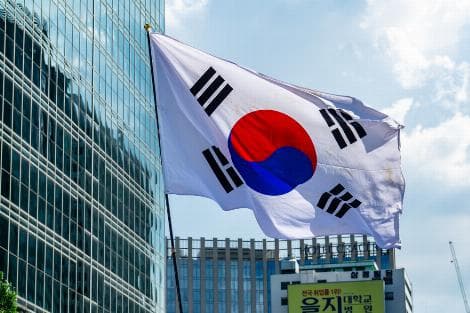
Samsung Electronics (KRX:005930), SK Hynix (KRX:000660) and Celltrion (KRX:068270) have pledged a combined 392 trillion won ($254 billion) to build a tech and biotech hub in South Korea's Chungcheong region.

South Korea's Ministry of Trade, Industry and Energy announced the plans at a Thursday briefing held at Samsung Display's Asan campus.

The event, which coincided with the first glass substrate delivery for Samsung Display's 8.6-generation OLED production line, follows the government's mega-projects briefing last week, where the ministry also announced a 550 trillion won project in cooperation with the government, Samsung, SK Hynix and Naver (KRX:035420).

At the latest event, Samsung outlined a 140 trillion-won plan to transform Chungcheong into "a hub for materials and components."

Through Samsung Display, the group plans to expand high-value-added OLED lines in Asan for smartphones, IT devices, XR, automotive and humanoid and wearable applications, according to a separate press release from Samsung.

The company will also build an HBM manufacturing base with five fab lines in Onyang, plus expanded facilities in Cheonan.

Samsung expects the plan to create 250,000 jobs.

Separately, SK Hynix CEO Kwak Noh-Jung said the company will invest a total of 100 trillion won in Cheongju, of which 80 trillion won will be spent on M17 NAND production and 20 trillion won for P&T7 advanced packaging.

P&T7 is targeted for completion by the end of 2027, while M17 construction is expected to begin next year, with operations slated to start in the first half of 2029.

Kwak cited an increasing demand for enterprise SSDs and NAND flash memory tied to the adoption of AI services as the reason for the expansion.

SK Group separately plans to build a 1-gigawatt AI data center in the Chungcheong region as part of a push to build a total of 15 GW of AI data center capacity across the country.

Meanwhile, biopharmaceutical company Celltrion (KRX:068270) will also invest 2 trillion won in biopharmaceutical production facilities within Chungcheong, according to the ministry.

The planned facility will manufacture pre-filled syringes, with plans to boost production capacity by 50 million syringes, raising Celltrion's total annual capacity in the region to 70 million syringes, Korea JoongAng Daily reported, citing the event.

The ministry also hinted that other companies have earmarked about 150 trillion won in the region.
Related Articles

Australia's Perpetual Turns Down AU$2.45 Billion EQT Buyout Bid
US Markets

Australia's Perpetual Turns Down AU$2.45 Billion EQT Buyout Bid

Australian investment fund Perpetual (ASX:PPT) has turned down a takeover approach from Swedish private equity firm EQT AB, saying the proposal undervalued the financial services company, according to a Wednesday press release.Under the proposal, EQT-controlled Windflower Pte Limited offered to acquire all of Perpetual's shares for AU$21.64 apiece in cash, valuing the company at about AU$2.45 billion."The indicative proposal was highly conditional and did not adequately represent fair value for Perpetual shareholders in the context of a change of control transaction," the company said in a statement.The approach comes after Perpetual terminated an AU$2.2 billion deal with private equity firm KKR in 2025 to sell its wealth management and corporate trust businesses.The transaction was scrapped after an independent expert concluded it was not in the best interests of shareholders following an adverse tax ruling.Perpetual said it would instead pursue a separate sale of its wealth management business.The investment manager subsequently agreed to sell its wealth management business to Bain Capital for an upfront cash payment of AU$500 million, with additional performance-linked payments of up to AU$50 million.The company said the proceeds would be used to reduce debt and support growth in its asset management and corporate trust businesses.The latest proposal adds to a string of takeover attempts for the investment manager.Perpetual rejected an AU$1.7 billion bid from a consortium that included Regal Partners in 2022, before turning down an AU$3.1 billion offer from its largest shareholder, Washington H. Soul Pattinson, the following year.

ASX:PPT
Update: Alibaba, US Payments Partner to Pay $600 Million in Drug-Import Probe
US Markets

Update: Alibaba, US Payments Partner to Pay $600 Million in Drug-Import Probe

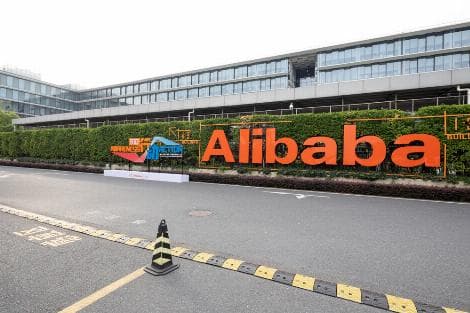
(Updates to remove the seeking comment line in the 9th paragraph, as Alibaba has since responded)Alibaba Group (HKG:9988) and its US payments processor, AUS Merchant Services, agreed to pay a combined $600 million to resolve an investigation by the US Justice Department into illegal pharmaceutical sales on the company's e-commerce platforms.The Chinese tech and e-commerce firm admitted that between January 2016 and December 2024, it failed to prevent roughly 80,000 product sales on Alibaba.com and AliExpress.com that involved unlawful imports of pharmaceuticals, controlled substances, listed chemicals and pill presses, according to a Wednesday notice from the Justice Department.In a statement issued to, Alibaba described the settlement as a "mutually satisfactory resolution with U.S. regulators.""This settlement reflects a thorough regulatory process with Alibaba's full cooperation and our commitment to best-in-class standards of control, policies, and measures against non-compliant product sales."The products involved in the investigation have a combined gross merchandise value exceeding $200 million, the DOJ said, adding that federal agents made more than 40 undercover purchases of illegal drugs and counterfeiting equipment during the probe.Separately, AUS admitted that from January 2020 to December 2023, it accepted US dollar-denominated wire and credit-card payments on behalf of overseas Alibaba merchants.Under a non-prosecution agreement, Alibaba will pay a $125 million criminal penalty and forfeit $200 million, while AUS, formerly known as Alipay US, will pay an $85 million penalty and forfeit $190 million.First Assistant U.S. Attorney Charles C. Calenda for the District of Rhode Island called it "the largest monetary settlement in the history of the District of Rhode Island."Assistant Attorney General Brett A. Shumate of the Justice Department's Civil Division, said, "Companies operating online marketplaces - whether based in the United States or abroad - must implement appropriate safeguards to prevent bad actors from exploiting their platforms. If they fail to do so, the Department will hold them accountable."The settlement marks the latest US action against Alibaba after the US Department of Defense in June added the company to its list of "Chinese military companies" under Section 1260H of the National Defense Authorization Act, alongside Baidu (HKG:9888), BYD (HKG:1211, SHE:002594), Nio (HKG:9866), WuXi AppTec (HKG:2359, SHA:603259), Robosense Technology (HKG:2498) and more.Last week, Alibaba sued the Pentagon, seeking to overturn the designation and accusing the department of acting without factual basis or fair process in branding it as a threat to national security."The determinations have no basis in fact or law... To label Alibaba a 'Chinese military company' is to brand it an instrument of the Chinese military and a threat to US national security," Alibaba wrote.

HKG:9988
Alibaba, US Payments Partner to Pay $600 Million in Drug-Import Probe
US Markets

Alibaba, US Payments Partner to Pay $600 Million in Drug-Import Probe

Alibaba Group (HKG:9988) and its US payments processor, AUS Merchant Services, agreed to pay a combined $600 million to resolve an investigation by the US Justice Department into illegal pharmaceutical sales on the company's e-commerce platforms.The Chinese tech and e-commerce firm admitted that between January 2016 and December 2024, it failed to prevent roughly 80,000 product sales on Alibaba.com and AliExpress.com that involved unlawful imports of pharmaceuticals, controlled substances, listed chemicals and pill presses, according to a Wednesday notice from the Justice Department.In a statement issued to, Alibaba described the settlement as a "mutually satisfactory resolution with U.S. regulators.""This settlement reflects a thorough regulatory process with Alibaba's full cooperation and our commitment to best-in-class standards of control, policies, and measures against non-compliant product sales."The products involved in the investigation have a combined gross merchandise value exceeding $200 million, the DOJ said, adding that federal agents made more than 40 undercover purchases of illegal drugs and counterfeiting equipment during the probe.Separately, AUS admitted that from January 2020 to December 2023, it accepted US dollar-denominated wire and credit-card payments on behalf of overseas Alibaba merchants.Under a non-prosecution agreement, Alibaba will pay a $125 million criminal penalty and forfeit $200 million, while AUS, formerly known as Alipay US, will pay an $85 million penalty and forfeit $190 million.First Assistant U.S. Attorney Charles C. Calenda for the District of Rhode Island called it "the largest monetary settlement in the history of the District of Rhode Island."Alibaba did not immediately respond to' request for comment.Assistant Attorney General Brett A. Shumate of the Justice Department's Civil Division, said, "Companies operating online marketplaces - whether based in the United States or abroad - must implement appropriate safeguards to prevent bad actors from exploiting their platforms. If they fail to do so, the Department will hold them accountable."The settlement marks the latest US action against Alibaba after the US Department of Defense in June added the company to its list of "Chinese military companies" under Section 1260H of the National Defense Authorization Act, alongside Baidu (HKG:9888), BYD (HKG:1211, SHE:002594), Nio (HKG:9866), WuXi AppTec (HKG:2359, SHA:603259), Robosense Technology (HKG:2498) and more.Last week, Alibaba sued the Pentagon, seeking to overturn the designation and accusing the department of acting without factual basis or fair process in branding it as a threat to national security."The determinations have no basis in fact or law... To label Alibaba a 'Chinese military company' is to brand it an instrument of the Chinese military and a threat to US national security," Alibaba wrote.

HKG:9988