
FINWIRES · TerminalLIVE
FINWIRES

PMI: Non-oil Private Sector Growth in Saudi Arabia, UAE Picks Up Against Tense Geopolitical Backdrop

By
PMI: Non-oil Private Sector Growth in Saudi Arabia, UAE Picks Up Against Tense Geopolitical Backdrop

Expansion in the non-oil private sectors of Saudi Arabia and the United Arab Emirates improved in May but remained well below their respective long-run averages as regional geopolitical tensions continued to dampen new business growth, surveys conducted by S&P Global showed Wednesday.

The seasonally adjusted Riyad Bank Saudi Arabia PMI climbed to 52.8 in May from 51.5 in April, against the historical average of 56.8. The "notable" improvement in business activity was the quickest in three months as domestic demand and stabilizing supply chains led to a sharp rise in production.

Employment also swung back to growth, while purchasing activity trended higher for the first time since February. Still, shipping disruptions, higher freight and fuel costs, and regional tensions weighed down external demand, leading to a steep drop in new export orders for a third straight month.

"Overall, the latest PMI reading supports the expectation that Saudi Arabia's non-oil economy will continue its upward trend during the remainder of 2026," Riyad Bank Chief Economist Naif Al-Ghaith said. "Improving domestic demand, stabilizing supply chains, contained inflation, strong government-led investment activity, and healthy trade performance collectively provide a strong foundation for continued private sector expansion."

In the Emirates, the improvement in non-oil private sector conditions was only moderate in May. The seasonally adjusted S&P Global UAE PMI edged up to 52.6 from 52.1 in April, staying under its long-run average of 54.3.

Survey respondents reported heightened supply-chain disruptions, because of which new business growth remained subdued, holding close to April's 62-month low. A decline in exports also impacted order books.

Still, output growth reached a three-month high, with 21% of businesses seeing increased activity, thanks to stronger market demand, project expansion and government-backed initiatives.

"Positively, the longer-term outlook remained strong in May, suggesting that [Emirati] businesses still view these current challenges as temporary and expect growth to bounce back quickly," S&P Global Principal Economist David Owen concluded.

Related Articles

US Proposes New Tariffs on EU Over Forced Labor as Brussels Advances Trade Deal
US Markets

US Proposes New Tariffs on EU Over Forced Labor as Brussels Advances Trade Deal

The US on Tuesday proposed additional tariffs on 60 economies, including the European Union, following an investigation into the enforcement of forced labor import prohibitions.As part of a Section 301 investigation, the Office of the US Trade Representative threatened an extra 10% duty on the EU, stemming from findings that the bloc failed to "effectively" block forced labor imports. The proposed tariffs were announced on the same day that the European Parliament's trade committee granted preliminary approval for a trade agreement reached with the US in the third quarter of 2025.The targeted 27-nation bloc joins countries like Canada, Mexico and Pakistan, which will face the 10% tariff rate because they established partial enforcement regimes or have committed to doing so through reciprocal trade agreements. Meanwhile, other economies, including Switzerland, Saudi Arabia, South Africa and the United Arab Emirates, will be hit by a steeper 12.5% tariff rate on failure "to impose and effectively enforce a prohibition on the importation of goods produced with forced labor.""The failure of our most important trading partners to address the importation of goods made with forced labor is unacceptable," said US Trade Representative Jamieson Greer. "This creates a dynamic where American workers are forced to compete globally on an unlevel playing field. We will no longer tolerate this disparity."The United States Trade Representative invited public feedback on the proposal, setting a deadline of July 6 for written comments and scheduling public hearings for July 7.Danske Bank noted that the move clears the path for permanent tariffs to take over when the 10% Section 122 duties expire on July 24. "While the shift in legal basis could still face court challenges, overall tariff levels for now should remain little changed when the authority 'switches' from Section 122 to Section 301," the bank wrote.

$^DFMGI$^FADGI$^FTSE$^SSMI$^SXXP$^TASI
Inditex Shares Rise as Fiscal First-quarter Earnings Match Consensus; Sales Momentum Improves
US Markets

Inditex Shares Rise as Fiscal First-quarter Earnings Match Consensus; Sales Momentum Improves

Shares of Industria de Diseño Textil (ITX.MC), d/b/a Inditex, rose over 5% in early Wednesday morning trading in Madrid after the Zara owner reported fiscal first-quarter results in line with market expectations and solid sales growth at the start of the next three-month period.Attributable net profit for the three months ended April 30 was 1.38 billion euros, up from 1.31 billion euros a year ago, while EPS moved to 0.441 euro from 0.419 euro. The clothing company recorded net sales of 8.75 billion euros, compared with 8.27 billion euros last year.Analysts polled by FactSet were expecting 1.38 billion euros in net income, 8.72 billion euros in sales and 0.44 euro in EPS.Inditex, which operates Zara, Pull&Bear and Massimo Dutti, among others, also saw sales picking up at the start of the second fiscal quarter. Revenue for store and online sales, in constant currency, rose 11.5% year over year between May 1 and June 1."Inditex has delivered a good start to the year, with 1Q26 sales up +5.8% yoy and +8.8% cFX to to [EUR]8,750m, largely in line with expectations (Cons [EUR]8,750m)," Deutsche Bank Research said in a quick-take note following the earnings release. "Gross margin was a beat, up +67 bps to 61.2% (Cons 60.7%, DBe 60.5%) with opex slightly higher at +31.8% of sales (+6.4% yoy). EBIT of [EUR]1,756 million was a c.1% beat vs consensus ([EUR]1,740m), with EPS of [EUR]0.44 in line with consensus."The clothing company plans to invest 2.3 billion euros during 2026 to strengthen its store network, digital platforms and logistics infrastructure. "Optimization of stores is ongoing, and we expect this to drive further gains in store productivity," the company said.For fiscal 2026, Inditex expects a 1% negative currency impact on sales at current exchange rates and a stable gross margin, plus or minus 50 basis points.

$ITX.MC
Vietnam's Industrial Output, Retail Sales Cool in May
US Markets

Vietnam's Industrial Output, Retail Sales Cool in May

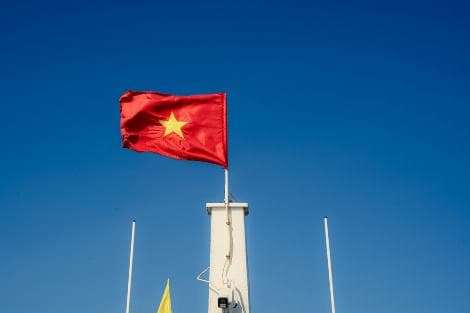
Vietnam maintained its economic expansion in May, posting further increases in industrial output and retail sales, though the pace of growth slowed slightly from the previous month.The industrial production index grew 8.8% from a year ago, decelerating from April's 9.3% expansion. Similarly, retail sales jumped 11.8% year on year, a slight cooldown from the 12.1% growth recorded in April. On a month-on-month basis, industrial output rose 3.3% and retail sales ticked up 0.5% in May.For the first five months of the year, industrial production rose 9.1% and retail sales jumped 11.2%.Analysts consider Vietnam a strong economic performer in Asia, bolstered by its 2025 gross domestic product growth of 8.02%, the second-fastest annual rate since 2011."This growth was driven by strong performances in manufacturing, tourism, exports, consumption, and investments, underscoring the country's resilience and positioning it as one of Asia's standout economic performers in 2025, despite challenging trade tensions and tariff actions," according to a March 27 report from McKinsey & Company.Vietnam's tourism sector remained robust, with international visitors in May climbing 16.5% year on year to 1.78 million.However, the country is not immune to geopolitical issues, such as U.S. tariff hikes and the Middle East conflict, which has driven fuel prices higher. These factors widened the country's trade deficit in May to its highest level since 1990, surging to $5.21 billion from $3.28 billion in April.Exports grew 18% year on year to $46.93 billion, while imports came in at $52.14 billion, up 34% year on year.Vietnam remains vulnerable to global oil price shocks despite the government's introduction of short-term stabilization measures, such as the Fuel Price Stabilization Fund."Vietnam's most pressing energy security challenge is not the immediate turbulence in global oil markets, but the country's structural under‑preparedness for future supply disruptions," East Asia Forum's Cuong Nguyen said."Oil stocks cover only roughly 32 days of demand, well below the 90-day benchmark set by the International Energy Agency, leaving Vietnam without the buffer to withstand prolonged shocks."Nguyen suggested that Vietnam should establish a strategic petroleum reserve and adopt a recalibrated growth model to ensure the country's energy security.

$^HNX$^HSX