FINWIRES · TerminalLIVE
FINWIRES

Oil Falls as Trump Says Iran Deal is Days Away

By
Oil Falls as Trump Says Iran Deal is Days Away

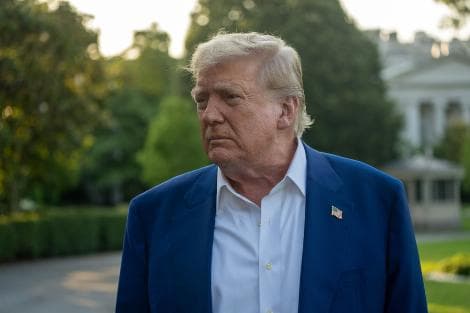
Oil prices declined on Tuesday after US President Donald Trump said the Iran war could end within days.

West Texas Intermediate crude oil was down 5.7% at $86.08 a barrel, while Brent was last down 4.8% to $89.70.

Trump told reporters in New York that a diplomatic resolution to the Middle East conflict could be reached in "two or three days," CNBC reported. The critical Strait of Hormuz, which remains effective shut, would reopen "immediately" after the deal, Trump reportedly said.

Trump has previously said on a number of occasions that an end to the conflict was imminent.

Iran and Israel launched direct attacks against each another over the weekend, testing an already fragile ceasefire between Washington and Tehran. Iran and Israel, however, suspended strikes against each other on Monday.

The global crude market has already lost 1 billion barrels of supply since the Iran war began at the end of February, Rystad Energy said in a note.

"Cumulative losses have now reached 1 billion barrels and are on track to nearly double by year-end under our base case, which still assumes a narrow US-Iran deal in June and a phased reopening of the Strait of Hormuz from mid-July," Aditya Saraswat, Middle East and North Africa research director at Rystad, said in a note.

That base case is now under pressure, Saraswat said.

"Despite a fragile memorandum of understanding between the US and Iran that had raised hopes of a deal, both sides have since returned to air strikes, narrowing the diplomatic track and widening the tail risk of a prolonged shock," he added.
Related Articles

Australian Consumer Sentiment 'Deeply Pessimistic' as Cost-of-Living Pressures Mount
US Markets

Australian Consumer Sentiment 'Deeply Pessimistic' as Cost-of-Living Pressures Mount

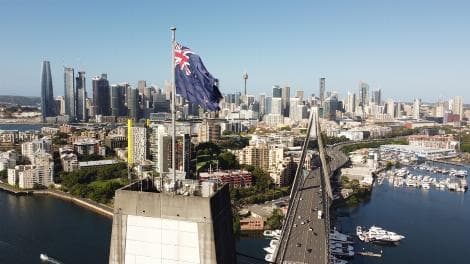
Australian consumers continued to show deep pessimism in June, beaten by cost-of-living pressures, while the recent fuel excise tax cut gave little relief to struggling consumers.The Westpac-Melbourne Institute Consumer Sentiment Index fell 2.9% to 80.6, among the weakest figures in the 50-year history of the survey, with pessimists beating optimists by 20% in numbers."Australian consumers are clearly bracing for more bad news on the financial front," said Matthew Hassan, Westpac's head of Australian macro-forecasting.Recent data seems to be in line with the comment, as Australia's seasonally adjusted unemployment rate rose to 4.5% in April, up from 4.3% in March, data from the Australian Bureau of Statistics showed recently.Also, the gross domestic product rise of 0.3% in the March quarter shows that growth over the course of the year will be at a soft pace, ANZ said last week, adding that it expects a further weakening in real income growth over the year.The Reserve Bank of Australia also expects gross domestic product growth to slow this year under the weight of higher interest rates and the Middle East conflict, with unemployment forecast to rise over the coming year but remain below pre-pandemic levels.Hassan said the central bank is likely to hold interest rates at its meeting next week after three consecutive rate hikes, though further increases are still expected in future meetings.

$^AXJO
South Korea's First-Quarter GDP Rises 3.8% Year Over Year on Chip Surge
US Markets

South Korea's First-Quarter GDP Rises 3.8% Year Over Year on Chip Surge

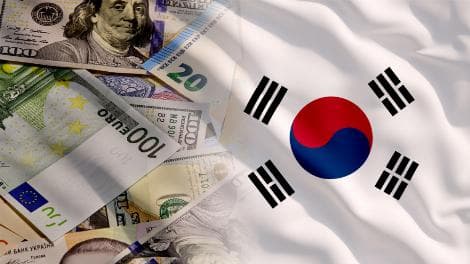
South Korea's economy expanded 3.8% in the first quarter from a year earlier, according to data released Tuesday by the Bank of Korea.The latest print accelerated from 1.6% growth in the fourth quarter of 2025, beating the consensus forecast of 3.6% tracked by Investing.com.On a quarter-over-quarter basis, the Bank of Korea revised its advance estimate upward by 0.1 percentage point to 1.8%, rebounding from a 0.1% contraction in the previous quarter. The quarterly figure also topped the consensus forecast of 1.7%.The latest data confirmed a semiconductor-led surge that the Bank of Korea reported in its advance estimate in April. Major players in the semiconductor field include Samsung Electronics (KRX:005930) and SK Hynix (KRX:000660).Exports of goods and services rose 11.8% year over year in the first quarter, significantly faster than the 4.6% jump in the fourth quarter of 2025, according to the latest data.Imports of goods and services likewise jumped 8.5% from a year earlier in Q1, also accelerating from the 3.9% increase in Q4 2025.Elsewhere, manufacturing output climbed 7.2% year over year, versus the 2.4% increase in Q4 2025. The agriculture, forestry and fishing sector rose 3.5% in Q1 from a year earlier, reversing the 0.5% dip in Q4 2025.Output from the electricity, gas and water supply sector contracted for the fourth straight quarter in Q1, dropping 5% after the 4.4% slide in Q4 2025.On the expenditure side, private consumption rose 2.7% year over year in Q1 after growing 2.4% in Q4 2025, while government spending jumped 3.1%, slowing from the 3.6% expansion previously.ING Think Senior Economist for South Korea, Min Joo Kang, wrote in an April 23 note that growth is expected to slow in the second quarter."We expect strong chip momentum to continue, but also a slowdown in 2Q26 growth as energy disruptions affect activity across petrochemicals and other manufacturing sectors.""The Korean government implemented a temporary export ban on Naphtha, and Korean companies increased oil and gas imports from outside the Middle East. Despite these measures, manufacturing activity still cannot be sustained at full capacity," Min added.Meanwhile, Stephen Lee, an economist at Meritz Securities in Seoul, expects stronger export momentum in the third quarter and export growth of around 50% for the full year."It is truly an unprecedented pace, raising market expectations again and again and ​exceeding them again and again," Lee was quoted by Reuters as saying last week.The Bank of Korea recently raised its economic growth forecast for the country to 2.6% this year from its previous 2% growth outlook, citing the semiconductor boom.BOK Governor Shin Hyun-song expects strong exports to contribute 0.7 percentage points to the country's GDP growth in 2026, Yonhap reported May 28, citing a press conference.

$^KOSDAQ$^KS11$KRX:000660$KRX:005930
Tech-Heavy Nasdaq Snaps 3-Day Losing Streak
US Markets

Tech-Heavy Nasdaq Snaps 3-Day Losing Streak

The Nasdaq Composite rose Monday following a three-day slump, buoyed by the technology sector's rebound.The tech-heavy Nasdaq Composite rose 0.9% to 25,929.7, while the S&P 500 added 0.3% to 7,405.5. The Dow Jones Industrial Average lost 0.2% to 50,786.01, closing lower for a second consecutive session. Most sectors were in the red, led by utilities, while tech paced the gainers with a 1.5% rise.Chipmaker Intel (INTC) climbed 11%, the top performer on the S&P 500, followed by Micron Technology (MU), which jumped 9.9%. Cisco Systems (CSCO) rose 2.1%, the best performer on the Dow. Nvidia gained 1.7%.The tech sector shed 5.8% on Friday."In our view, volatility in technology stocks is likely to continue, although the (artificial intelligence) investment boom appears robust," D.A. Davidson said in a report on Monday. "We continue to expect a broadening of gains supporting sector diversification in portfolios."Alphabet's (GOOG, GOOGL) Google and Nvidia (NVDA) have turned to Intel as a backup manufacturer for their most advanced processors as Taiwan Semiconductor Manufacturing (TSM) struggles to meet overwhelming demand, The Information reported, citing unnamed sources.Taiwan Semiconductor shares were up 2.8%.West Texas Intermediate crude oil was up 0.8% at $91.22 a barrel in Monday late-afternoon trade, while Brent rose 1.2% to $94.22, but both benchmarks were off session highs.Iran and Israel suspended strikes against each other. However, Tehran vowed to resume attacks if Israel continues to target Iran-backed Hezbollah in Lebanon, according to a CNBC report.Israel and Iran were looking for an "immediate" ceasefire, US President Donald Trump said Monday."Overall, the situation remains fragile, and for the oil market, the status quo holds: global inventories continue to draw, with analysts increasingly convinced that inventories will reach dangerously low levels by the end of June (if not sooner)," Tudor Pickering Holt Analyst Matt Portillo said in a note.US Treasury yields were higher, with the 10-year rate last up four basis points at 4.56%, and the two-year rate rising 1.9 basis points to 4.17%.In economic news, US consumers' short-term inflation expectations decreased in May, while the labor market outlook "deteriorated somewhat," a survey by the Federal Reserve Bank of New York showed Monday.Gold was down 0.2% at $4,358.50 per troy ounce, while silver dropped 0.9% to $68.50 per ounce.

$^DJI$^IXIC$^SPX$CSCO$GOOG$GOOGL$INTC$MU$NVDA$TSM