FINWIRES · TerminalLIVE
FINWIRES

Nvidia Investing $3.5 Billion in MediaTek, Partners on NVLink Fusion Platform

By
Nvidia Investing $3.5 Billion in MediaTek, Partners on NVLink Fusion Platform

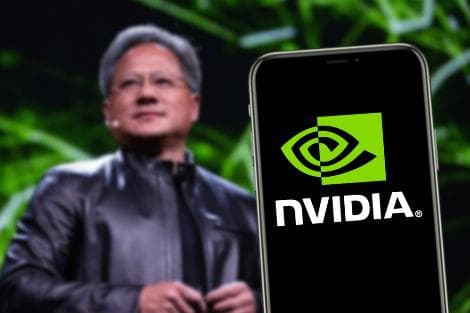
Nvidia (NVDA) expanded its partnership with chip designer MediaTek, including a $3.5 billion investment, to support adoption of the company's proprietary interconnect technology for custom rack-scale artificial intelligence chips.

Under the deal, Nvidia bought $3.5 billion convertible bonds issued by MediaTek, and the Taiwan-based fabless chipmaker will adopt the NVLink Fusion platform, which provides chipmakers with prevalidated connectors and specialized memory to integrate custom AI accelerators directly into Nvidia's rack-scale data center systems.

"MediaTek is one of the world's great semiconductor companies, with exceptional expertise in system-on-chip design, connectivity, leading performance and power efficiency," Nvidia Chief Executive Jensen Huang said. "Together, we're building platforms that bring Nvidia accelerated computing to new markets and give customers the freedom to create differentiated AI systems at enormous scale."

"Nvidia's investment strengthens a collaboration that spans cloud AI infrastructure, local AI computing and automotive in the era of physical AI," MediaTek CEO Rick Tsai said.

Last week, Nvidia reported fiscal second-quarter results that more than doubled from a year ago and topped Wall Street expectations, driven by record data center sales. Morgan Stanley said the chipmaking giant offered a surprisingly strong fiscal 2028 revenue outlook, while its gross margin guidance provided clarity amid rising memory costs.

Separately, Nvidia announced an expanded partnership with Amazon.com's (AMZN) Amazon Web Services to supply 2 million additional GPUs across AWS infrastructure in 2027 and 2028, and build dedicated 100,000-GPU AI factories for federal security workloads.

Earlier in August, Nvidia said it was collaborating with six major financial institutions to launch compute financing platforms aimed at raising over $500 billion in third-party capital to support its AI infrastructure. Apollo (APO), BlackRock (BLK), Blackstone (BX), Brookfield (BAM), Goldman Sachs (GS) and KKR (KKR) were part of the partnership.

Previously, Nvidia agreed to expand its partnership with South Korean conglomerate SK Group with a more than $500 billion AI infrastructure initiative.

Nvidia's shares were up 1.1% Monday and have gained 18% this year.

Chip designer Marvell Technology (MRVL) reported late last week second-quarter results above Wall Street's estimates amid a surge in data center revenue. B. Riley Securities said the company's fiscal third-quarter gross margin outlook came in a bit soft amid a higher custom product mix.

Semiconductor manufacturer Broadcom (AVGO) is scheduled to report its fiscal third-quarter results Wednesday.

Price: $220.40, Change: $+2.85, Percent Change: +1.31%
What else is happening in US Markets?

Austal Swings to Loss in Fiscal 2026, Impacted by 'Onerous' US Contracts
US Markets

Austal Swings to Loss in Fiscal 2026, Impacted by 'Onerous' US Contracts

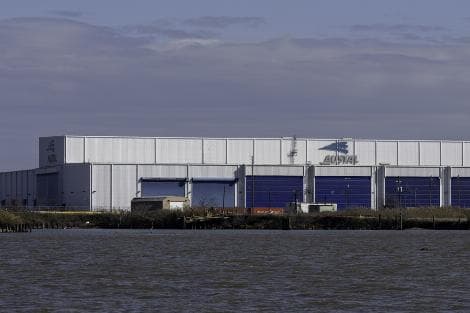
Austal (ASX:ASB) posted a loss in fiscal 2026, impacted by "onerous" US contracts, while the company said it's committed to delivering a return to profitability in fiscal 2027."The Group result was influenced in the near term by the previously announced non-cash provision relating to onerous contracts at Austal USA, where its request for accelerated contractual relief was not agreed to by the US Department of War, despite previous positive discussions," said Chief Executive Patrick Gregg.The shipbuilder and defense contractor logged AU$0.127 in loss per share for fiscal 2026, compared with a profit of AU$0.233 a year ago, while revenue increased to AU$2.03 billion from AU$1.82 billion previously.Euroz Hartleys, which has a buy rating on Austal with an under review price target of AU$6, said in a note that the results were largely anticipated after the company's August trading update."The Board and management are committed to delivering a return to profitability in FY2027. We have a strong contractual position in relation to the onerous contracts, and other programs and sustainment business in the US remain profitable with a strong order book and outlook," said Gregg.The company said earlier in the month that it received a non-binding, conditional proposal from a unit of South Korea's Hanwha Group to acquire its US operations for an indicative enterprise value of up to $1.2 billion."The [proposal] was a major development. Austal has determined that it merits further evaluation and approved Hanwha to undertake due diligence to improve the certainty of any proposal." Gregg added.

ASX:ASB
BYD's First-Half Profit Falls on Lower NEV Business, FX Losses
US Markets

BYD's First-Half Profit Falls on Lower NEV Business, FX Losses

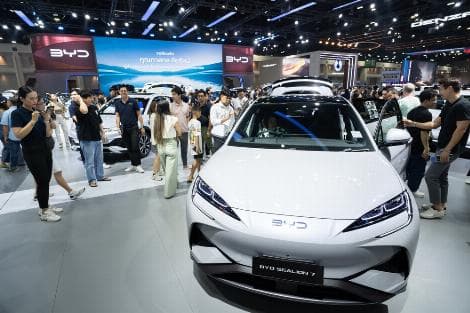
BYD Company (HKG:1211, SHE:002594) reported a 21% decline in first-half profit attributable to shareholders, as weaker new energy vehicle (NEV) business and foreign exchange losses weighed on results.Profit attributable to shareholders fell to 12.3 billion yuan in the six months ended June 30, from 15.5 billion yuan a year earlier, while revenue declined 7% to 344.8 billion yuan, according to the company's interim report.Earnings per share fell to 1.35 yuan from 1.71 yuan a year earlier.The company said the revenue decline was mainly attributable to a decrease in its NEV business, while the decline in attributable profit was also affected by foreign exchange losses arising from exchange rate movements.BYD said its overseas business remained a core growth driver in the first half, with its NEV business footprint expanding to 121 countries and regions across six continents.The automaker is also expanding localized production and logistics capacity overseas. Its factories in Brazil and Thailand are already operating, and its owned overseas fleet comprises eight roll-on/roll-off vessels.Looking ahead, BYD said it expects overseas expansion to remain an important support for sales.It plans to deploy 6,000 flash-charging stations overseas and continue increasing production capacity for its second-generation blade battery and flash-charging technologies.The company also expects AI-related opportunities to provide new growth engines. In its electronics business, several server models achieved bulk shipments in the first half, while its latest liquid-cooling products for a major overseas customer entered the production ramp-up phase.BYD plans to expand its AI computing infrastructure business across servers, liquid cooling, high-voltage power supply, and high-speed connectivity.

HKG:1211SHE:002594
China's Big Four Banks Let Credit Costs Eat Into First-Half Profits Even as Revenues Jump
US Markets

China's Big Four Banks Let Credit Costs Eat Into First-Half Profits Even as Revenues Jump

Industrial and Commercial Bank of China (HKG:1398, SHA:601398), China Construction Bank (HKG:0939, SHA:601939), Agricultural Bank of China (SHA:601288, HKG:1288) and Bank of China (SHA:601988, HKG:3988) all posted stronger revenue in the first half versus a year earlier, but all four booked higher credit impairment losses, limiting profit growth to low single digits.Attributable profit at ICBC, China's largest commercial bank, rose 3.3% to 173.7 billion yuan as operating income climbed 9.1% to 446.2 billion yuan.However, credit impairment losses ballooned 22% to 127 billion yuan, accounting for about 28% of the lender's revenue during the period.The same trend happened at CCB, where attributable profit rose only 4.6% to 169.6 billion yuan as credit impairment losses swelled by 21% to 130 billion yuan, offsetting the 10.5% jump in operating income to 426.3 billion yuan.At AgBank, attributable profit inched up 4.9% to 146.4 billion yuan. Operating income climbed 11% to 411.1 billion yuan, while credit impairment losses widened 13% to 110.6 billion yuan.BOC also posted a modest profit growth of 5.1% to 123.6 billion yuan, or 0.36 yuan per share. Operating income edged up 8.4% to 357.1 billion yuan, while credit impairment losses surged to 68.1 billion yuan from 56.5 billion yuan a year earlier.Net interest income, which still accounts for the bulk of the banks' revenues, grew across the board, with AgBank reporting the sharpest increase at 10.5%.However, three of the "Big Four" banks reported lower net interest margin in the first half versus a year earlier. For AgBank, the lender attributed the decline to "a decrease in the yield of interest-earning assets as a result of our support for the development of the real economy and the decline in interest rates."Only BOC reported an increase in net interest margin in the first half versus a year earlier. However, the company flagged a drop in the average interest rate of its interest-earning assets, which it attributed to factors such as the repricing of domestic RMB loans after last year's reduction of the domestic RMB loan prime rate and the decline in market interest rates.In terms of asset quality, all four banks reported lower non-performing loan ratios (NPLs) in the first half versus the end of 2025. Only AgBank reduced its allowance to NPLs in the first half.On shareholder returns, each bank's board proposed an interim dividend for 2026: ICBC at 0.1511 yuan per share, CCB at 2.01 yuan per 10 shares, AgBank at 1.297 yuan per 10 shares, and BOC at 1.19 yuan per 10 shares.

HKG:0939HKG:1288HKG:1398HKG:3988SHA:601288SHA:601398SHA:601939SHA:601988