FINWIRES · TerminalLIVE
FINWIRES

Nike Results, Downgraded Sales Forecast Indicate 'Choppy' Recovery, BofA Says

By
Nike Results, Downgraded Sales Forecast Indicate 'Choppy' Recovery, BofA Says

Nike's (NKE) latest quarterly results and sales guidance indicate a "choppy" turnaround for the sportswear company amid continued headwinds in China, BofA Securities said Wednesday.

Late Tuesday, Nike's fiscal fourth-quarter revenue fell year over year, while earnings got a boost from expected tariff refunds. Revenue for the Nike brand was virtually flat, weighed down by a 12% slump in China.

The company now expects sales to be down low- to mid-single digits for the period stretching from the fourth quarter through the first two quarters of fiscal 2027, compared with its previous forecast of down low-single digits, Chief Financial Officer Matthew Friend said on an earnings conference call.

"We are not expecting the environment to improve meaningfully over the next six months," Friend told analysts, adding that Nike continues to anticipate "flattish" earnings over the same time period, excluding the benefit from tariff recovery, according to a FactSet transcript.

Describing the company's sales recovery as "choppy," BofA analysts, including Lorraine Hutchinson, said the latest results showed that "China remains pressured, and wholesale sell-through is still a key debate."

The brokerage lowered its price objective on the Nike stock to $47 from $55 "to reflect slower progress on the sales turnaround," while reiterating its neutral rating. "Our concerns about declining sales in China and sportswear are offset by inflecting margins," the analysts wrote.

Nike shares were up 3.8% in Wednesday afternoon trade. The stock has lost 33% in value so far this year.

The environment remains uncertain for the company given evolving tariff policies and the situation in the Middle East, Friend said on the call. Nike's consumer is under pressure "around the world," with sportswear hit particularly hard in the just-ended quarter, he added.

"Considering the current macro environment as well as recent sell-through trends, we are taking actions to tighten buys, reduce future sell-in, and manage inventory," Friend said. "This will result in revenue moderating, but also higher gross margins."

Price: $42.82, Change: $+1.77, Percent Change: +4.31%
Related Articles

Japan Taps SoftBank-Backed Noetra for AI Push Worth Up to 1 Trillion Yen
US Markets

Japan Taps SoftBank-Backed Noetra for AI Push Worth Up to 1 Trillion Yen

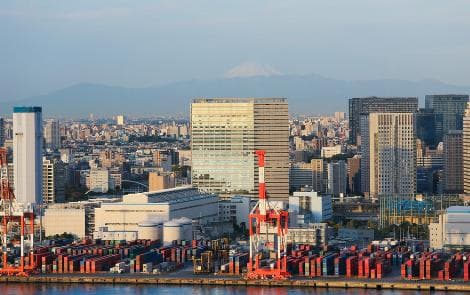
Japan's government has selected a SoftBank Corp.-backed (TYO:9434) consortium to lead a national effort to develop a homegrown artificial intelligence model, with total government investment poised to reach 1 trillion yen over five years.The Ministry of Economy, Trade and Industry (METI) and the New Energy and Industrial Technology Development Organization (NEDO) named Noetra Inc. and the National Institute of Advanced Industrial Science and Technology (AIST) as the implementers of its "Multimodal Platform Model Development Project for AI Robots and Physical AI," according to a press release on Tuesday.It follows a review of 15 proposals submitted during a public tender that ran from March 24 to April 22.The project spans fiscal years 2026 through 2030, with contracts initially signed for the first two years and continuation subject to an annual stage-gate review, NEDO said.Under the arrangement, Noetra will develop and supply "an internationally competitive" multimodal platform model while taking into account the needs of Japanese model development and utilization.AIST will work with domestic and international research institutions to carry out advanced technological development and contribute to the development of what METI described as "a future-oriented, competitive platform model."The AI model is expected to handle a range of data, including language, audio, images, videos, sensor data, and more.The government has already earmarked 387.3 billion yen for the program in its fiscal 2026 budget, funded through GX Economy Transition Bonds, according to METI's budget outline published in April.Noetra is a joint project led by SoftBank Corp., the telecommunications and internet subsidiary of SoftBank Group (TYO:9984). It counts NEC Corp. (TYO:6701), Honda Motor (TYO:7267), Sony Group (TYO:6758), Mitsubishi UFJ Financial Group (TYO:8306), Sumitomo Mitsui Financial (TYO:8316), Mizuho Financial Group (TYO:8411), Nippon Steel (TYO:5401) and Kobe Steel (TYO:5406) as partners.Back in April, METI disclosed its ambition for Japan to capture 30%, or 20 trillion yen, of the global AI robotics market by 2040.The announcement comes amid a broader rally in Japanese AI-linked stocks that pushed the Nikkei 225 to its sharpest quarterly increase on record as of Tuesday. SoftBank Group recently overtook Toyota Motor (TYO:7203) as Japan's most valuable listed company.The Japanese initiative follows a similar push from neighboring South Korea, which also unveiled plans to build semiconductor facilities and AI data centers on Monday, enlisting chipmaker SK Hynix (KRX:000660), Samsung Electronics (KRX:005930) and internet firm Naver (KRX:035420).

Nikkei 225KRX:000660KRX:005930KRX:035420TYO:5401TYO:5406TYO:6701TYO:6758TYO:7203TYO:7267TYO:8306TYO:8316TYO:8411TYO:9434TYO:9984
Japan's June PMI Caps Best Quarterly Performance Since First Quarter of 2014
US Markets

Japan's June PMI Caps Best Quarterly Performance Since First Quarter of 2014

Japan's manufacturing activity rose for the sixth straight month in June as customer demand and sales grew at their strongest pace in nearly four and a half years.The headline S&P Global Japan Manufacturing Purchasing Managers' Index (PMI) climbed to 54.8 from 54.5 in May. This marks the second-fastest pace of expansion since January 2022, according to a press release on Wednesday.On a quarterly basis, the data revealed that conditions during the second quarter of the year soared to their highest levels since the first quarter of 2014.The broad improvement in the manufacturing output was attributed to new order growth and sales that booked their strongest since 2022.Annabel Fiddes, S&P Global Market Intelligence's economics associate director, noted that strong demand for artificial intelligence-related products contributed heavily to the sruge in total new orders.However, supplier delivery times slowed down substantially during the month. Ongoing tensions in the Middle East have triggered shipping delays, resulting in widespread material shortages.Firms continued to draw down existing inventories to meet demand as stocks of finished goods fell for the 22nd consecutive month, S&P Global said.Selling prices were raised as a direct result of profit margin pressures, while manufacturers expanded their payrolls to accommodate larger order backlogs. This brought sector employment growth to its strongest pace since April 2018, matching a peak last seen in January 2022.The manufacturing momentum aligns with recent official labor data. The Ministry of Internal Affairs and Communications reported that Japan's unemployment rate held flat at 2.5%. While the number of jobless individuals ticked up by 20,000 to 1.85 million year over year, the broader labor market remained strong, with the total number of employed persons expanding by 520,000 to reach 68.9 million.Meanwhile, manufacturers remain confident that production output will continue to rise over the coming year, buoyed by the structural demand for AI chips and infrastructure investments.However, the central bank warned that the country's inflation could consistently exceed its 2% target as oil and energy prices rise. Bank of Japan Governor Kazuo Ueda recently indicated that the board is leaning toward continued interest rate hikes to counter these inflationary pressures, as Middle East transit security remains volatile.

Nikkei 225
Australia's Manufacturing Sector Expands in June Despite Weak Demand, Rising Prices
US Markets

Australia's Manufacturing Sector Expands in June Despite Weak Demand, Rising Prices

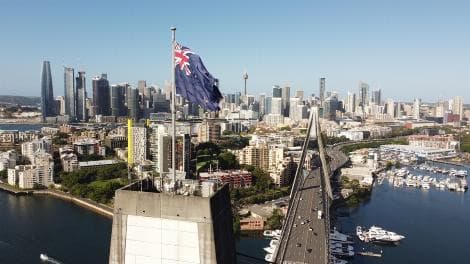
Australia's manufacturing sector expanded in June despite a continued decline in output and new orders amid market uncertainty and rising prices.The headline seasonally adjusted S&P Global Australia Manufacturing Purchasing Managers' Index rose to 51.5 in June from 50.7 in May, being above the no-change mark of 50 for the third consecutive month and at its highest level since January.S&P's report showed that Australian manufacturing firms increased their staffing levels while struggling to acquire new business amid reports that uncertainty and rising prices had limited demand.The fall in new orders and decline in production for the fifth consecutive month, albeit at a softer pace than before.Concerns over timely material supplies prompted manufacturers to increase input inventories in June. Pre-production stocks rose for the second time in three months, reaching their highest level since September, while purchasing activity edged lower.Hopes of improving geopolitics and stronger new orders have lifted confidence in the year-ahead manufacturing outlook, according to S&P, as sentiment rose to a four-month high in June but remained below pre-Middle East war levels.According to the Australian Bureau of Statistics, more manufacturing firms experienced supply chain disruptions in June compared to May, as ABS's June business conditions and sentiments survey showed that almost half of Australian businesses saw increased operating expenses.

ASX 200