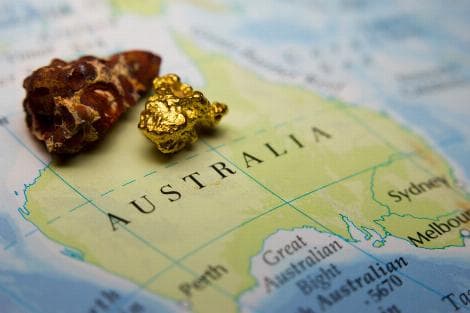
Australian miner Mineral Resources (ASX:MIN), in partnership with China's Ganfeng Lithium (SHE:002460, HKG:1772), will invest AU$490 million to expand its Mt. Marion lithium operation, according to a Tuesday press release.
The expansion will include the construction of a flotation plant, the development of an underground mine, and the addition of non-processing infrastructure.
The project is expected to boost annual spodumene concentrate output to 600,000 tons per year from 500,000 tons. It will also phase out the lower-grade SC3.5 product, which contains only 3.5% lithium oxide, in favor of producing a single, higher-grade SC5 product containing 5% lithium oxide.
"This high-return brownfield investment sets up Mt Marion for decades to come. Underground mining and flotation will work together to access deeper high-grade ore, lift recoveries and produce a single 5% product," said MinRes General Director Chris Ellison.
Construction is scheduled to begin in the first quarter of 2027 and run through 2028.
The announcement comes as analysts expect lithium prices to rise this year, driven by growing demand for electric vehicles and battery storage.
UBS analysts noted that lithium prices are anticipated to climb to $3,875 per ton this year, with the market forecast to remain tight until 2030, according to a Nikkei Asia report.
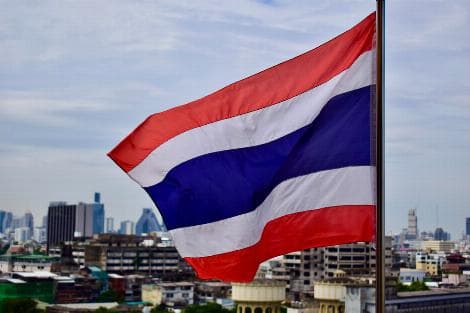
The joint venture is also expected to further consolidate China's influence over the global lithium supply.
A Monday report by Wood Mackenzie found that Chinese companies are on track to own 39% of the world's extracted lithium by 2030, up from roughly one-third in 2020. The report noted that while Australia accounted for 43% of global lithium extraction in 2020, its share is projected to drop to 25% by 2030.
"Lithium production and lithium ownership are increasingly diverging, and it is reshaping the global critical mineral supply chains," said Allan Pedersen, Wood Mackenzie's research director for energy transition and battery materials-lithium.
"While production growth is becoming more geographically diverse, ownership remains concentrated among a relatively small group of companies, mostly led by China."