FINWIRES · TerminalLIVE
FINWIRES

Manufacturing Strength Drives New Zealand's Economy to Third Consecutive Quarter of Expansion

By
Manufacturing Strength Drives New Zealand's Economy to Third Consecutive Quarter of Expansion

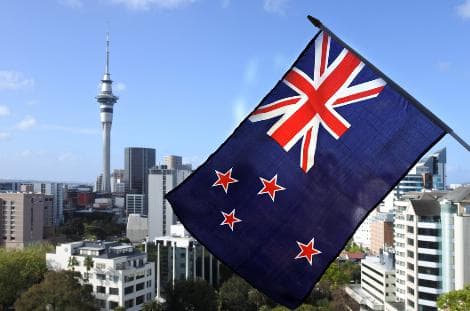
New Zealand's economy continued to expand in the March quarter as growth in the manufacturing and business services sectors helped offset weakness in mining and construction.

The country's gross domestic product increased 0.8% in the first quarter, accelerating from 0.5% growth in the previous three-month period and marking the third consecutive quarter of expansion, according to a report by the official statistics agency, StatsNZ, filed on Thursday.

The growth is slightly ahead of the 0.7% expansion forecast by BofA Securities, but short of the 1% rise expected by ANZ.

Nine out of the 16 industries in New Zealand posted an increase in activity in the first quarter, with a 1.9% jump in manufacturing representing the largest upward contribution to overall GDP growth. The business services sector grew 1.1%, and wholesale trade advanced 2.4%.

On the flip side, mining was the biggest downward contributor to GDP as activity slumped 11.6% due mainly to a fall in oil and gas extraction. The construction sector declined 1% as spending on both residential and non-residential building slid by more than 3%.

Earlier in June, the government agency said the Middle East conflict and the resulting increase in fuel prices will influence various segments of the economy, but the full impact is likely to be evident in second-quarter GDP data due for release in September.

Westpac said that while the 0.8% first-quarter growth is slightly lower than the bank's forecast, the net impact of certain revisions, including the upward revision of December 2025 quarter growth to 0.5% from 0.2%, "make this a stronger overall result than we were expecting."

ANZ echoed that sentiment, saying the result marks "a good start to the year." The data is unlikely to alter the Reserve Bank of New Zealand's thinking, ANZ said, adding that it still expects the central bank to raise its official rate by 25 basis points in July.

Related Articles

Japan's Core Machinery Orders Jump in April Despite Global Uncertainty
US Markets

Japan's Core Machinery Orders Jump in April Despite Global Uncertainty

Japan's core machinery orders rebounded sharply in April, signaling resilient business investment despite growing uncertainty over the global economic outlook.Core machinery orders, which exclude volatile sectors such as ships and electric power, rose 8.7% month on month on a seasonally adjusted basis in April, according to data released by the Cabinet Office on Wednesday.The increase far exceeded the consensus forecast of a 1.2% gain, as tracked by Investing.com, and followed a 9.4% decline in March.On an annual basis, core machinery orders climbed 15.6% in April.The rebound suggests companies continued to invest in equipment and production capacity despite concerns over higher energy costs and geopolitical tensions.Manufacturing orders rose 5.1% to 513.5 billion yen, supported mainly by demand from the textile mill products and non-ferrous metals industries.Non-manufacturing orders increased 6.7% to 570.1 billion yen, reflecting steady investment activity across the services sector.The data offers a positive signal for Japan's capital spending outlook and comes shortly after the Bank of Japan raised interest rates to a 31-year high, saying the economy has continued to recover moderately despite uncertainty linked to the conflict in the Middle East.The machinery orders data also comes as Japanese companies navigate an evolving trade environment with the United States.Last year, President Donald Trump agreed to impose a 15% tariff on Japanese products and reduce duties on automobiles to the same level, while Japan pledged to increase investment in the U.S. economy.More recently, Washington proposed additional tariffs on imports from several trading partners, but Japanese Trade Minister Ryosei Akazawa said he confirmed with U.S. Commerce Secretary Howard Lutnick that no tariffs beyond those agreed under last year's arrangement would be imposed on Japan.Global oil supply conditions may also improve in the coming months, following the U.S. and Iran's interim agreement to reopen the Strait of Hormuz.Trump said the vital shipping route is expected to reopen on June 19 once the agreement is formally signed, potentially easing energy supply concerns for import-dependent economies such as Japan.

Nikkei 225
Japan Factory Sentiment Rises for Second Month on Chip Demand; Near-Term Outlook Dims
US Markets

Japan Factory Sentiment Rises for Second Month on Chip Demand; Near-Term Outlook Dims

Japanese manufacturers' sentiment improved for a second straight month in June, driven by strong demand from the semiconductor sector.The Reuters Tankan manufacturers' index climbed to plus-13 in June from plus-8 in May, according to the monthly poll conducted from June 3 to June 12 across 215 responding firms out of 490 polled.The print beat the Trading Economics forecast of plus-9.Non-manufacturers' sentiment also rose to plus-32 from plus-29 the previous month.The Reuters Tankan is a monthly leading indicator for the Bank of Japan's quarterly Tankan business survey, which measures current business conditions and economic outlook.The chemicals sub-index led the improvement, jumping to plus-20 from plus-6, as companies cited sustained demand for semiconductors."Despite geopolitical tensions, demand remains robust, especially in semiconductor-related sectors," a manager at a ​chemical company was quoted by Reuters as saying.Electronics and machinery makers also reported improving sentiment, with order books likewise supported by demand for chips.On the services side, real estate and construction confidence contributed to the non-manufacturing gain."Despite rising costs, demand for housing remains robust, and we are seeing a steady flow of new projects," a manager in the real estate industry reportedly said.However, companies flagged a more cautious outlook in the near term amid concerns over geopolitical risks and supply chain challenges, said Reuters.Manufacturers expect sentiment to hold at plus-13 in September, suggesting that momentum will remain positive, but not accelerating. Non-manufacturers forecast a sharper drop to plus-19 from plus-32.The transport machinery sector is among the most pessimistic across Japan's industries for the second half, with the index for the sector anticipated to fall to minus-13 in September from plus-13 in June."We are facing ongoing challenges in sourcing materials due to geopolitical tensions," a transport ⁠machinery company ​manager was quoted by Reuters as saying.The June Tankan survey arrives against a backdrop of moderating inflation and manufacturing activity.Japan's annual core inflation eased to a four-year low of 1.4% in April from 1.8% in March, missing the consensus forecast of 1.7% tracked by Investing.com. It remained below the Bank of Japan's 2% inflation target.On Tuesday, the BOJ raised its policy rate to a three-year high of 1% from 0.75%, as widely expected. It marked the first since December."With underlying inflation approaching 2%, we need to be mindful ​of upward price risks. We will guide policy so that we won't fall behind the curve," Deputy Governor Shinichi Uchida told a news conference on ⁠behalf of Governor Kazuo Ueda, who missed the meeting to undergo medical treatment.On the activity side, the S&P Global Japan Manufacturing PMI slipped to 54.5 in May from April's 51-month high of 55.1 as input costs and selling prices rose at among the sharpest rates on record.

Nikkei 225
Update: Dow Logs Back-to-Back Record High in Mixed Session Ahead of Fed Decision
US Markets

Update: Dow Logs Back-to-Back Record High in Mixed Session Ahead of Fed Decision

(Updates with market moves at the end of the day.)The Dow Jones Industrial Average hit a fresh record high on Tuesday despite a sell-off in the technology sector, as the Federal Reserve kicked off its two-day monetary policy meeting.The Dow rose 0.6% to 51,999.7, notching a new closing high for a second straight day. The Nasdaq Composite fell 1.2% to 26,376.3, while the S&P 500 shed 0.6% to 7,511.4, the first decline in the past four sessions.Among sectors, financials paced the gainers, while tech saw the biggest drop.Among tech majors, Nvidia (NVDA) shares fell 2.4%, the biggest drop on the Dow, followed by Salesforce (CRM) and Microsoft (MSFT), respectively. On the S&P 500, Intel (INTC) was among the worst performers, down 8.5%.Markets widely expect the Fed to leave its benchmark lending rate unchanged Wednesday, which would mark the central bank's fourth straight pause, according to the CME FedWatch tool. The meeting is Kevin Warsh's first as Fed chair, who assumed the role last month, replacing Jerome Powell."The (Federal Open Market Committee) is expected to remove the lingering easing bias from the statement, signaling instead an equal probability of the next policy move being a rate cut or a rate hike," Stifel said in a note.The Fed is also scheduled to publish its latest Summary of Economic Projections, or SEP, document Wednesday. Stifel projects the Fed's "dot plot" to show most officials' expectations for a "stagnant" monetary policy for the rest of the year amid concerns over inflation.West Texas Intermediate crude oil was down 4.8% at $76.89 a barrel in Tuesday late-afternoon trade, while Brent dropped 4.2% to $79.66.The US and Iran recently agreed to end their war and reopen the Strait of Hormuz, which is the world's most important chokepoint for crude flows. The two sides are scheduled to sign their peace deal in Switzerland Friday, which would kick off another round of negotiations on Tehran's nuclear program as Iran seeks sanctions relief.Analysts have flagged the possibility of implementation risks and potential disagreements.Iran is demanding Israel withdraw from Lebanon, CNN reported."The path ahead is complex: watch for implementation disagreements, Gulf states' security demands, and Iran's continued leverage over the Strait of Hormuz," Deutsche Bank said in a note.US Treasury yields were lower, with the 10-year rate down 4.6 basis points at 4.44% and the two-year yield falling 2.3 basis points to 4.06%.In economic news, US housing starts plummeted to the lowest level since 2020 in May amid a steep drop in multi-family projects, government data showed."There is little indication that US home building will break to the upside anytime soon, given high mortgage rates, previous overbuilding in the South, elevated new home inventories relative to sales, and the current depressed level of builder activity in the (National Association of Home Builders) survey," BMO Capital Markets said in a note.In company news, Space Exploration Technologies (SPCX) agreed to acquire Anysphere, which operates artificial intelligence coding agent Cursor, in a deal worth about $60 billion, just days after the Elon Musk-led rocket and satellite company went public. SpaceX shares rose 4.8%, rising for the third straight day following its Friday debut.Olin (OLN) and Huntsman (HUN) agreed to merge in an all-stock deal to create a larger North American chemicals company with more than $12 billion in annual revenue. Huntsman shares slid 17%, while Olin fell 5.9%.Gold was last seen up 0.1% at $4,355.10 per troy ounce, while silver was little changed at $70.16 per ounce.

Dow JonesNasdaq CompositeS&P 500$CRM$HUN$INTC$MSFT$NVDA$OLN$SPCX