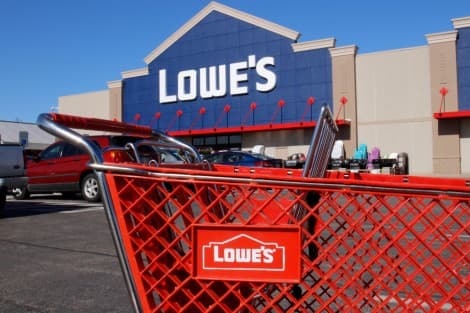
Lowe's (LOW) lowered full-year expectations on Wednesday as the home-improvement retailer's fiscal second-quarter revenue fell short of market estimates amid pressure on do-it-yourself spending.
Adjusted earnings and sales are now pegged at $12.25 a share and $92 billion for fiscal 2026, respectively, each representing the bottom end of the company's prior guidance range. The current consensus on FactSet is for non-GAAP EPS of $12.43 and sales of $92.91 billion.
Comparable sales are set to be flat for the ongoing fiscal year, compared with the previous outlook range of flat to up 2%. The Street is looking for same-store sales growth of 0.8%.
"While the near-term remains dynamic, our teams are executing at a high level, advancing our total home strategy and investing to drive growth and profitability," Chief Executive Marvin Ellison said in a statement.
On Tuesday, bigger rival Home Depot (HD) affirmed its full-year outlook and reported fiscal second-quarter results above Wall Street's estimates as customers continued to take on smaller projects.
In an emailed client note, Truist Securities said Lowe's weaker performance than Home Depot may partly be attributable to Lowe's higher exposure to the DIY segment, which remains softer than its pro category.
Lowe's posted sales of $25.96 billion for the three months through July, up from $23.96 billion the year before, but below the average analyst estimate of $26.13 billion. Comparable sales edged up 0.2%, trailing the market's expectation for an increase of 0.5%.
"Sustained growth in pro, online and home services led to our fifth consecutive quarter of positive comp sales, despite pressure in discretionary DIY spending," according to Ellison.
Adjusted EPS increased to $4.40 from $4.33 year over year, defying the FactSet-polled consensus for a decline to $4.22. The result included a $0.11 per-share benefit from tariff refunds.
Earlier this year, the US Supreme Court ruled that the Trump administration lacked authority under the International Emergency Economic Powers Act to impose tariffs, paving the way for refunds to companies that had paid the duties.
Last week, Oppenheimer said the second-quarter results of Home Depot and Lowe's were unlikely to show meaningful signs of recovery amid persistent macroeconomic pressures.