FINWIRES · TerminalLIVE
FINWIRES

Kevin Warsh Sworn in as Fed Chair as Central Bank Weighs Next Policy Move

By
Kevin Warsh Sworn in as Fed Chair as Central Bank Weighs Next Policy Move

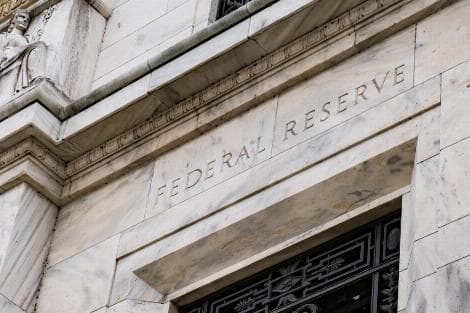
Kevin Warsh took charge of the Federal Reserve on Friday, replacing former Chair Jerome Powell amid growing signs of division at the central bank as inflation heats up.

Warsh, who served as a governor on the Fed's board from 2006 to 2011, is US President Donald Trump's pick to lead the institution.

Powell's term as Fed chief expired on May 15, but he'll stay on as a governor for an indefinite period.

Trump has repeatedly criticized Powell for the central bank's cautious view on lowering interest rates, though he said Friday Warsh should remain "independent."

"I want Kevin to be totally independent," Trump said at Warsh's swearing-in ceremony. "Don't look at me, don't look at anybody."

Warsh is taking over a Fed that is increasingly divided, ING said in a note last week.

Three regional Fed presidents supported the April decision of holding rates amid the Middle East conflict, but opposed including an easing bias in the policy statement. Former Fed Governor Stephen Miran, who resigned to make way for Warsh on the Fed's board, favored an interest rate reduction.

"The prospect of headline inflation above 4% this summer and the recent improvement in jobs numbers suggest an extended pause from the (Fed)," ING said. "We still see the potential for the Fed to move the policy rates down towards neutral, but three months later than we previously forecast."

Warsh said the Fed's mandate is to promote price stability and maximum employment.

"When we pursue those aims with wisdom and clarity, independence and resolve, inflation can be lower, growth stronger, real take home pay higher, and America can be more prosperous, and no less important, America's place in the world more secure," Warsh said after being sworn in on Friday.

Unhappy with current inflation measures, Warsh has proposed trimmed averages, which eliminate the biggest moves from inflation data, Stifel said in a note on May 15.

"I will lead a reform-oriented Federal Reserve, learning from past successes and mistakes both, escaping static frameworks and models, and upholding clear standards of integrity and performance," Warsh said.

Warsh has shifted his policy stance to be more in line with the Trump administration's call for rate cuts, "a dovish tilt that is likely to face at least some level of opposition given the rising level of inflation and the notable number of dissents at the latest April FOMC meeting," Stifel Chief Economist Lindsey Piegza wrote.

At that meeting, Fed officials flagged the possibility of higher interest rates if the Iran war dragged on and kept inflation above the 2% goal, minutes from the meeting showed on Wednesday.


Related Articles

Workday Results Don't Suggest Enough of 'Growth Improvement' to Sustain Re-Rating, UBS Says
US Markets

Workday Results Don't Suggest Enough of 'Growth Improvement' to Sustain Re-Rating, UBS Says

Workday's (WDAY) latest quarterly results don't indicate enough of a "growth improvement" to sustain any re-rating, UBS Securities said in a note e-mailed Friday.Late Thursday, the finance and human resources solution provider reaffirmed its fiscal 2027 subscription revenue guidance range of $9.93 billion to $9.95 billion even as its first-quarter bottom- and top-lines topped Wall Street's expectations. Subscription revenue for the quarter jumped 14% year over year to $2.35 billion, also ahead of the market consensus.Workday shares were up 5.4% in Friday afternoon trade. So far in 2026, the stock has lost 40% in value."We think this rally is partly justified given Workday proved itself to be more resilient than feared in a tough budget backdrop, but in our view the (first-quarter) results don't point to enough of a growth improvement to sustain any re-rating," UBS analysts Karl Keirstead and Daniela Campo said in a note to clients. "Despite the (first-quarter subscription revenue) upside, Workday reaffirmed the (full-year) guide, citing a desire to be conservative and an uncertain macro."UBS raised its price target on the company's stock to $140 from $130 while maintaining its neutral rating.The company's latest results showed that its artificial intelligence initiatives were working, its executives said during Thursday's earnings conference call. Workday will announce new AI "platform innovations" next month, Gerrit Kazmaier, president of product and technology, said on the call, according to a FactSet transcript.In the first quarter, Workday saw a more than 200% year-over-year surge in new annual contract value from agentic AI products, Kazmaier told analysts. The company is approaching $500 million in annual recurring revenue from agentic AI solutions, he said.Workday's Flex Credits pricing model for its AI products "is quickly gaining traction," Chief Commercial Officer Robert Enslin said on the call. "While still early in the journey, we're seeing a growing mix of AI monetization coming through Flex Credits."Still, UBS outlined several concerns, including "a larger lift from the acquired AI suite, not from Workday's 'core'," and a deceleration in backlog growth, according to the note."On the surface, there was no evidence of stress, with Workday saying that it hasn't yet seen any impact of the uncertain macro, the (February to March) sales re-org didn't cause any real disruption and that it wasn't seeing any change in customer contracting behavior," Keirstead and Campo said. "Net, in our view this outcome warrants some modest relief in the stock."For the ongoing quarter, Workday projects subscription revenue at $2.46 billion, representing 13% growth.Price: $126.37, Change: $+4.52, Percent Change: +3.71%

$WDAY
Rising US Borrowing Costs Won't Slow Massive AI Data-Center Buildout as Potential Profit Outweighs Spending
US Markets

Rising US Borrowing Costs Won't Slow Massive AI Data-Center Buildout as Potential Profit Outweighs Spending

Rising interest rates won't stop companies such as Alphabet's (GOOG, GOOGL) Google, Amazon (AMZN) and Microsoft (MSFT) from spending enormous amounts of money to build artificial intelligence data centers because the potential profit far outweighs slightly higher borrowing costs, according to industry analysts.The yield on benchmark 10-year US Treasuries rose to 4.58% on Thursday from 3.96% on Feb. 26 as investors worry that rising inflation could prevent the Federal Reserve from cutting interest rates. Earlier this week, the rate reached its highest level since January 2025. That affects borrowing costs for AI hyperscalers that are on track to spend $800 billion in capital expenditures this year and an additional $1 trillion next year.Rates will rise and inflation will remain a concern as the war in Iran will keep oil above $80 a barrel until February, Peter Tchir, head of macro strategies at Academy Securities, said in an interview with. Still, the expected revenue gain from AI products and services is at this point outweighing concerns that rising rates will dampen the data-center buildout, benefiting companies in and adjacent to the AI space including real estate investment trusts, he said."Right now, the profitability of these data centers and AI, and the perceived profitability, just means that they're not really going to be constrained by 50 or 100 basis points in yield," Tchir said. "These are fairly large bets that this is going to work, and it's going to work in a huge scale, in which case borrowing at 5%, 7% or 9% will turn out kind of trivial."It costs $45 billion to $50 billion to build out 1 gigawatt of data-center capacity, said Mandeep Singh, global head of technology research at Bloomberg Intelligence. SpaceX revealed in its initial public offering prospectus this week that it's renting one of its data centers to Anthropic for $1.25 billion a month, or about $15 billion a year."If it costs $50 billion to build an AI data center, and you're able to generate up to $15 billion in revenue in year one, then it takes three and a half years to get your investment back, and then obviously you'll make returns from year four onward," Singh said in an interview.Analysts agreed that benchmark borrowing costs will continue to rise this year."The bond market is a little bit freaked out, we're seeing inflation and risk in the current environment putting a lot of pressure on longer duration Treasury yields to get to very high levels," Elizabeth Templeton, senior product manager for fixed-income indexes at Morningstar, said in an interview. "Seeing the 30-year yield at 5.1% this week, the highest since 2007, is certainly an indication that there's some worry in the markets right now around inflation. That could certainly continue to impact the 10-year the rest of this year."Smaller AI companies including CoreWeave (CRWV) and Nebius (NBIS) could be affected more by the rise in borrowing costs than hyperscalers Amazon, Google and Microsoft, Bloomberg's Singh said. Those companies and others have already sold $300 billion in debt to fund their AI investments this year, according to Bloomberg News. CoreWeave and Nebius didn't respond to a request for comment.Still, the scale of AI borrowing is so large that it can't be ignored, said Kevin McPartland, an analyst at Crisil Coalition Greenwich. Debt deals that are already underway shouldn't be affected, he said."It doesn't take much of a move when you're talking about billions of dollars of financing to really change the economics," he said. "The devil's advocate would be: These are literally the largest companies in the world that have an incredible amount of free cash flow, and so these are not two- or three-year plans, these are five- and 10-year plans, in which case I'm sure they've modeled out the risk of everything, from interest rates to other geopolitical issues," McPartland said."If you're committed for 10 years to spending tens or hundreds of billions, of course you don't want the cost of financing to go up, but maybe the answer is some short-term slowdowns, but no long-term change in strategic planning."The two main data center REITs -- Equinix (EQIX) and Digital Realty Trust (DLR) -- have been refinancing debt and financing their development at roughly the current level of interest rates for the last couple of years, Jeffrey Langbaum, senior REIT analyst for Bloomberg Intelligence, told.That's dented their earnings growth but hasn't deterred them because the returns they generate from the developments outpace the debt costs, he said. Equinix and Digital Realty didn't respond to requests for comment."The returns they are getting on their developments are well in excess of the costs of capital," he said. "My thesis is that even if overall demand shrinks, they should still be able to get their share because they're keeping the size of their development business at a manageable level and not getting out over their skis and trying to expand too far too fast."Equinix sales in the second quarter that ends on June 30 are pegged at $2.58 billion and adjusted funds from operations are estimated at $11.24 a share, according to estimates compiled by FactSet. If realized, that would be up from $2.26 billion and $9.91 a share, respectively, in Q2 2025.Digital Realty Trust revenue in the second quarter is projected by analysts in a FactSet survey at $1.65 billion, while adjusted funds from operations are seen at $1.80 a share. Sales in Q2 last year were reported at $1.49 billion and AFFO was $1.68 per share.Data-center REITs are seeing a tailwind from momentum behind artificial intelligence expansion, Wells Fargo Investment Institute analysts John Sheehan and Amanda Martinez said in a note to clients earlier this month.REITs have a diverse range of offerings including colocation, which allows for multiple users, from hyperscalers to smaller companies, at a single location and interconnection, which means lower-latency connections and better tenant retention, as "particularly notable features" of some data-center buildouts, the analysts said."We are favorable on the data-center REITs subsector as we believe it possesses durable growth prospects, attractive margins, and solid pricing power," Sheehan and Martinez said in their note. "We also view the sub-sector as an attractive route for gaining exposure to the AI theme within the real estate sector, particularly as AI use cases continue to expand and support sustained demand and pricing power."Academy's Tchir said he expects the 10-year Treasury yield to rise to 5% in the next few months, and that investors are rewarding AI capital spending."We're almost in what I call free money stage, where if you announce $10 billion to spend, your stock goes up $20 billion, so why wouldn't you announce spending?" he said. "We are so underinvested in data centers and AI that even if your project turns out not to be as good as you thought, it's still going to do well, because someone needs that compute right now, and for the foreseeable future."Matthew Leising and Tim WeatherheadPrice: $386.34, Change: $-1.32, Percent Change: -0.34%

$AMZN$CRWV$DLR$EQIX$GOOG$GOOGL$MSFT$NBIS
Consumer Sentiment Plunges to Fresh Record Low Amid High Gasoline Prices
US Markets

Consumer Sentiment Plunges to Fresh Record Low Amid High Gasoline Prices

US consumer sentiment declined to a fresh record low in May as people fear that high gasoline prices could erode their purchasing power, University of Michigan said Friday.The main sentiment index tumbled 10% to 44.8 from last month. The consensus in a Bloomberg-compiled poll was for May's print to stay unchanged from a preliminary 48.2 estimate."Consumer sentiment fell for the third straight month as supply disruptions in the Strait of Hormuz continue to boost gasoline prices," Surveys of Consumers Director Joanne Hsu said. "The cost of living continues to be a first-order concern, with 57% of consumers spontaneously mentioning that high prices were eroding their personal finances, up from 50% last month."Gasoline prices in the US have surged as the Middle East conflict pushed crude oil costs higher. Consumers apparently don't yet see an immediate relief as the Strait of Hormuz, the most important chokepoint for energy flows, remains largely shut due to the US-Israel war with Iran.The year-ahead inflation outlook increased to 4.8% this month from 4.7% in April, the University of Michigan survey showed. The five-year price growth outlook climbed to 3.9% from 3.5% a month ago.At their April policy meeting, Federal Reserve officials flagged the possibility of higher interest rates if the Middle East conflict dragged on and kept inflation above the 2% goal, minutes from the meeting showed on Wednesday.The gauge for current economic conditions fell to 45.8 in May from 52.5 in April, while the expectations measure declined 8.3% to 44.1, the University of Michigan reported."Lower-income consumers and those without college degrees posted particularly strong sentiment declines; these groups are more sensitive to increases in the cost of gas and other essentials," Hsu said. "Critically, consumers appear worried that inflation will increase and proliferate beyond fuel prices, even in the long run."