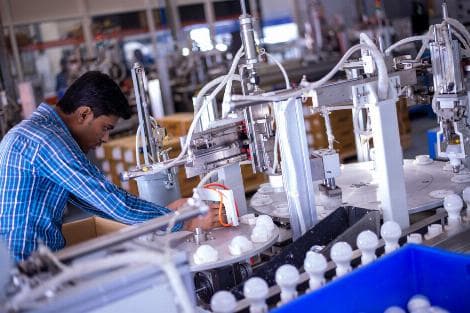
India's manufacturing sector steadily expanded in May, driven by growth in sales and production, while firms continued to stockpile as a precautionary measure amid uncertainties surrounding the conflict in the Middle East.
The seasonally adjusted HSBC India Manufacturing Purchasing Managers' Index (PMI) climbed to 55.0, the sector's strongest improvement in three months, up from 54.7 in April and a flash estimate of 54.3 released 10 days prior, according to a press release from S&P Global on Monday.
This rise was attributed to an increase in new orders and output, which grew at their fastest pace since February. Domestic demand was robust, outpacing new export orders, which grew at a more modest rate. Among its global trading partners, India saw its biggest export gains from Asia, Europe, Kenya, Nigeria, and the Middle East.
Meanwhile, the Middle East conflict continued to weigh on operating costs, particularly for fuel, energy, materials, and transportation. However, business sentiment remained optimistic that these cost pressures would fade later in the year.
Data released last week by the Ministry of Commerce and Industry showed that India's wholesale prices surged by 8.30% year over year in April, marking the steepest increase since 2022, and rose 3.86% from March. This inflation was primarily driven by rising fuel and power prices following the closure of the Strait of Hormuz.
Additionally, the PMI survey indicated that the growth in production prompted firms to increase staffing levels.
"India's final manufacturing PMI points to another month of possible precautionary stockpiling as the Middle East conflict remains unresolved," HSBC Chief India Economist Pranjul Bhandari said.
ING noted that India is currently managing the impact of the conflict in Iran effectively due to its domestic fuel subsidies. However, the situation has placed pressure on the Indian rupee, exposing structural weakness. The rupee-to-dollar exchange rate is now projected to reach 95.50 by the end of the year.
"Fuel subsidies have limited the immediate impact on inflation, while diversification of energy sources has helped address fuel shortages," said Deepali Bhargava, ING's regional head of research for Asia-Pacific, in a May 26 note. "The rupee has borne the brunt, not due to an outsized deterioration in the current account, but because of weaker capital inflows."