FINWIRES · TerminalLIVE
FINWIRES

High Treasury Yields Unlikely to Derail Equity Rally, Wells Fargo Says

By
High Treasury Yields Unlikely to Derail Equity Rally, Wells Fargo Says

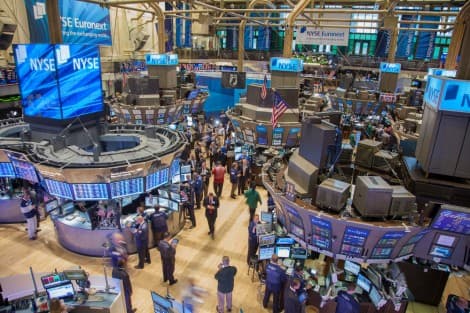
A sharp jump in Treasury yields following the Middle East conflict is unlikely to dampen investor appetite for equities, given corporate earnings growth and excitement surrounding artificial intelligence, Wells Fargo Investment Institute said in a note.

US Treasury yields have risen dramatically since late February amid rising inflation, which could prompt the Federal Reserve to keep interest rates steady for longer than expected or even raise them. The 10-year yield advanced to as high as 4.69% on May 19 from about 3.9% on Feb. 27, a day before the Iran war began.

As yields rise, borrowing costs often move higher, which could weigh on the equities market.

But yields are not high enough yet to "derail the stock market," Wells Fargo Investment Institute said in a note e-mailed toon Friday. Wall Street's major indexes hit new record highs this week.

"For now, several forces are helping offset that pressure (from higher rates)," Tony Miano, investment strategy analyst at Wells Fargo Investment Institute, wrote. "Corporate earnings have generally been better than expected, the job market has stayed resilient, and enthusiasm around (AI) continues to support many technology stocks."

S&P 500 companies' most recent results have shown earnings growth of about 28% from a year earlier, more than double the FactSet estimate ahead of the reporting season, Oppenheimer Asset Management said Tuesday.

Besides earnings momentum and an AI boom, there's been some optimism around prospects of a US-Iran deal to end their conflict.

"Technology and AI-related companies now make up a large share of the S&P 500 Index, so their strength can have an outsized effect on the overall index," Miano said. "We believe many of these companies also have strong revenue growth expectations for this year, which may help cushion some of the drag from higher borrowing costs."

Wells Fargo believes a significant stock market pullback could be triggered by either slowing AI momentum or a "more meaningful" increase in rates, such as the 10-year yield nearing 5%.

"The pace of rate moves also matters," Miano said. "Recently, yields have been especially volatile, and sharp swings can make investors uneasy. They can also make it harder for companies to plan financing and borrowing needs, which may add pressure to stock prices."


Related Articles

Japan's Jobless Rate Falls to Nine-Month Low in April
US Markets

Japan's Jobless Rate Falls to Nine-Month Low in April

Japan's unemployment rate eased to 2.5% in April from 2.7% in March, according to government data released Friday.The latest print was also below market expectations and marked the lowest jobless rate since July 2025.The number of employed people rose to a seasonally adjusted 68.8 million from 68.2 million a month earlier, while the number of unemployed fell to 1.8 million from 1.9 million.The labor market data came as Japan's key inflation gauge showed signs of easing.Core consumer prices, which exclude fresh food, rose 1.4% in April from a year earlier, the slowest pace in four years and below economists' expectations.The softer inflation reading was partly attributed to government measures to ease cost-of-living pressures, including energy subsidies, and could complicate expectations for a near-term Bank of Japan rate hike."This data leaves room for debate whether there is a pressing need for the BOJ to raise rates soon," Taro Saito, head of economic research at NLI Research Institute, was quoted as saying by Bloomberg News."Of course, you can argue that a real rate is too low, so more hikes are justified," he added.Meanwhile, Bank of Japan Governor Kazuo Ueda earlier this week cautioned against drawing simple conclusions from the recent surge in energy prices, saying the inflationary impact would depend on a range of factors beyond oil costs alone."Central banks should not look at oil prices in isolation. The same oil price increase can have very different effects depending on wages, expectations, demand, and exchange rates," Ueda said.Ueda stopped short of signaling the timing of the central bank's next policy move, even as policymakers have become increasingly concerned about higher crude oil prices stemming from tensions in the Middle East and their potential impact on inflation."Looking ahead, higher oil prices will likely ripple through a broad range of items, keeping the Bank of Japan on guard against inflation overshoots. We still expect the BOJ to raise its policy rate to 1% in June," Taro Kimura said, according to Bloomberg.

Nikkei 225
Innovent Biologics Secures Up to $10.5 Billion Pfizer Oncology Deal
US Markets

Innovent Biologics Secures Up to $10.5 Billion Pfizer Oncology Deal

Chinese biopharmaceutical company Innovent Biologics (HKG:1801) has secured an oncology licensing deal with New York-based pharmaceutical giant Pfizer that could potentially be worth up to $10.5 billion.Innovent will receive a $650 million upfront payment and is eligible for up to $9.85 billion in development, regulatory and commercial milestone payments, according to a joint release on Thursday.The company is also entitled to up to "double-digit" royalties on net sales of each approved product.The deal covers 12 early-stage and de novo cancer drug programs from Innovent's pipeline, spanning antibody-drug conjugates (ADCs) with novel payloads and multi-specific antibodies with immune-engaging features, according to the release.Eight of the 12 programs originated by Innovent's early-stage programs, while the remaining four are Pfizer-proposed discovery programs.Under the terms of the deal, Innovent will carry out Phase 1 clinical trials of these programs before Pfizer takes over global development."This agreement brings together best-in-industry expertise of Pfizer and Innovent to advance novel cancer medicines to patients at a global scale," said Dr. Hui Zhou, Chief R&D Officer (Oncology Pipeline) of Innovent."By leveraging both companies' complementary resources, we can develop our early-stage oncology pipeline with greater speed and impact to help bring innovative therapies to patients more efficiently worldwide."For Innovent, the agreement further bolsters its presence in the biopharmaceutical market. The company said it has launched 18 products in the market, has five assets in Phase III or pivotal clinical trials and 14 more molecules in early clinical stage.The company has partnered with over 30 global healthcare companies, including Eli Lilly, Roche, Takeda, Sanofi, Incyte, LG Chem (KRX:051910) and MD Anderson Cancer Center."This collaboration brings together two highly complementary engines of innovation with a shared ambition to move faster, go further and deliver truly transformative medicines to patients who are waiting," said Jeff Legos, Chief Oncology Officer, Pfizer.The deal with Pfizer is subject to regulatory approvals.The agreement marks Innovent's latest billion-dollar licensing deal with a multinational pharma company after striking a license and collaboration deal with Japan's Takeda Pharmaceutical (TYO:4502) in December 2025.As part of that deal, Innovent licensed two late-stage cancer drug candidates, IBI363 and IBI343, to Takeda, and granted an option over early-stage asset IBI3001. The agreement included an upfront payment of about $1.2 billion.The deal also saw Innovent issuing about 6.9 million new shares to Takeda at HK$112.56 each. The shares represent roughly 0.4% of Innovent's enlarged share capital and generated net proceeds of about HK$777 million.Innovent's shares jumped 6% in early-morning trade in Hong Kong on Friday.

HKG:1801KRX:051910TYO:4502
XPeng's Losses Nearly Triple in First Quarter as Deliveries Slide 33% Amid 'Seasonal Slowdown'
US Markets

XPeng's Losses Nearly Triple in First Quarter as Deliveries Slide 33% Amid 'Seasonal Slowdown'

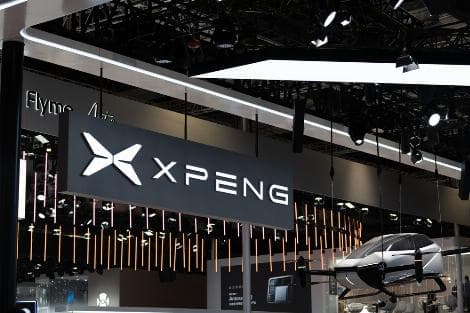
XPeng (HKG:9868) incurred wider losses in the first quarter of 2026 versus a year earlier, as vehicle deliveries fell sharply during what the carmaker described as a "seasonal slowdown."Guangdong, China-based XPeng booked 1.78 billion yuan in attributable net loss for the first quarter, nearly tripling from a net loss of 664.0 million yuan a year prior, according to a press release after market hours on Thursday.Loss per share ballooned to 0.93 yuan for the quarter ended March 31 from 0.35 yuan a year earlier.Total revenue declined 17.6% year over year to 13.03 billion yuan as revenue from vehicle sales plunged 23.5% from a year earlier to 11 billion yuan.Vehicle deliveries totaled 62,682 units in the first quarter, down 33% from 94,008 units in the first quarter of 2025."Even in a market downturn, our focus extends beyond scale," XPeng Co-Founder, Chairman and CEO He Xiaopeng told analysts during an earnings call.Despite the loss, gross margin improved to 20.6% from 15.6% a year earlier, while vehicle margin edged up to 12.1% from 10.5%, supported by cost reductions and improvement in product mix, XPeng said.Looking ahead, XPeng expects a recovery in the second quarter, with deliveries forecast to grow by up to 2.73% year over year to up to 106,000 units, or a quarter-over-quarter growth of up to 69%.Revenue is predicted to jump by up to 13.8% from a year earlier to up to 20.8 billion yuan."Starting with the GX, we plan to launch and begin deliveries of four all new SUV models within the next six months. These models have been defined and designed from day one as global vehicles," He said.XPeng launched the GX on May 20. The model secured 24,863 orders within the first 12 hours of its launch, the company said on Weibo."I believe XPeng is entering the strongest delivery growth trajectory in our history," He added.Deutsche Bank analyst Wang Bin said in a note to clients this week that the aggressive pricing of GX will boost XPeng's May orders to 50,000 units.Meanwhile, the first quarter also marked a transformation for XPeng."We formally changed our official Chinese name from XPeng Motors to XPeng Group, reflecting XPeng's transformation from a smart EV company to a physical AI company," He told analysts.In the first quarter, XPeng's revenue from "services and others" jumped 41% year over year to 2.03 billion yuan, owing to increased revenues from technical research and development services and parts and accessories sales, the company said."At this pivotal moment, we choose to bet firmly on physical AI with increasing R&D on AI, and I believe physical AI applications represent one of the most significant global strategic opportunities of the next decade," He said.He also hinted that XPeng will bring "robo taxis and humanoid robots" into mass production, and that the company will build the commercial ecosystem around these products.

HKG:9868