FINWIRES · TerminalLIVE
FINWIRES

Fox to Buy Roku in $22 Billion Cash-Stock Deal

By
Fox to Buy Roku in $22 Billion Cash-Stock Deal

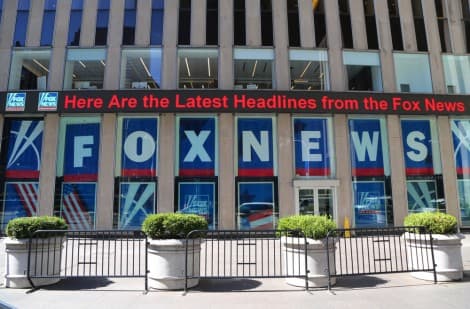
Fox (FOX, FOXA) agreed to acquire Roku (ROKU) in a cash-and-stock deal that values the TV streaming platform at about $22 billion, creating a media and technology entity with one of the largest streaming businesses in the US.

Fox will pay $160 per Roku's share, comprised of $96 in cash and 0.9693 of the media company's class A shares, the companies said in a joint statement on Monday.

Roku's shares declined 2.2% intraday, while Fox's class A and B stock plunged 18% and 17%, respectively.

Roku serves more than 100 million global streaming households through its streaming players, TVs and The Roku Channel. The combined company is expected to become the third largest entity in US television by share of viewing, the companies said. Fox owns the Tubi streaming service.

"This combination will transform the scope of our company into high-growth verticals and yield a step change in our overall growth profile," Fox Chief Executive Lachlan Murdoch said.

The acquisition offers Fox "a wider entry" into the high-growth connected TV segment, especially advertising and streaming subscriptions, the company said. It boosts the media giant's long-term growth and accelerates its digital strategy.

Fox anticipates the deal to generate run-rate cost synergies of $400 million, with revenue upside.

"The combination with Fox is an extraordinary opportunity to accelerate our vision, scale faster and innovate more aggressively for viewers, partners and advertisers," Roku CEO Anthony Wood said. "This transaction offers a significant premium to Roku shareholders while also providing them with the opportunity to participate in the compelling future upside of the combined company."

The transaction, which requires approval from both companies' shareholders and clearance from US and non-US regulators, is expected to complete in the first half of next year. Wood and certain trusts and entities that collectively holding a majority of the voting power at Roku, have agreed to vote in favor of the deal.

Following completion, Fox shareholders are expected to own about 73% of the combined company, with Roku's investors holding the remaining 27% stake. Wood is set to have an "ongoing role" at the combined company.

At the end of April, Roku reported first-quarter net income of $0.57 a share, swinging from a loss of $0.19 the year before. Overall revenue improved 22% to $1.25 billion. At the time, the company said it expected revenue of $5.5 billion for 2026.

Last month, Fox recorded a surprise increase in fiscal third-quarter earnings, while its revenue topped estimates amid distribution growth.
Related Articles

China Threatens Retaliation After Pentagon Adds Alibaba, Baidu, BYD to Military Blacklist
US Markets

China Threatens Retaliation After Pentagon Adds Alibaba, Baidu, BYD to Military Blacklist

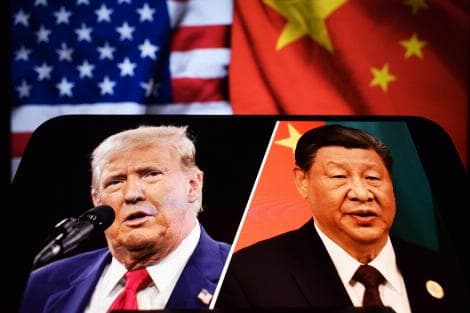
China's Ministry of Commerce on Saturday threatened to retaliate after the US Defense Department added a number of Chinese companies, including Alibaba (HKG:9988), Baidu (HKG:9888) and BYD (HKG:1211, SHE:002594), to its list of firms it deems linked with the Chinese military."China will resolutely and forcefully retaliate, and the US will bear full responsibility for the consequences," a spokesperson for the Ministry of Commerce said over the weekend, adding that "China expresses its strong dissatisfaction and firm opposition" to the designations.The Pentagon published its updated Section 1260H list on June 8, which supersedes an earlier version from January 2025. The updated roster now also includes electric-vehicle maker Nio (HKG:9866), pharmaceutical research and manufacturing services provider WuXi AppTec (HKG:2359, SHA:603259), AI robotics company Robosense Technology (HKG:2498), and Unitree Robotics, which is currently pursuing an initial public offering in Shanghai. Nvidia recently said it plans to collaborate with Unitree to build robots.The list also names telcos China Mobile (HKG:0941, SHA:600941), China Telecom (HKG:0728, SHA:601728), and China Unicom (HKG:0762), as well as chipmaker Semiconductor Manufacturing International (HKG:0981, SHA:688981), Huawei Technologies, Contemporary Amperex Technology (SHE:300750, HKG:3750) and Tencent (HKG:0700), most of which were added in January.The June update also reinstated ChangXin Memory Technologies and Yangtze Memory Technologies on the list after they were withdrawn from the February version. Both companies are among China's leading memory chipmakers and are currently pursuing public listings.As the Pentagon noted, being on the list means an entity is identified as a contributor to China's "Military-Civil Fusion strategy," supporting the modernization goals of the People's Liberation Army "by ensuring it can acquire advanced technologies and expertise developed by PRC companies, universities, and research programs that appear to be civilian entities."While these Chinese companies face no formal sanctions under the list, the Pentagon is prohibited from entering into, renewing or extending contracts with them or acquiring their products starting June 30, 2026.Several newly listed companies pushed back, with Alibaba saying it is "not a Chinese military company nor part of any military-civil fusion strategy." The company warned that it will take "all available legal action against attempts to misrepresent the company."Baidu said there was "no justification" for its inclusion, adding that it does not expect the designation to impact its business.BYD, which recently toppled Tesla as the world's top electric vehicle seller, echoed Alibaba and Baidu's statements, adding that the move will not impact its business.Meanwhile, analysts from Jefferies said the update was largely anticipated, noting that an earlier version of the list had briefly appeared in February before being withdrawn without explanation.Jefferies also noted on June 9 that while the Defense Department is prohibited from procurement of goods and services from entities in the list, "it does not restrict US citizens from engaging in trading activity with the listed companies."In a separate Jefferies note on June 9, analysts from the bank said 10 companies were removed from the list, including, most notably, CNOOC (HKG:0883, SHA:600938)."The immediate implication for companies on the 1260H list is that they are prohibited from providing any goods or services to the US military directly or via contractors. We believe the final decision-maker is the US president," said Jefferies."President Trump has just concluded his China trip, and, in our view, the US-China relationship is moving in an incrementally positive direction. In our view, President Trump is largely occupied with Iran, the high oil price (thus higher inflation risk), and the upcoming mid-term election, implying there will be less motivation for the US to escalate geopolitical tension with China."

Shanghai Composite^SZSEHKG:0700HKG:0728HKG:0762HKG:0883HKG:0941HKG:0981HKG:1211HKG:2359HKG:2498HKG:3750HKG:9866HKG:9888HKG:9988SHA:600938SHA:600941SHA:601728SHA:603259SHA:688981SHE:002594SHE:300750
New Zealand's Service Sector Contracts Further in May Amid Weak Spending
US Markets

New Zealand's Service Sector Contracts Further in May Amid Weak Spending

New Zealand's services sector showed further contraction in May as the country continues to see the impacts of higher fuel costs and low spending.The BusinessNZ Performance of Services Index, or PSI, fell to 47.5 in May from 48.7 in April, moving farther away from the 50-point mark which separates contraction and expansion."It is frustrating to see the services struggle, but it is difficult to see how the sector's fortunes will turn around quickly," said BusinessNZ Chief Executive, Katherine Rich.This comes after the BusinessNZ Performance of Manufacturing Index, or PMI, fell into contraction in the same month, also impacted by weakening customer demand and higher fuel prices.The seasonally adjusted BusinessNZ Performance of Composite Index, or PCI, which combines the PMI and PSI, showed widening contraction in both components in May, with the GDP-weighted index falling 0.5 points to 48 and the free-weighted index falling 0.8 points to 48.4.The Reserve Bank of New Zealand and other forecasters are expecting weaker consumption growth this year due to lower purchasing power after filling the car, said ANZ in its ANZ-Roy Morgan NZ Consumer Confidence report on May 29.On the bright side, the US and Iran said on Sunday that they have agreed on a peace framework for a deal ​to end their war and reopen the Strait of Hormuz, a development that has eased Brent crude oil by about 4%.

^NZ50
Update: Equities Rise as SpaceX Soars; Wall Street Logs Weekly Gain Amid Iran Deal Optimism
US Markets

Update: Equities Rise as SpaceX Soars; Wall Street Logs Weekly Gain Amid Iran Deal Optimism

(Updates with market moves at the end of the day.)US equities advanced Friday to lock in a weekly gain for Wall Street as Space Exploration Technologies' (SPCX) blockbuster debut and a potential Middle East peace deal buoyed sentiment.The Dow Jones Industrial Average closed 0.7% higher at 51,202.3, while the S&P 500 rose 0.4% to 7,431.4. The Nasdaq Composite added 0.3% to 25,888.8. Barring healthcare, all sectors ended in the green, led by materials.SpaceX -- Elon Musk's rocket and satellite company -- ended its first trading day 19% above its initial public offering price of $135. The rally pushed the company's market capitalization above $2 trillion, placing it among the 10 most valuable public companies in the US, even more valuable than Musk's electric vehicle maker, Tesla (TSLA).The three major Wall Street indexes posted a weekly gain of 0.7% each, rebounding after last week's declines."It was a dizzying week in financial markets," Sal Guatieri, senior economist at BMO Capital Markets, said in a report. "After closing above 7,600 for the first time ever on June 2, the S&P 500 was headed for a second weekly decline, until Thursday afternoon. That's when President (Donald) Trump called off plans to strike Iran "very hard" as a potential peace deal emerged, with hopes of both sides signing off in Geneva this weekend.""Investor spirits were also stoked by the world's largest initial public offering, SpaceX, which blasted off on Friday," Guatieri said.West Texas Intermediate crude oil was down 3.9% at $84.30 a barrel in Friday late-afternoon trade, while Brent fell 4% to $86.79. The benchmarks were headed for weekly falls after last week's gains.The US and Iran are edging closer to an interim agreement to reopen the Strait of Hormuz, Bloomberg News reported Friday, citing senior officials. The agreement would extend the existing ceasefire by around two months and open further negotiations over Iran's nuclear program, according to the report.Pakistani Prime Minister Shehbaz Sharif said Friday that "final" text of a peace deal has been reached."Pakistan is now working closely with both sides to finalize the next steps," Sharif said in a social media post Friday. "Peace has never been this close as it is now."US Treasury yields were higher, with the 10-year rate last up 1.5 basis points at 4.49% and the two-year rate rising 1.9 basis points to 4.09%.In economic news, US consumer sentiment rebounded in June as gasoline prices eased, while the inflation outlook dropped, the University of Michigan's latest survey showed."Sentiment and spending have become disconnected," Oxford Economics said in a note. "Still, higher gas prices will take a bite out of consumers' real disposable incomes, forcing them to reel in spending."In other company news, Adobe (ADBE) shares fell 6.8%, the second-steepest drop on the S&P 500. The software maker reported solid quarterly results that were overshadowed by the departure of its finance chief and lingering questions about the company's growth trajectory, RBC Capital Markets said in a note.Lennar (LEN) dropped 4.9%, among the worst performers on the S&P 500, as the homebuilder issued a downbeat fiscal third-quarter home delivery outlook.Gold was last up 2.9% at $4,231,10 per troy ounce, while silver jumped 6.1% to $67.90 per ounce.

Dow JonesNasdaq CompositeS&P 500$ADBE$LEN$SPCX$TSLA