The Federal Reserve could raise interest rates as soon as September amid growing support within the rate-setting committee for policy tightening, Macquarie Group said in a note e-mailed Thursday.
Ahead of the Fed's decision to hold rates steady on Wednesday, the firm expected the central bank to deliver a hike in December.
But after three regional presidents dissented in favor of higher interest rates at the most recent meeting, Macquarie said there was a possibility the Fed could move as early as September.
"Our baseline remains that a Fed rate hike lies ahead (in December)," said David Doyle, head of economics at Macquarie. "Risks to this are titled towards earlier timing, with September or October also possible."
The dissenting votes came from Beth Hammack of Cleveland, Neel Kashkari of Minneapolis and Lorie Logan of Dallas. All three preferred to raise interest rates by a quarter percentage point, the Federal Open Market Committee said Wednesday.
"Should the labor market show further improvement (as we anticipate) and core inflation measures remain above 2%, there will likely be more FOMC voters advocating for a rate hike in the months ahead," Doyle said.
US inflation, as measured by the personal consumption expenditures price index, dipped last month for the first time in more than six years, as lower energy prices offered a brief consumer reprieve before renewed Middle East hostilities sent oil costs higher again.
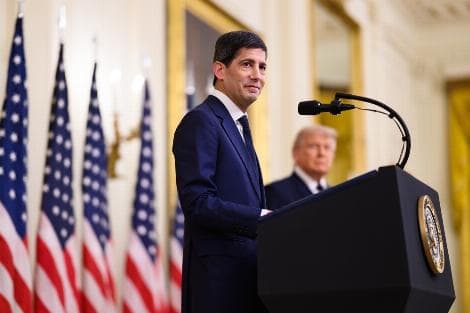
Fed Chair Kevin Warsh on Wednesday reiterated that the central bank will deliver price stability.
"The path to central bank heaven requires delivering on our remit," Warsh said during his post-meeting press conference. "These days that means delivering on price stability."
The probability of the US central bank raising its benchmark lending rate by a quarter percentage point in September moved to 65% on Thursday from 57% Wednesday, according to the CME FedWatch tool.
"If an institution that usually strives for consensus can produce three dissenters in favor of hawkish action, we suspect that (there) are many more (perhaps a majority) that would have a tightening bias, if allowed to speak individually," Thierry Wizman, global foreign exchange and rates strategist at Macquarie, said in a separate note.