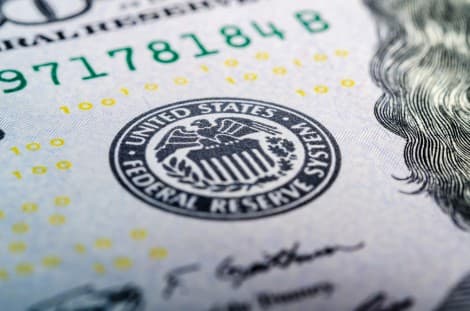
The Federal Reserve's so-called "dot plot" later this week may signal no interest rate cuts until 2028, said UBS Securities, which flagged the possibility of a tighter monetary policy amid the energy price shock stemming from the Middle East conflict.
The Federal Open Market Committee kicks off its two-day policy meeting Tuesday. Markets widely expect policymakers to leave their benchmark lending rate unchanged Wednesday, which would mark their fourth consecutive pause, according to the CME FedWatch tool.
The Fed is also scheduled to publish its latest Summary of Economic Projections, or SEP, document Wednesday. The SEP includes the so-called dot plot, which anonymously shows 19 individual members' expectations regarding monetary policy. The document also contains estimates on economic growth, inflation and unemployment.
"We expect the assumptions of appropriate policy in the updated (SEP) show the median participant assumes no rate cuts are appropriate until 2028," UBS economists, including Jonathan Pingle, said in a note e-mailed Monday. "We expect the SEP to show a rate cut in 2028, but policy remains restrictive."
The SEP is also expected to show upward revisions to policymakers' inflation outlook, according to the note to clients.
Under its base case, UBS expects the FOMC to remain on a "prolonged hold," though it may need to increase interest rates.
"We have been saying since early March the energy price increase and potential supply disruptions (amid the US/Israel war with Iran) widened the potential outcomes for the future path of the funds rate, including rate hikes," Pingle said.
UBS outlined three reasons why the FOMC might tighten monetary policy. These include a scenario where inflation expectations look unanchored, or if policymakers want to better align aggregate demand with supply. The third reason is risk management.
"If inflation in the second half of the year does not show signs of slower monthly changes, the FOMC risks a bigger inflation problem," Pingle wrote. "They may need to reposition policy to better address the risks to the outlook."
The upcoming meeting will be Kevin Warsh's first as Fed chair, who assumed the role last month, replacing Jerome Powell.
"We do not know (Warsh's) policy view with any confidence; we have a guess but we do not know for sure what his monetary policy reaction function might be," Pingle said. "Which Kevin Warsh steps up to the podium? Is he a hawk or dove? Both are potential risks to market pricing."
The US and Iran have reached an agreement to end their war and reopen the crucial Strait of Hormuz after more than three months of conflict that disrupted regional stability and global shipping routes.