FINWIRES · TerminalLIVE
FINWIRES

Evergrande Founder Sentenced to Life in Jail in China

By
Evergrande Founder Sentenced to Life in Jail in China

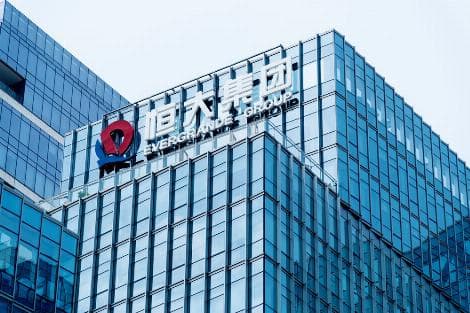
Hui Ka Yan, the founder of Chinese property conglomerate Evergrande Group and once was one of the richest men in Asia, was sentenced to life in prison by the Shenzhen Intermediate People's Court in Guangdong Province on Thursday.

The Chinese court found Hui, also known as Xu Jiayin, guilty of multiple crimes, while 56 related individuals will be imprisoned between 22 months and 18 years. The crimes include corporate bribery, unlawful disclosure of important information and illegal issuance of loans and securities, various media agencies reported.

As part of the sentencing, Evergrande Group, which was forced to delist from the Hong Kong exchange in 2025, faced a fine of 8.82 billion yuan, while Evergrande Real Estate Group received a fine of 7 billion yuan.

"The criminal acts of Xu and the two companies seriously disrupted the socialist market economy, infringed upon public and private property rights, and undermined the integrity of public officials in the performance of their duties, the court said, adding that given the exceptionally large sums involved, the particularly egregious circumstances, the extraordinarily heavy economic losses caused, and the extremely serious harm to society, they should be severely punished in accordance with the law," Xinhua wrote.

Hui's legal woes started in late 2021 when Evergrande defaulted on loans following Beijing's 2020 debt crackdown in the real estate sector. In April 2026, Hui pleaded guilty. Thursday's ruling found that the Evergrande group of companies was engaged in widespread financial fraud via inflated assets and concealed liabilities, among others.

The liquidators for Evergrande had no comment on the ruling when reached by.

Related Articles

Japan's Trade Gap Widens as Import Surge Outpaces Exports
US Markets

Japan's Trade Gap Widens as Import Surge Outpaces Exports

Japan's trade deficit widened in July as imports grew faster than exports, while the country continued to shift its energy sourcing amid heightened risks around the Strait of Hormuz.Japan recorded a trade deficit of 634.5 billion yen in July, up from 409.9 billion yen the previous month but narrower than the 680 billion yen market forecast, according to preliminary data from the Ministry of Finance released Thursday.Exports rose 23.2% year over year to 11.5 trillion yen, accelerating from a 19.3% increase in June and exceeding the 19.9% consensus forecast tracked by Investing.com.Imports climbed 27.8% to 12.1 trillion yen, picking up from a 25.4% increase in the previous month and beating the 26.5% forecast.The export gains were led by electrical machinery, partly due to a surge in semiconductor exports. Machinery exports rose 18.4%, while transport equipment increased 20.7%, helped by a 19.5% rise in motor vehicle exports.By destination, exports to Asia increased 24.5%, with shipments to China rising 25.8% and those to Taiwan jumping 43.5%.Exports to the U.S. increased by 22%, while imports from the U.S. surged by 58%, pushing Japan's North American import bill up 56.3%.Against that backdrop, Japan expected to source about 100% of its average monthly crude oil imports in July from areas that do not require transit through the Strait of Hormuz, Prime Minister Sanae Takaichi said earlier last month."Thanks to the efforts of all of those involved, it looks like we'll be able to fully source all of our crude oil from areas outside of the Strait of Hormuz, despite having relied on the strait for over 90% of our oil previously," she had said, as quoted by Bloomberg.Energy supply uncertainty remains as a 60-day negotiating period under a U.S.-Iran memorandum of understanding expired Monday without a lasting peace agreement.The talks had sought to address tensions over the Strait of Hormuz, Iran's nuclear program, and economic sanctions.

Nikkei 225
Kingsoft Posts Higher Quarterly, First-Half Earnings on AI Push, Cloud Growth
US Markets

Kingsoft Posts Higher Quarterly, First-Half Earnings on AI Push, Cloud Growth

Kingsoft Corp. (HKG: 3888) reported higher earnings for the second quarter and first half of the year, driven by the integration of artificial intelligence across its operations to meet rising market demand.For the three months ended June 30, profit attributable to owners rose 3% to nearly 548 million yuan from 532.4 million yuan a year earlier. Diluted earnings per share increased to 0.40 yuan from 0.38 yuan.Revenue climbed 9% year over year to 2.51 billion yuan from 2.31 billion yuan. The growth was led by the office software and services segment, which benefited from the ongoing integration of AI technology into its WPS Office applications.Kingsoft Cloud expanded its AI capacity in response to growing demand for computing services, notably from Xiaomi (HKG:1810) and the broader Kingsoft ecosystem.According to a Jefferies research note, AI advancements helped Kingsoft Cloud achieve its first-ever positive operating profit under GAAP terms, alongside rapid growth across both internal and external client bases.However, online games revenue fell 15% amid product lifecycle transitions and intensifying market competition.For the first half, attributable profit more than doubled, jumping 101% to 1.64 billion yuan from 816.3 million yuan a year ago. Diluted EPS increased to 1.19 yuan from 0.59 yuan.First-half revenue grew 6% to 4.93 billion yuan from 4.65 billion yuan in the prior-year period, supported by the deployment of enhanced AI capabilities across the company's systems.Meanwhile, Kingsoft's mainland-listed subsidiary, Beijing Kingsoft Office Software (SHA: 688111), also reported a sharp increase in first-half attributable profit, which surged to 2.52 billion yuan from 747.2 million yuan a year earlier. Diluted EPS climbed to 5.41 yuan from 1.61 yuan, while revenue rose 25% to 3.31 billion yuan from 2.66 billion yuan.

HKG:1810HKG:3888SHA:688111
Australia's Unemployment Rate Counters Expectations With Rise to 4.5% in July
US Markets

Australia's Unemployment Rate Counters Expectations With Rise to 4.5% in July

The number of employed Australians fell by nearly 16,000 in July, reversing gains seen in the previous month and countering expectations for continued jobs growth.The country's seasonally adjusted unemployment rate increased to 4.5% in July from 4.4% in the previous month as employment fell by 15,800 people, data from the Australian Bureau of Statistics showed on Thursday. The result follows an employment increase of 76,300 in June.Westpac expected the July jobless rate to hold steady at 4.4% and anticipated a lift in employment of 15,000, saying that a recent sharp jump in underemployment could be a "signal of more slack to come."The number of unemployed people rose by 4,200 from June to hit 691,500, while the underemployment rate remained at 6.4%, the data showed. The employment-to-population ratio and the participation rate both edged 0.2 percentage points lower to 63.9% and 66.9%, respectively."The majority of the fall in employment came from males, which fell by 11,000 people," said Sean Crick, head of labor statistics at the government agency. Female employment posted a smaller decline of 5,000.In July, Reserve Bank of Australia Assistant Governor Sarah Hunter said the country may need a period of higher unemployment to ease inflation expectations. The central bank left its key rate unchanged at 4.35% earlier this month, and is due to meet again in late September.A recent Commonwealth Bank of Australia report showed the country's annual wage growth rising to 3.2% in July from 3.1% in the previous month, while a Seek employment report indicated a continued decline in the volume of job ads in Australia in July but at a slower pace than earlier in the year.

ASX 200