FINWIRES · TerminalLIVE
FINWIRES

Eurozone Inflation Ticks Up in July Amid Renewed Increase in Energy Prices

By
Eurozone Inflation Ticks Up in July Amid Renewed Increase in Energy Prices

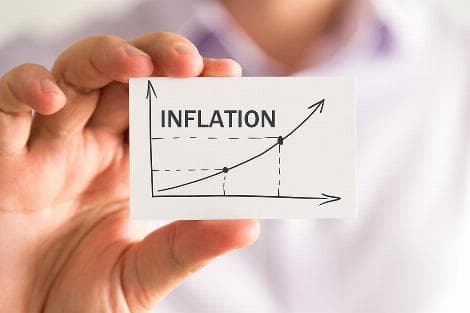
The annual inflation rate in the euro area moved higher in July, reinforcing market expectations that the European Central Bank would hike rates at its next monetary policy meeting amid a renewed increase in energy prices as the Middle East war continues.

Flash estimates released by Eurostat on Friday showed that eurozone inflation ticked up to 2.9% in July from 2.8% in June, in line with the consensus estimate. Month over month, consumer prices were 0.2% higher, after previously inching down 0.1%.

The rise in the annual rate was largely attributed to higher energy inflation, which climbed to 10% during the month from the prior 8.5%. Inflation in services and non-energy industrial goods also edged up, while the price growth in food, alcohol and tobacco eased to 1.2% from 1.5%.

Excluding energy, food, alcohol and tobacco, the annual inflation rate stood at 2.5% in July, above the previous and expected 2.4%. On a monthly basis, core consumer prices showed zero growth.

"Fuel prices climbed sharply in July, lifting average pump prices across the eurozone to their highest level since the Middle East conflict began. Because July started while the US-Iran memorandum of understanding was still in place, the effect on this month's inflation figures was relatively modest, but August inflation will be significantly higher if oil prices remain around their current levels," ING said in a quick take note. "While energy inflation is on the move again, the question remains when second round effects will show up in core inflation data."

Among the euro area's top economies, preliminary data showed that harmonized inflation rates in Germany, France and Spain accelerated year over year, while Italy bucked the trend with a decline in the harmonized index of consumer prices.

"So, while the data for July was quite benign, there is still plenty of scope for a further increase in inflation. Especially since the Middle East war remains very unpredictable. The ECB remains on high alert and is likely to raise rates in September again under current conditions," ING added.

Related Articles

Japan Retail Sales Growth Slows Sharply; Factory Output Accelerates
US Markets

Japan Retail Sales Growth Slows Sharply; Factory Output Accelerates

Japan's economy delivered a mixed set of readings on Friday, with retail sales growth in June slowing far more than expected, while industrial output rose sharply, topping expectations.The latest data complicates the economic picture for the Bank of Japan as it wraps up its policy meeting Friday.Retail sales expanded 0.5% year over year in June to 13 trillion yen, decelerating sharply from the 5% jump recorded in the previous month. The latest print missed the consensus forecast of 3.1% growth tracked by Investing.com.Meanwhile, industrial production rose 4.2% year over year, reversing the 2.1% drop the previous month. The recovery outpaced the Trading Economics forecast for a 1.8% expansion.Japan's labor market also tightened further in June, with the active jobs-to-applications ratio rising to 1.18 in June from 1.17 in May. The data beat the 1.17 consensus compiled by Investing.com and equates to 118 job openings for every 100 applicants.Overall, Japan's seasonally adjusted unemployment rate steadied at 2.5% in June, matching the month-ago print and the consensus forecast tracked by Investing.com.Separately, Tokyo's headline consumer price index rose 2% year over year in July, accelerating from 1.7% in June and in line with Trading Economics' estimate. Core CPI, which excludes fresh food, rose 1.9%, up from 1.7% the prior month, while core-core inflation, which strips out both food and energy, quickened to 2% from 1.8%.The economic indicators come as the BOJ concludes its policy meeting Friday, with the central bank widely expected to hold its benchmark interest rate at a 31-year high of 1% after a 25-basis-point hike in June.ING economists Chris Turner and Padhraic Garvey wrote in a Tuesday note that the BOJ had kept a tightening bias after the June hike, concluding that "a further removal of monetary accommodation would be required."They added that despite acknowledging downside risks from the Middle East conflict, most expect the central bank to stick with its view that AI-related capital spending is supporting global demand."This probably means there will not be too many changes to the BoJ's forecast for modest GDP increases when it publishes its latest Outlook Report on Friday," they wrote.

Nikkei 225
Apple Tops Third-Quarter Estimates; IPad, Services Revenue Falls Short
US Markets

Apple Tops Third-Quarter Estimates; IPad, Services Revenue Falls Short

Apple (AAPL) reported strong fiscal third-quarter results amid momentum in iPhone sales, though the company missed estimates for iPad and services revenue.Per-share earnings rose to $2.02 for the quarter ended June 27 from $1.57 a year earlier, compared with the FactSet-polled consensus of $1.89. Net sales climbed 16% to $109.42 billion, ahead of Wall Street's $109.04 billion view."Apple is proud to report our strongest June quarter ever, with double-digit revenue growth across iPhone, Mac and services, and in every geographic segment," Chief Executive Tim Cook said in a statement.John Ternus, senior vice president of Apple's hardware engineering, will become CEO in September as Cook transitions to the executive chairman role.Sales for iPhone rallied to $54.25 billion from $44.58 billion in the year-earlier quarter. Analysts polled by FactSet projected $53.74 billion.IPad revenue declined to $6.19 billion from $6.58 billion, contrary to the Street's average estimate that indicated an increase to $7.10 billion. Mac jumped to $10.35 billion from $8.05 billion, beating market expectations.Services revenue increased to $30.74 billion from $27.42 billion, but fell short of analysts' $31.41 billion view. Overall product sales advanced to $78.68 billion in the third quarter from $66.61 billion a year ago."Our installed base of active devices also reached a new all-time high across all major product categories and geographic segments," Chief Financial Officer Kevan Parekh said.Apple's shares were down 4.4% in after-hours trading and had gained 23% this year through Thursday close.Apple recently increased prices for MacBooks and iPads amid surging memory and storage chip costs. That, combined with expected price increases for iPhone, could slow unit growth, KeyBanc Capital Markets said in a note earlier this month.Morgan Stanley lowered its iPhone shipment forecast for the calendar year 2026 to about 250 million units from 252 million, assuming a "significant" pricing increase for the iPhone 18 model. The consensus estimate is for shipments of 255 million units, Morgan Stanley said in a note last week."We continue to believe that Apple fundamentals are very strong, with myriad price hikes likely to drive upside to revenue and (earnings per share) over the next 6-18 months," Morgan Stanley wrote.Earlier this month, Apple said Broadcom (AVGO) will manufacture more than 15 billion US-made chips for its products, in a deal worth more than $30 billion. Last month, President Donald Trump announced that Apple had agreed to work with Intel (INTC) to design and build chips in the US.

$AAPL$AVGO$INTC
Update: Nasdaq Composite Snaps 6-Day Slump as Microsoft Soars
US Markets

Update: Nasdaq Composite Snaps 6-Day Slump as Microsoft Soars

(Updates with market moves at the end of the day.)The Nasdaq Composite surged Thursday, rebounding after a six-day losing streak, as Microsoft's (MSFT) shares moved 16% higher in a post-earning rally.The technology-heavy Nasdaq gained 2.8% to close at 25,122.18, its biggest single-day percentage gain since June 15. The S&P 500 rose 1.7% to 7,437.63, while the Dow Jones Industrial Average climbed 1.2% to 52,208.06. Among sectors, tech paced the gainers with a 5.2% advance, while communication services led the laggards.Microsoft soared almost 16%, the top gainer on the Dow. Its quarterly results released late Wednesday topped estimates driven by a revenue surge in cloud computing platform Azure."This year, Azure revenue surpassed $100 billion for the first time, and Microsoft 365 Copilot reached over 30 million paid seats, reflecting the confidence customers are placing in us to power their (artificial intelligence) transformation," Chief Executive Satya Nadella said in a statement on Wednesday.Sandisk (SNDK) surged 26%, the top performer on the S&P 500, while other chip-related stocks also logged sharp gains, such as Micron Technology (MU), Advanced Micro Devices (AMD), and Intel (INTC).Meta Platforms' (META) shares slumped 8% as the technology giant provided a soft third-quarter revenue outlook following an unexpected year-over-year decline in quarterly earnings. It raised the lower end of its capital expenditure guidance."Microsoft shows clearer AI revenue through Azure and Copilot, while Meta still depends mainly on advertising," Saxo Bank said in a report.Amazon.com (AMZN) was the Dow's third-biggest gainer, up 3.9%. The e-commerce giant and Apple (AAPL) released their latest quarterly results after the closing bell on Thursday.Treasury yields were mixed, with the 10-year rate up 5.1 basis points at 4.67%, while the two-year rate was little changed at 4.25%.In economic news, the US personal consumption expenditure price index fell 0.1% month over month in June, marking the first decline since April 2020, the Bureau of Economic Analysis reported Thursday. That helped cut the year-over-year rate to 3.7% from 4.1%.Separate data showed US economic growth slowed more than expected in the second quarter, though consumer spending seemed to shrug off intensifying price measures.West Texas Intermediate crude oil was down 0.9% at $83.71 a barrel in Thursday late-afternoon trade, while Brent fell 1.8% to $89.15. Both benchmarks are on track for hefty gains this month, following two consecutive monthly declines.The US carried out fresh strikes against Iran on Wednesday in response to Tehran's attempted missile attacks on US forces in the Middle East a day earlier, the US Central Command said."Elevated energy prices are also clouding the inflation outlook for the (Federal Reserve), keeping upside inflation risks alive, with core PCE inflation having run above the Fed's 2% target for more than five years," TD Economics said. "While the Fed remained on the sidelines this week, financial markets continue to price a rate hike by year-end."The Federal Open Market Committee held the policy rate steady on Wednesday, in a divided decision that included three officials calling for a hike.Spot gold rose 1.1% to $4,113.71 per troy ounce, while silver advanced 2.3% to $59.43 per ounce.

Dow JonesNasdaq CompositeS&P 500$AAPL$AMD$AMZN$INTC$META$MSFT$MU$SNDK