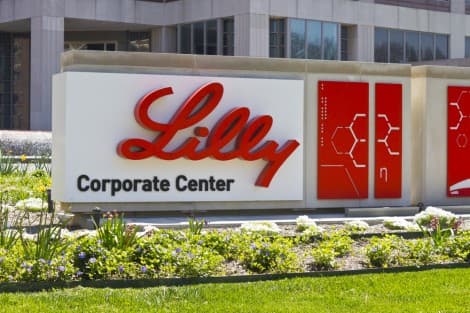
Eli Lilly (LLY) will acquire three vaccine developers in all-cash deals with a combined value of up to $3.83 billion, as the drugmaker aims to strengthen its infectious disease portfolio.
The pharmaceutical giant on Tuesday agreed to purchase Curevo for up to $1.5 billion, LimmaTech Biologics for up to $780 million and Vaccine Company for up to $1.55 billion, including upfront and subsequent payments upon meeting certain milestones. Eli Lilly's shares were up 1.2% in the most recent premarket activity.
The transactions will expand the company's research and development efforts in infectious diseases and reflect its strategy of investing in differentiated technology platforms, it said.
"These acquisitions reflect a deliberate strategy to prevent disease at its source rather than treat its consequences," Eli Lilly Chief Scientific and Product Officer Daniel Skovronsky said in a statement. "Combining these companies' platforms and teams with Lilly's global scale positions us to change that trajectory."
The acquisition of Curevo will give Eli Lilly access to its lead product candidate, amezosvatein, which is currently being developed for the prevention of shingles in adults. "Lilly's global development and commercialization capabilities will accelerate and expand upon amezosvatein's significant potential," Curevo Chief Executive George Simeon said in a separate statement.
Switzerland-based LimmaTech is developing vaccines against bacterial pathogens, with its LTB-SA7 lead program currently in phase 1 development as a vaccine against staphylococcus aureus. Vaccine Company's lead program is applying in vivo nanoparticle technologies to the Epstein-Barr virus, with a five-antigen phase 1-ready candidate.
Last month, Eli Lilly agreed to acquire clinical-stage biotechnology firm Kelonia Therapeutics for up to $7 billion to bolster its cancer treatment portfolio. Earlier in the year, Lilly announced an up to $7.8 billion deal to purchase UK-based Centessa Pharmaceuticals and also agreed to buy Orna Therapeutics, a biotechnology company focused on engineering immune cells, for up to $2.4 billion.
In April, the drugmaker raised its full-year outlook and reported better-than-expected first-quarter results.