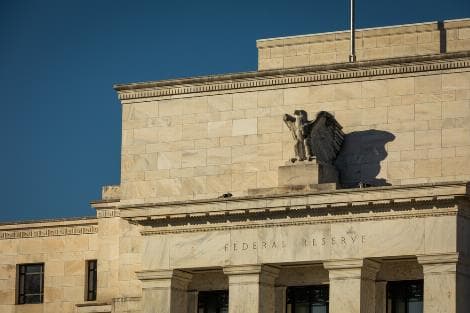
The Federal Reserve may need to pursue an aggressive tightening cycle if it doesn't raise interest rates immediately to bring inflation down, the three dissenters at this week's monetary policy meeting said Friday.
The central bank's 12-member Federal Open Market Committee maintained its benchmark rate at 3.50% to 3.75% on Wednesday, staying on hold for the fifth time, as expected. However, three regional Fed presidents -- Beth Hammack of Cleveland, Neel Kashkari of Minneapolis and Lorie Logan of Dallas -- preferred to raise rates by a quarter percentage point.
Official data showed Thursday that US inflation, as measured by the personal consumption expenditures price index, slowed to 3.7% year over year in June from May's 4.1%, but remained well above the Fed's 2% target.
Crude oil prices are set to close out July with monthly gains of more than 20%, following two consecutive monthly declines.
"Now is the time for the FOMC to act to speed the return of PCE inflation to our 2% objective," Hammack said in a statement. "The longer that high inflation persists, the more challenging and costly it can be to bring it back down."
Hammack said businesses in her district see pricing pressures as "broadening rather than fading."
Kashkari called on the Fed to tighten policy incrementally to ensure high inflation doesn't become entrenched.
"If inflation remains elevated, in my view, a potential series of small policy moves would be better than waiting and eventually concluding that even bolder actions were necessary," Kashkari said in a separate statement.
Logan cautioned that without any policy action, inflation could continue to trend above target "until there's an unanticipated shock."
"The FOMC cannot count on unanticipated shocks to achieve its goals and can always adjust policy if unanticipated shocks occur," Logan said separately. "Modest action in the near term would reduce the likelihood of needing to take sharper action later."
The Fed could raise interest rates as soon as September amid growing support within the rate-setting committee for policy tightening, according to Macquarie Group.