FINWIRES · TerminalLIVE
FINWIRES

Consumers Look to Congress for Relief as Companies Cash Tariff Refund Checks

By
Consumers Look to Congress for Relief as Companies Cash Tariff Refund Checks

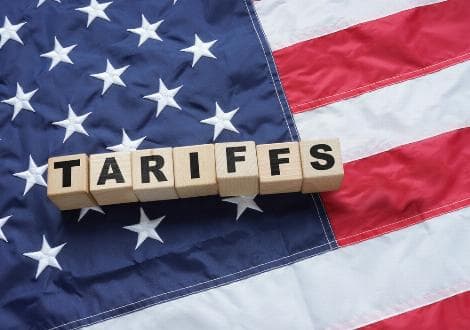
The majority of US companies holding $100 billion in potential tariff refunds haven't pledged to return the money to consumers, concerning advocates who say corporations have a "moral obligation" to return the funds to people who paid elevated prices for products they purchased.

Companies including FedEx (FDX), Amazon (AMZN), Nike (NKE), Walmart (WMT), Target (TGT) and Apple (AAPL) have reported billions of dollars in collective tariff recoveries, temporarily boosting their earnings and cash flow.

' review of earnings documents and conference calls found that the biggest reported refunds included Walmart, at nearly $2.9 billion; Target and Nike, at a little less than $1 billion each; FedEx, at $800 million; and Amazon, at $600 million.

Apple hasn't disclosed the dollar amount for the windfall, but quantified the margin boost in its earnings release. The Wall Street Journal put Apple's tariff refund-related gain at nearly $2.2 billion. Tool manufacturer Stanley Black & Decker (SWK) booked a $118 million benefit.

FedEx, Amazon and Costco Wholesale (COST) plan to return amounts to eligible customers, as per comments on their most recent earnings calls. But most businesses either have different plans for the additional money or have been mum on how to use tariff refunds.

That doesn't satisfy some consumer advocacy groups that say regulatory or congressional intervention may be needed to make certain that money is passed through to hard-hit consumers.

Companies have "a moral obligation" to return the money to consumers, ideally in the form of direct repayments, a spokesperson for the Consumer Federation of America said in remarks emailed to.

While rebates and discounts are also viable options, those programs could be used as a tactic to charge consumers more on other products, Emily Peterson-Cassin, director of competition and market fairness at the advocacy group, said.

Retail giants Walmart and Target plan to keep prices low generally, while Apple and Stanley Black & Decker intend to channel the additional cash back into the business, their executives told analysts on the earnings calls.

Plumbing and home-improvement product maker Masco (MAS), which booked a $95 million net tariff refund, said it aims to use the money for share repurchases or acquisitions. Nike hasn't publicly stated its plans for the windfall.

"A profit-maximizing entity like a corporation will do what they think serves them best. And that could include keeping prices higher because we've gotten used to higher prices," Peterson-Cassin said.

"That's why we need regulatory intervention to ensure the money ends up in the hands of consumers where it belongs."

Nonprofit group Public Citizen called on Congress to scrutinize the tariff refund processes "to prevent mismanagement and abuse," according to its statement to the House Ways and Means Committee in May.

And the concern over a lack of a framework that guides the use of these refunds isn't limited to lobby groups. Wall Street giant Goldman Sachs said companies are using tariff refunds for a wide range of initiatives, including boosting marketing budgets and expanding share buyback programs.

"Companies are treating (more than $100 billion) in tariff refunds issued so far as a one-time windfall and using them to increase marketing budgets, offset ongoing cost headwinds, lower consumer prices, increase buybacks, and, in a few cases, issue refunds to customers," Goldman Sachs said in a weekly update on Aug. 17.

US Customs and Border Protection has so far returned about $100 billion in tariff revenue to the Treasury Department for onward disbursement, according to a recent filing with the Court of International Trade. That followed the Supreme Court's February decision to strike down the Trump administration's tariffs implemented under the International Emergency Economic Powers Act.

Earlier this year, the National Retail Federation said not every retailer lifted prices as a result of tariffs, suggesting consumers might not see broad-based price reductions.

"Many retailers absorbed the increased costs, adjusted their product mix or took other steps rather than increase prices," the National Retail Federation said at the end of April. "Their response to tariff refunds will be similar. Retailers will have a range of options to offset tariff-related costs and reinvest where it matters most: the business, their workforce and consumers."

Rep. Rosa DeLauro (D-Conn.) introduced the Tariff Relief for Consumers Act in March to ensure that companies pass down tariff refunds to shoppers. Consumer Federation of America is one of the endorsers of the bill, which hasn't passed the House yet.

"I hope Congress steps in and sets some guardrails for consumers here, but unfortunately I don't think Congress has enough will around this issue to take bold steps yet," Peterson-Cassin of Consumer Federation of America said.

"I do think that putting money back in the hands of consumers during an affordability crisis should be among their top priorities, so perhaps they will prove me wrong!"

When reached out for comment, Walmart and Amazon pointedto comments made on their most recent earnings calls. FedEx said it has started processing refunds to customers.

Other companies mentioned in the article didn't respond to.

Related Articles

China Life's First-Half Profit Triples as Investment Gains Outpace Insurance Growth
US Markets

China Life's First-Half Profit Triples as Investment Gains Outpace Insurance Growth

China Life Insurance's (HKG:2628, SHA:601628) attributable profit in the first half of 2026 more than tripled versus a year earlier, driven by a surge in investment income that outpaced the modest rise in insurance revenue.Net profit attributable to shareholders surged 229% year over year to 134.5 billion yuan, or 4.76 yuan per share, according to an after-market filing in Hong Kong on Thursday.The Chinese insurer, also listed in Shanghai, said revenue jumped 81.5% to 434.6 billion yuan, as investment income more than tripled to 240.2 billion yuan. Insurance revenue, meanwhile, only rose 5.3% to 112.5 billion yuan.The company attributed the surge in investment income to market value fluctuations of financial assets and proactive investment operations.Gross written premiums rose 2.2% to 536.6 billion yuan. The company attributed the modest growth to its solid "market-leading position."By segment, China Life's life insurance business remained its largest revenue driver, accounting for about 84% of overall gross written premiums, followed by the health insurance business at 15% and accident insurance business at 1%."The company continuously advanced the diversification of product supply and business development in terms of product form, duration and cost, with premiums from new policies from life insurance, annuity insurance and health insurance accounting for 22.80%, 42.49% and 31.55%, respectively," China Life Insurance said.Premiums from new policies jumped nearly 12%, while renewal premiums edged down 2%.Insurance service expenses fell sharply, as the company swung from booking losses on onerous contracts to reversing those losses in the first half.The board proposed an interim dividend of 0.358 yuan per share, inclusive of tax, up 50.4% from the payout a year earlier.Looking to the second half, the company flagged a weak global backdrop, warning that "the asset-liability matching management will be more difficult for the insurance industry."However, it expects to have sufficient capital to meet its insurance business spending and new general investment needs in the second half.

HKG:2628SHA:601628
Marvell Technology Tops Second-Quarter Expectations on Data Center Revenue Surge
US Markets

Marvell Technology Tops Second-Quarter Expectations on Data Center Revenue Surge

Marvell Technology's (MRVL) second-quarter results rose above Wall Street's estimates amid a surge in data center revenue, while the chip designer expects artificial intelligence to drive revenue acceleration through fiscal 2028.Revenue climbed 37% annually to $2.74 billion, exceeding the FactSet-polled consensus of $2.72 billion. Non-GAAP earnings per share increased to $0.94 in the three months ended Aug. 1 from $0.67 a year earlier. Analysts expected $0.93.Data center revenue jumped 46% annually to $2.17 billion, while Street's view was $2.16 billion.The "communications and other" division grew to $567.8 million from $515.6 million. Analysts expected $559 million."AI-related bookings remain exceptionally robust, and we expect our revenue growth to accelerate further through the remainder of fiscal 2027," Chief Executive Matt Murphy said in a statement. "Given this strength, we are again raising our revenue outlook for both fiscal 2027 and fiscal 2028 compared with the guidance we provided last quarter."Marvell didn't provide an updated outlook for fiscal 2027 and 2028 in its second-quarter earnings release.In May, the company projected revenue growth of 40% and 45% year over year in fiscal 2027 and 2028, respectively. Analysts expect sales growth of 41% in fiscal 2027 and 46% in 2028."We are seeing broad-based strength across our data center portfolio, including strong demand in connectivity and a significant acceleration in our custom business beginning in the second half of fiscal 2027," Murphy said.For the fiscal third quarter, Marvell expects net revenue of $3.15 billion, plus or minus 5%. Wall Street expects $3.04 billion. The company forecasts non-GAAP earnings at $1.10 per share, plus or minus $0.05, compared with analysts' consensus of $1.08.The company's shares were down 1.3% in after-hours trading, and had gained about 184% this year through Thursday close.Oppenheimer expected the company to provide an upbeat third-quarter outlook after exceeding second-quarter expectations amid growing customer wins, according to a note sent last Friday.Marvell entered into a deal last week that would allow Alphabet's (GOOG, GOOGL) Google to purchase up to $12.18 billion of Marvell shares.UBS Securities recently raised its second-quarter estimates on Marvell, citing accelerated AI spending by major hyperscalers and strong demand for optical and networking products.Nvidia (NVDA) offered a surprisingly strong fiscal 2028 revenue outlook late Wednesday, while its gross margin guidance provided clarity amid rising memory costs, Morgan Stanley said in a note. The chip giant's fiscal second-quarter results more than doubled from a year ago and topped Wall Street expectations amid record data center sales.Semiconductor manufacturer Broadcom (AVGO) is scheduled to report fiscal third-quarter results Sept. 2.

$AVGO$GOOG$GOOGL$MRVL$NVDA
Update: Nasdaq Logs Best Day in More Than 3 Weeks as Nvidia Gains
US Markets

Update: Nasdaq Logs Best Day in More Than 3 Weeks as Nvidia Gains

(Updates with market moves at the end of the day, and other changes, if any.)The Nasdaq Composite rose the most in more than three weeks on Thursday as post-earnings rallies in shares of Nvidia (NVDA) and other technology players helped lift sentiment on Wall Street.The tech-heavy index closed 1.6% higher at 26,541.35, logging its biggest single-day percentage gain since Aug. 4. The S&P 500 climbed 0.7% to 7,730.99, while the Dow Jones Industrial Average advanced 0.2% to 53,569.44.Tech was the only sector that ended in the green, up 3.4%, while consumer staples saw the steepest decline.Nvidia shares jumped 8.7%, the second-biggest gain on the Dow, as the tech bellwether's fiscal second-quarter results more than doubled from a year earlier and topped Wall Street's expectations late Wednesday amid record data center sales.Nvidia expects fiscal 2028 revenue to grow about 70% year over year. That, according to Morgan Stanley, was a surprisingly strong sales outlook.Salesforce (CRM) shares soared nearly 23%, the best performer on both the S&P 500 and the Dow. The customer relationship management platform late Wednesday increased its full-year revenue guidance after delivering a fiscal second-quarter beat.CrowdStrike (CRWD) surged nearly 21%, the second-biggest rise on the S&P 500. The company late Wednesday raised its full-year annual recurring revenue outlook amid increasing demand for cybersecurity solutions. CrowdStrike reported better-than-expected fiscal second-quarter results.Hormel Foods (HRL) was the worst performer on the S&P 500, down 10%. The company lowered its fiscal 2026 sales outlook as it reported mixed third-quarter results, with the top-line pressured amid a challenging consumer environment.US Treasury yields were little changed, with the two- and 10-year yields at 4.23% and 4.67%, respectively.The annual economic policy symposium at Jackson Hole, Wyoming, kicked off Thursday, with Federal Reserve Chair Kevin Warsh slated to speak Friday morning.Cleveland Fed President Beth Hammack said in a CNBC interview Thursday that the Federal Open Market Committee should act now to cool inflation.Hammack was one of the three regional Fed presidents who dissented on the FOMC's decision to keep interest rates steady last month. All three called for a rate hike of 25 basis points.Markets are currently pricing in a 66% probability that the FOMC will keep the benchmark lending rate steady next month, with the remaining odds in favor of a 25-basis-point increase, according to the CME FedWatch tool.West Texas Intermediate crude oil rose 1.8% to $83.69 a barrel in Thursday late-afternoon trade, while Brent advanced 2.2% to $89.75.Iran and Oman are working on finalizing a deal that will see both countries share control of the Strait of Hormuz, Reuters reported.Spot gold edged up 0.3% to $4,605.11 per troy ounce, while silver gained 2% to $70.18 per ounce.

Dow JonesNasdaq CompositeS&P 500$CRM$CRWD$HRL$NVDA