
FINWIRES · TerminalLIVE
FINWIRES

Consumer Confidence Drops Amid 'More Pessimistic' Outlook for Business Conditions, Labor Market, Survey Shows

By
Consumer Confidence Drops Amid 'More Pessimistic' Outlook for Business Conditions, Labor Market, Survey Shows

US consumer confidence fell in August amid a decline in the expectations index, with a "more pessimistic" outlook for business conditions and the labor market ahead, the Conference Board said Tuesday.

The consumer confidence index dropped to 89.4 this month from July's reading of 90.2, which was the consensus in a Bloomberg survey.

"Consumer confidence moderated slightly in August for a second consecutive month," Conference Board Chief Economist Dana Peterson said. "Perceptions of the current labor market improved, reversing three months of moderate decline."

The expectations measure -- which accounts for short-term outlooks for income, business, and job markets -- dropped 5.8 points sequentially to 68.2 in August. The present situation index -- which reflects consumers' assessment of current business and labor conditions -- rose 6.8 points to 121.2, following three consecutive monthly drops, the Conference Board survey showed.

"Looking ahead, consumers were more pessimistic about business conditions and the labor market over the next six months," Peterson said. "Expectations for household incomes moderated, but remained optimistic overall."

Earlier this month, official data showed US employment unexpectedly fell in July amid a marked decline in government payrolls.

Consumers' average and median one-year inflation expectations were "slightly more elevated" this month, the Conference Board said Tuesday. About 61% of consumers expected higher interest rates over the next 12 months in August, down from 62% last month, according to the report.

Earlier this month, a University of Michigan survey showed US consumer sentiment fell in August after two straight monthly gains amid continued inflation concerns, while year-ahead price growth expectations rose.

Related Articles

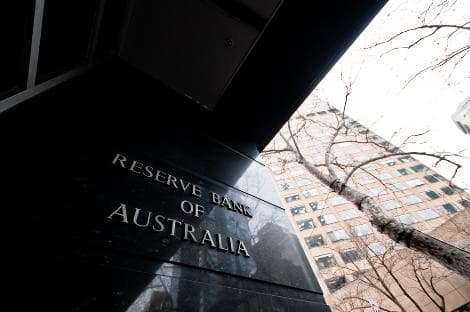
Inflation Risks Prompt Rate Hike Consideration at Australian Central Bank's August Meeting
US Markets

Inflation Risks Prompt Rate Hike Consideration at Australian Central Bank's August Meeting

Policymakers at Australia's central bank considered raising borrowing costs for the fourth time this year at their most recent meeting in August before unanimously deciding to leave the cash rate unchanged at 4.35%.One of the arguments to raise the rate by 25 basis points was based on an assessment of risks to the inflation forecast, with several members advocating for further tightening due to the possibility of upside risks materializing, according to the minutes of the meeting released Tuesday.However, other members pointed to possible downside risks providing an offset, including the labor market easing faster than expected and a more material negative impact on economic activity from the conflict in the Middle East.Ultimately, all Reserve Bank of Australia board members agreed that "upcoming decisions would benefit from additional information that could strengthen their conviction about the outlook for inflation."In June, the central bank saw some prospects for a resolution to the Middle East conflict, but tensions have persisted and continue to disrupt energy production and shipping in the region. Policymakers noted that elevated energy prices and high demand for goods used to develop artificial intelligence services have contributed to inflationary pressures in some countries.On the domestic front, inflation in Australia continues to be well above target even after an unexpected slowing in the June quarter, with policymakers assessing that some capacity pressures remain in both the labor market and the broader economy.In leaving the rate unchanged in August, board members also noted that data since their previous meeting pointed to an economy that is progressing towards the board's objectives, the minutes showed.

ASX 200
Luxshare's Profit Growth Slows as Currency Losses Offset Automotive, Data Center Gains
US Markets

Luxshare's Profit Growth Slows as Currency Losses Offset Automotive, Data Center Gains

Luxshare Precision Industry's (HKG:2475, SHE:002475) net profit growth decelerated in the first half as exchange rate fluctuations overshadowed its revenue growth.Attributable net profit in the first half rose 18% year over year to 7.84 billion yuan, or 1.05 yuan per share, according to an aftermarket filing in Hong Kong on Monday.The pace of growth slowed from the 20% jump recorded in the first quarter and the 23% expansion in the first half of 2025."Due to exchange rate fluctuations, the company's exposure arising from its foreign currency-denominated assets and liabilities resulted in an exchange loss of approximately 1.99 billion yuan," the iPhone assembler said.Revenue growth, however, accelerated to 40% in the first half from 36% in the first quarter and 20% a year earlier, driven by strong contributions from its consumer electronics, automotive electronics, and data center segments.Revenue from its automotive electronics business surged 274% to 32.4 billion yuan due to the continued expansion in the global market for auto electronic components. The company also expanded its global auto customer base and production capacity after acquiring a 50.1% stake in German cable and wiring manufacturer Leoni AG in July 2025.The company's communication and data center segment saw its margin narrow to 17.3% from 19.8% as the product mix shifted toward lower-margin finished-product assembly work.Luxshare's overall gross margin remained almost flat at 11.78%, up by only 0.17 percentage points from a year earlier.Looking ahead, the company expects nine-month net profit to grow 15% to 25% to about 13.3 billion yuan to 14.4 billion yuan. Luxshare declared an interim dividend of 1.10 yuan per 10 shares, payable Oct. 22 to shareholders on record as of Sept. 22.

HKG:2475SHE:002475
Update: Nasdaq, S&P 500 Fall as New Sanctions Plan Targets Iran's Trading Partners
US Markets

Update: Nasdaq, S&P 500 Fall as New Sanctions Plan Targets Iran's Trading Partners

(Updates with market moves at the end of the day, and other changes, if any.)The Nasdaq Composite and the S&P 500 fell Monday as the US unveiled a global sanctions plan targeting countries that have an economic relationship with Iran.The Nasdaq shed 0.8% to close at 25,980.19, while the S&P 500 declined 0.3% to 7,652.86. The Dow Jones Industrial Average rose 0.3% to 53,417.16. Technology led the laggards, while most sectors were in the green, led by consumer staples.The Treasury Department on Monday launched a campaign to close all financial resources that support Iran."We are launching an economic onslaught against Iran's financial connections around the globe," Treasury Secretary Scott Bessent said in a statement. "Our objective is to sever every economic lifeline that sustains this tyrannical regime until Tehran stands alone."Countries doing business with Iran will be given deadlines to shut down Iran-related activities, according to the statement. Entities aiding money laundering or sanctions evasion on behalf of Iran could be cut off from the US financial system.China, Russia, India, Pakistan, Qatar and Turkey, among others, still trade with Tehran, Axios reported."No one is above the reach of US sanctions," Bessent said Monday in response to a question at a press conference on whether the Trump administration would target Chinese banks, CNBC reported.West Texas Intermediate crude oil was down 2.3% at $85.07 a barrel in Monday late-afternoon trade, while Brent dropped 2.5% to $92.06.Iran's state-controlled Persian Gulf Strait Authority warned on X that vessels breaching its protocols in the Strait of Hormuz could face restrictions on future passages.US Treasury yields were mixed, with the 10-year yield down 3.2 basis points at 4.71%, while the two-year yield was little changed at 4.24%.Federal Reserve Chair Kevin Warsh's debut Jackson Hole speech on Friday is unlikely to help clear up investor confusion over the Treasury Department's bond market intervention, Morgan Stanley said in a note sent Monday. The firm's economists view the expansion in bond buybacks announced last week as evidence that the Treasury had become uncomfortable with a rise in long-term interest rates.Markets are currently pricing in a 58% probability that the Fed will keep its benchmark rate steady in September, with the remaining odds in favor of a 25-basis-point hike, according to the CME FedWatch tool.In company news, Nvidia (NVDA) shares fell 2.9%, the worst performer on the Dow. The technology bellwether is scheduled to release its latest quarterly earnings on Wednesday.Some Nvidia customers are facing price increases of over 15% on servers equipped with its artificial intelligence chips due to rising memory costs, Bloomberg News reported Saturday, citing people familiar with the matter.Chip-related stocks were among the notable laggards on the S&P 500, with SanDisk (SNDK) down 6.5%, the second-steepest decline on the index. Micron Technology (MU), Super Micro Computer (SMCI) and Western Digital (WDC) shed more than 5% each.Marvell Technology (MRVL), CrowdStrike (CRWD), Salesforce (CRM) and Intuit (INTU) are also slated to post their results this week.Spot gold rose 1.1% to $4,654.89 per troy ounce, while silver lost 1% to $69.65 per ounce.

Dow JonesNasdaq CompositeS&P 500$CRM$CRWD$INTU$MRVL$MU$NVDA$SMCI$SNDK$WDC