FINWIRES · TerminalLIVE
FINWIRES

Constellation Brands Fiscal First-Quarter Earnings Unexpectedly Rise

By
Constellation Brands Fiscal First-Quarter Earnings Unexpectedly Rise

Constellation Brands (STZ) shares rose early Wednesday after the beer and wine company reported an unexpected year-over-year increase in its fiscal first-quarter earnings, while revenue came in ahead of Wall Street's estimates.

Adjusted earnings came in at $3.43 per share for the quarter ended May, up from $3.22 the year before, the company said late Tuesday, defying the Street's expectations for a decrease to $3.19. Sales declined 3% to $2.43 billion, but topped the consensus view of $2.39 billion. Organic net sales gained 3%.

The stock was up 2.4% in the most recent premarket activity.

"Despite a discerning and value-conscious consumer environment, we grew enterprise organic net sales and gained share during the first quarter of fiscal 2027," Chief Executive Nicholas Fink said in a statement.

Consumer spending patterns remained "dynamic" throughout the quarter amid persistent inflation and economic uncertainties, Fink said in prepared remarks available on the company's website. While Constellation saw a resurgence in purchasing behavior amid a "more normalized" start to the quarter, financial pressures driven by a significant hike in gasoline prices led to a "more discerning and value-conscious consumer mindset" and a deceleration in beverage volume trends as the period progressed, the CEO said.

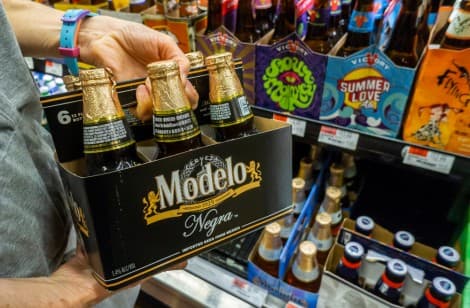
Beer revenue increased 2% to $2.28 billion, buoyed by shipment growth of 1.8% and favorable pricing. The division's depletion rate, or the pace at which units are sold to end consumers, edged down 0.3%, as gains in the Pacifico, Victoria and the Modelo Chelada brands were offset by declines in Modelo Especial and Corona Extra.

Sales of wine and spirits dropped 47% to $149.2 million, amid a 64% plunge in shipment volume, reflecting the impact of the divestiture of certain wine and spirits brands in 2025, the company said. The division's depletions rose 6.6%.

For fiscal 2027, Constellation continues to project adjusted EPS to come in between $11.20 and $11.90, while the Street is looking for $11.74. Enterprise organic sales, beer net sales and organic sales in the wine and spirits division are all still pegged to be down 1% to up 1% for the ongoing fiscal year.

"We expect (Constellation Brands) to exhibit better volume performance this year due to improving sentiment among Hispanic consumers, expansion of new pack sizes, new marketing campaigns, the World Cup and improved analytics to help local market execution," RBC Capital Markets said in a note.

The company's fiscal 2027 guidance is "understandably cautious" given the current environment and should be achievable even if conditions worsen, the brokerage said.
Related Articles

Japan Taps SoftBank-Backed Noetra for AI Push Worth Up to 1 Trillion Yen
US Markets

Japan Taps SoftBank-Backed Noetra for AI Push Worth Up to 1 Trillion Yen

Japan's government has selected a SoftBank Corp.-backed (TYO:9434) consortium to lead a national effort to develop a homegrown artificial intelligence model, with total government investment poised to reach 1 trillion yen over five years.The Ministry of Economy, Trade and Industry (METI) and the New Energy and Industrial Technology Development Organization (NEDO) named Noetra Inc. and the National Institute of Advanced Industrial Science and Technology (AIST) as the implementers of its "Multimodal Platform Model Development Project for AI Robots and Physical AI," according to a press release on Tuesday.It follows a review of 15 proposals submitted during a public tender that ran from March 24 to April 22.The project spans fiscal years 2026 through 2030, with contracts initially signed for the first two years and continuation subject to an annual stage-gate review, NEDO said.Under the arrangement, Noetra will develop and supply "an internationally competitive" multimodal platform model while taking into account the needs of Japanese model development and utilization.AIST will work with domestic and international research institutions to carry out advanced technological development and contribute to the development of what METI described as "a future-oriented, competitive platform model."The AI model is expected to handle a range of data, including language, audio, images, videos, sensor data, and more.The government has already earmarked 387.3 billion yen for the program in its fiscal 2026 budget, funded through GX Economy Transition Bonds, according to METI's budget outline published in April.Noetra is a joint project led by SoftBank Corp., the telecommunications and internet subsidiary of SoftBank Group (TYO:9984). It counts NEC Corp. (TYO:6701), Honda Motor (TYO:7267), Sony Group (TYO:6758), Mitsubishi UFJ Financial Group (TYO:8306), Sumitomo Mitsui Financial (TYO:8316), Mizuho Financial Group (TYO:8411), Nippon Steel (TYO:5401) and Kobe Steel (TYO:5406) as partners.Back in April, METI disclosed its ambition for Japan to capture 30%, or 20 trillion yen, of the global AI robotics market by 2040.The announcement comes amid a broader rally in Japanese AI-linked stocks that pushed the Nikkei 225 to its sharpest quarterly increase on record as of Tuesday. SoftBank Group recently overtook Toyota Motor (TYO:7203) as Japan's most valuable listed company.The Japanese initiative follows a similar push from neighboring South Korea, which also unveiled plans to build semiconductor facilities and AI data centers on Monday, enlisting chipmaker SK Hynix (KRX:000660), Samsung Electronics (KRX:005930) and internet firm Naver (KRX:035420).

Nikkei 225KRX:000660KRX:005930KRX:035420TYO:5401TYO:5406TYO:6701TYO:6758TYO:7203TYO:7267TYO:8306TYO:8316TYO:8411TYO:9434TYO:9984
Japan's June PMI Caps Best Quarterly Performance Since First Quarter of 2014
US Markets

Japan's June PMI Caps Best Quarterly Performance Since First Quarter of 2014

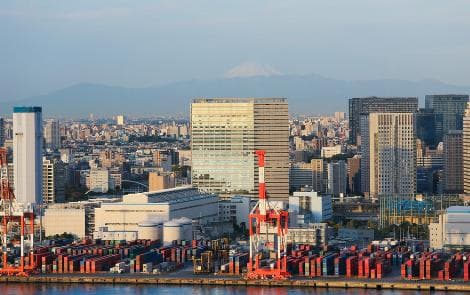
Japan's manufacturing activity rose for the sixth straight month in June as customer demand and sales grew at their strongest pace in nearly four and a half years.The headline S&P Global Japan Manufacturing Purchasing Managers' Index (PMI) climbed to 54.8 from 54.5 in May. This marks the second-fastest pace of expansion since January 2022, according to a press release on Wednesday.On a quarterly basis, the data revealed that conditions during the second quarter of the year soared to their highest levels since the first quarter of 2014.The broad improvement in the manufacturing output was attributed to new order growth and sales that booked their strongest since 2022.Annabel Fiddes, S&P Global Market Intelligence's economics associate director, noted that strong demand for artificial intelligence-related products contributed heavily to the sruge in total new orders.However, supplier delivery times slowed down substantially during the month. Ongoing tensions in the Middle East have triggered shipping delays, resulting in widespread material shortages.Firms continued to draw down existing inventories to meet demand as stocks of finished goods fell for the 22nd consecutive month, S&P Global said.Selling prices were raised as a direct result of profit margin pressures, while manufacturers expanded their payrolls to accommodate larger order backlogs. This brought sector employment growth to its strongest pace since April 2018, matching a peak last seen in January 2022.The manufacturing momentum aligns with recent official labor data. The Ministry of Internal Affairs and Communications reported that Japan's unemployment rate held flat at 2.5%. While the number of jobless individuals ticked up by 20,000 to 1.85 million year over year, the broader labor market remained strong, with the total number of employed persons expanding by 520,000 to reach 68.9 million.Meanwhile, manufacturers remain confident that production output will continue to rise over the coming year, buoyed by the structural demand for AI chips and infrastructure investments.However, the central bank warned that the country's inflation could consistently exceed its 2% target as oil and energy prices rise. Bank of Japan Governor Kazuo Ueda recently indicated that the board is leaning toward continued interest rate hikes to counter these inflationary pressures, as Middle East transit security remains volatile.

Nikkei 225
Australia's Manufacturing Sector Expands in June Despite Weak Demand, Rising Prices
US Markets

Australia's Manufacturing Sector Expands in June Despite Weak Demand, Rising Prices

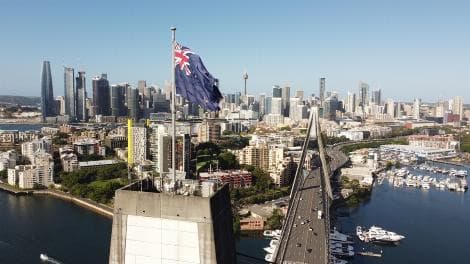
Australia's manufacturing sector expanded in June despite a continued decline in output and new orders amid market uncertainty and rising prices.The headline seasonally adjusted S&P Global Australia Manufacturing Purchasing Managers' Index rose to 51.5 in June from 50.7 in May, being above the no-change mark of 50 for the third consecutive month and at its highest level since January.S&P's report showed that Australian manufacturing firms increased their staffing levels while struggling to acquire new business amid reports that uncertainty and rising prices had limited demand.The fall in new orders and decline in production for the fifth consecutive month, albeit at a softer pace than before.Concerns over timely material supplies prompted manufacturers to increase input inventories in June. Pre-production stocks rose for the second time in three months, reaching their highest level since September, while purchasing activity edged lower.Hopes of improving geopolitics and stronger new orders have lifted confidence in the year-ahead manufacturing outlook, according to S&P, as sentiment rose to a four-month high in June but remained below pre-Middle East war levels.According to the Australian Bureau of Statistics, more manufacturing firms experienced supply chain disruptions in June compared to May, as ABS's June business conditions and sentiments survey showed that almost half of Australian businesses saw increased operating expenses.

ASX 200