China's overall business activity contracted in July to its lowest level since December 2022, as both the manufacturing and non-manufacturing Purchasing Managers' Indices dipped below the 50-point threshold separating expansion from contraction.
The official Composite PMI Output Index slid to 49.3 from 50.6 in June, indicating a broad slowdown in production and operational activities, according to data from the National Bureau of Statistics released Friday.
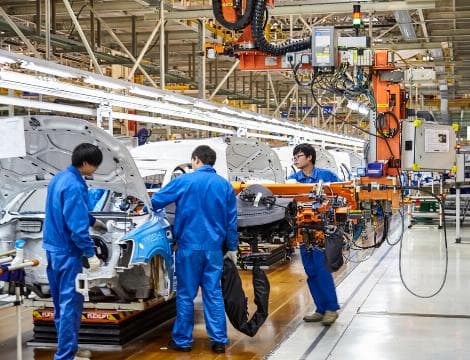
Factory activity in the country contracted for the first time since February, with the official manufacturing PMI shrinking to 49.2 from 50.3 in the previous month. The latest print missed the consensus forecast of 50.1 tracked by Investing.com.
Weakening manufacturing PMI could indicate the peak of PPI inflation in 2026, ING Chief Economist for Greater China Lynn Song said in a note the same day. Chinese reflation could see rising challenges in the second half if factory activity continues its weakening trend, he said.
By enterprise size, the PMI for large-sized enterprises fell to 49.5 from 50.7 in June, while the indices for medium and small-sized enterprises edged down to 49.7 and 47.4, respectively.
The non-manufacturing PMI narrowed to a 43-month low to 49 in July from 50.2 in June, also missing a forecast of a flat 50 reading tracked by Investing.com.
By industry, the services business activity index fell to 49.3 from 50.4 in June, while the construction business activity index declined to 47 from 49.
"Yesterday's Politburo meeting offered a more supportive tone and suggested more incremental easing measures are on the way. We believe the main area of support could be fiscal policy, where there was a commitment to accelerate fiscal expenditures," Song wrote.