FINWIRES · TerminalLIVE
FINWIRES

AutoZone's Fiscal Fourth-Quarter Estimates Cut at Oppenheimer Amid Impact of Higher Oil Prices

By
AutoZone's Fiscal Fourth-Quarter Estimates Cut at Oppenheimer Amid Impact of Higher Oil Prices

AutoZone's (AZO) fiscal fourth-quarter results are likely to face pressure as surging oil prices weigh on demand, Oppenheimer said in a Friday client note as it lowered its estimates for the auto-parts retailer.

The brokerage lowered its fourth-quarter projection for the company's earnings per share to $51.21 from $53.84. It now expects the company's comparable sales for the quarter to be flat to up 2%, down from its previous expectation for 2% to 4% growth. The current consensus on FactSet is for EPS of $54.08 and comparable sales growth of 3.8%.

AutoZone will release its quarterly results on Tuesday.

Oppenheimer remains encouraged by AutoZone's strategic investments and their potential to support further market-share gains. However, the brokerage believes the recent surge in oil prices is worsening an already challenging macroeconomic backdrop and putting greater pressure on do-it-yourself demand.

Oil prices recently spiked amid intensifying hostilities in the Middle East, while diesel in the US has hit record highs. Benchmark West Texas Intermediate and Brent crude prices are up about 19% and 14%, respectively, so far this month after advancing in each of the previous two months.

Last week, preliminary results of a University of Michigan survey showed US consumer sentiment weakened in September, while inflation expectations rose. The Federal Reserve raised its key interest rate on Wednesday for the first time since 2023 in what is widely seen as the start of a policy tightening cycle in order to curb sticky inflation.

Oppenheimer trimmed its price target for AutoZone shares to $3,500 from $4,300, though it maintained its outperform rating on the stock. Shares of AutoZone have fallen 16% so far this year.

"A now historically depressed valuation for (AutoZone) should lend support to shares, amid continued, cyclical fundamental softness," the note said. "Longer-term focused clients are advised to use any pullback in AZO as a buying opportunity."

Last month, AutoZone rival Advance Auto Parts (AAP) raised its full-year earnings outlook even after its fiscal second-quarter comparable sales unexpectedly declined amid weakness in the DIY channel. In July, O'Reilly Automotive (ORLY) lifted its full-year outlook as it reported better-than-expected second-quarter comparable store sales growth.

Price: $2847.54, Change: $+3.22, Percent Change: +0.11%

What else is happening in US Markets?

New Zealand Sees Sharp Rise in International Airfares in August
US Markets

New Zealand Sees Sharp Rise in International Airfares in August

New Zealand saw a sharp rise in international airfares in August, primarily by higher fares to Europe and Asia amid a rise in global oil prices caused by the Middle East conflict.International airfares rose 4.3% month-on-month in August and increased 21.5% on a yearly basis, being the largest annual increase in international airfares since April 2023, Stats NZ's selected price indexes data showed."Because we collect some international airfare prices around four months in advance, price changes that occurred earlier in the year for travel in August are now being reflected," said Nicola Growden, the prices and deflators spokesperson at Stats NZ.Food prices rose 0.3% in August compared with the previous month, driven by a 1.7% increase in meat, poultry and fish prices, while non-alcoholic beverage prices fell 1.4%.Diesel prices rose 8.6% in the month and 45.8% from a year ago, while petrol rose 2% in August and 17.9% from the same time last year.ANZ said in a note that the selected prices data confirms the downside risk to its September quarter consumer price index forecast of 0.8% quarter on quarter and 3.9% year on year.While the selected prices data is still in line with the bank's non-tradable CPI forecast of 1.1% quarterly growth, the downside to its forecast comes from the tradable side of the CPI basket, which it said is likely to be looked through by the Reserve Bank of New Zealand's monetary policy committee, ANZ added.

^NZ50
Upside Inflation Risks Materialize in Australia, Weighing on Central Bank's Upcoming Rate Decision
US Markets

Upside Inflation Risks Materialize in Australia, Weighing on Central Bank's Upcoming Rate Decision

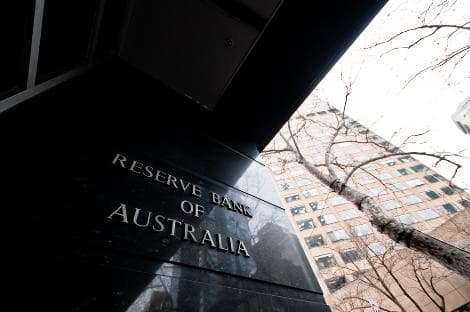
Policymakers at Australia's central bank flagged upside risks to inflation in August, and data since then suggests that some of those risks have started to materialize despite a slowdown in the domestic economy's growth, Reserve Bank of Australia Governor Michele Bullock said.In an opening statement delivered Friday to a House of Representatives standing committee on economics, the central bank chief said global cost pressures have intensified as the Middle East conflict shows little-to-no signs of a resolution.Bullock reiterated an expectation for inflation to remain elevated for some time, noting that the artificial intelligence boom and extreme weather events are placing upward pressure on a broad range of prices from energy to agriculture.Many businesses are now passing on higher input costs as oil and related prices have surged again, and remaining capacity pressures risk exacerbating the degree of the pass-through. If inflation proves to be more persistent, it may require "a stronger policy response," the governor said.The central bank has raised borrowing costs by 75 basis points so far in the year, bringing its official cash rate to 4.35%. As the bank gears up for its next meeting later in September, a key focus will be on determining whether policy is now tight enough to return inflation to the target band, Bullock said.She added that inflation concerns are not unique to Australia, as many other central banks are reacting to the global inflation shock by increasing rates or expressing a willingness to do so if needed."I recognize that higher interest rates are difficult for Australians with mortgages who are also facing cost-of-living pressures," Bullock said. "But reducing inflation is essential."The US Federal Reserve this week increased its target range on the overnight funds rate to 3.75% to 4% from 3.5% to 3.75% in a unanimous decision, marking its first rate hike since 2023.BofA Securities expects the Reserve Bank to boost its cash rate by 25 basis points to 4.60% at the upcoming meeting in September, as underlying price growth is accelerating and inflation pressures are becoming increasingly broad-based. A watch tool that tracks the market-implied rate probability currently forecasts an 82% likelihood for a rate increase at the meeting.

ASX 200
Japan's Core Inflation Cools in August Ahead of BOJ's Closely Watched Rate Call
US Markets

Japan's Core Inflation Cools in August Ahead of BOJ's Closely Watched Rate Call

Japan's closely watched core inflation slowed in August, pointing to a slight easing in underlying price pressures even as headline inflation remained steady.The core consumer price index, which excludes fresh food, rose 1.7% year over year in August, down from 1.8% in July, according to data from the Statistics Bureau released Friday.The reading missed the consensus forecast of 1.8% growth tracked by Investing.com.On a seasonally adjusted basis, the core CPI increased 0.1% from the previous month.The headline CPI rose 1.9% year over year, unchanged from July, while the seasonally adjusted index was flat from the previous month.A measure excluding both fresh food and energy rose 1.9% year over year, matching July's pace, and increased 0.3% from the previous month.Food prices remained a key source of upward pressure. Prices excluding fresh food rose 3% year over year, while fresh food prices increased 7%. Fresh fish and seafood prices climbed 13.5%, while fresh vegetables rose 5.5%.Among other categories, housing-related costs increased 3.1% year over year, while furniture and household goods prices rose 1.2%. Transport and communications costs increased 3.7%.Energy prices, however, continued to weigh on headline inflation. Energy prices fell 0.7% year over year, with electricity prices down 2.4% and gasoline prices down 2.6%.Education costs provided another drag, falling 6.4% year over year, largely reflecting a 73.2% decline in private high-school tuition.The data comes ahead of the Bank of Japan's policy decision, with all BOJ watchers surveyed by Bloomberg expecting the central bank to raise its benchmark rate to 1.25% from 1% at the end of its two-day meeting.If delivered, it would mark the second rate increase in three months and the shortest interval between hikes since March 1990.

Nikkei 225