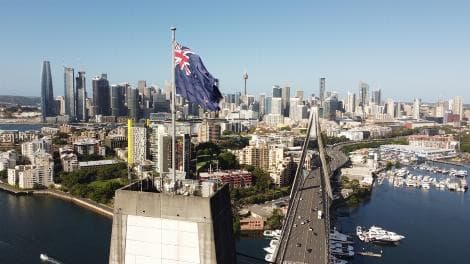
Australia's service sector returned to growth in June following a contraction in the previous month, as higher staffing capacity allowed for an expansion of business activity despite continued weakness in new orders.
The seasonally adjusted S&P Global Australia Services PMI Business Activity Index improved to 50.5 in June from 48.7 in May, advancing beyond the 50 mark that separates growth from contraction, the index provider said Friday.
However, S&P Global Market Intelligence Economics Director Andrew Harker cautioned that the rise in activity was driven at least partly by employment growth as opposed to fresh business, as new orders declined for the fourth consecutive month in June.
"This may therefore prove to be a temporary boost unless order volumes start to expand again soon," Harker said, adding that Australia will need to see an improvement in the demand environment to sustain the nascent rise in business activity into the remainder of the year.
The PMI reading comes as business confidence hit its lowest level since November 2023 after dropping for the second straight month in June. Concerns about the overall economy and tax changes outlined in Australia's federal budget have weighed on the 12-month outlook for business activity, while the Middle East conflict continued to negatively impact new export orders, S&P Global said.
The finance and insurance sector reported the lowest level of optimism among the five sectors monitored by S&P Global, while information and communication enjoyed the highest sentiment.
Service providers faced another sharp monthly increase in input costs during June, although the pace of inflation eased for the second consecutive month. At the same time, output prices rose at a considerably slower pace compared with May on account of competitive pressures.
Additionally, the S&P Global Australia Composite PMI posted at 50.4 in June following a 48.7 reading in May, indicating a marginal increase in private-sector business activity.