FINWIRES · TerminalLIVE
FINWIRES

Australia's Central Bank Pauses Tightening Cycle, Leaves Door Open for Further Rate Hikes

By
Australia's Central Bank Pauses Tightening Cycle, Leaves Door Open for Further Rate Hikes

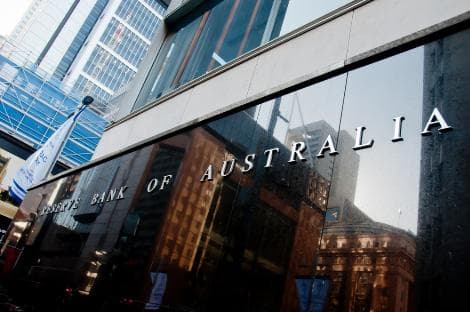
Australia's central bank has paused its policy-tightening cycle amid a slowdown in consumer spending and continued uncertainty surrounding the economy, but warned that further rate hikes remain on the cards given persistently high inflation.

Policymakers at the Reserve Bank of Australia on Tuesday unanimously voted to hold the cash rate target at 4.35%, following three consecutive rate hikes this year that triggered a tightening of financial conditions.

The decision came as no surprise, with the investment arms of Bank of America and HSBC forecasting a pause based on recent economic indicators that showed both housing momentum and the labor market softening.

Australia's unemployment rate was higher than expected in April, and housing prices have declined in some capital cities, the central bank said in a statement reporting the decision. It added that while a resolution to the Middle East conflict appears within grasp, oil supply disruptions will take time to settle, and inflation is likely to stay elevated for a while longer.

The pause in the cycle follows the Australian economy growing by a seasonally adjusted 0.3% in the March quarter, decelerating from growth of 0.9% in the previous three-month period. The country's unemployment rate rose to 4.5% in April from 4.3% in March, adding to deliberations on borrowing costs.

The central bank said it will continue to assess the response to previous interest rate hikes, and will do whatever is needed to keep a lid on inflation, "including increasing the cash rate target further if required."

At a press conference after the decision, central bank Governor Michele Bullock said the domestic economy is expected to slow further in the current quarter, which should help rein in inflation. She added that the bank did not consider a hike at this meeting, but reiterated that the pause does not rule out further tightening.

Commenting on the Australian Fair Work Commission's decision to increase the national minimum wage by 6% and minimum award wages by 4.75%, Bullock said the outcome was higher than what the central bank had factored into its forecast.


Related Articles

South Korea's Export Price Growth Quickens in May on Chip Surge
US Markets

South Korea's Export Price Growth Quickens in May on Chip Surge

South Korea's export price index surged 46.9% year on year in May on a Korean won basis, accelerating sharply from a revised 41.3% gain in April, according to preliminary data from the Bank of Korea on Tuesday.The rally in semiconductor-linked products pushed the headline index to its sharpest increase since March 1998.On a month-over-month basis, the export price index inched up 0.3%, easing from the 7.5% gain recorded in April, suggesting the pace of monthly increases is stabilizing.On the import side, prices rose 24.8% from a year earlier, also accelerating from April's revised 20.5% increase. While prices edged down 0.3% from the prior month, the pace of drop eased from the 2.1% monthly decline in April.The sustained drop in import prices on a monthly basis, combined with the widening in export price gains, helped push South Korea's net barter terms of trade (NBTT) index up by 18.7% from a year earlier.The latest print was up from 14.3% in April, extending a streak of improving purchasing power for Korean exporters.The NBTT measures the quantity of imports that can be purchased per unit of exports relative to the 2020 base year.The export price acceleration was driven by a double-digit jump in export prices of agricultural, forestry and marine products, as well as manufacturing products.Within the manufacturing cluster, export prices of computers, electronic and optical equipment soared 104% year over year in May, driven by a boom in semiconductor products. The category accounts for 29% of overall export prices.South Korea recently reported that trade surplus hit an all-time high in May, boosted by strong chip exports that pushed overall shipments to their fastest growth in four decades.Semiconductor exports alone surged 169% to $37.2 billion during the month, led by capital investments by US tech companies. ING noted that chip exports accounted for 42.3% of South Korea's overall exports in May.Strong demand for chips recently translated into surging equity valuations for South Korea's tech giants, with SK Hynix (KRX:000660) joining the $1 trillion market capitalization club for the first time alongside rival Samsung Electronics (KRX:005930)."Market sentiment appears to be shifting toward the view that the semiconductor upcycle will last longer than previously expected," BNP Paribas economist Jeeho Yoon was quoted by Bloomberg as saying recently.

^KOSDAQKOSPI
Space Sector's Sell-Off 'Unwarranted' as Long-Term Growth Prospects Intact, KeyBanc Says
US Markets

Space Sector's Sell-Off 'Unwarranted' as Long-Term Growth Prospects Intact, KeyBanc Says

The space sector's recent sell-off as Space Exploration Technologies (SPCX) headed to public markets is "unwarranted," with the industry's long-term growth prospects remaining strong, KeyBanc Capital Markets said in a note emailed Monday.SpaceX -- Elon Musk's rocket and satellite company -- surged 20% on Monday after finishing its trading debut on Friday up 19%.Space companies Rocket Lab (RKLB), Firefly Aerospace (FLY) and Intuitive Machines (LUNR) plunged on Friday. The sector sold off sharply over the weeks leading up to SpaceX's Nasdaq debut, KeyBanc said."We think this (sell-off) is unwarranted and largely systematic in nature, as funds make room for the space behemoth," KeyBanc analyst Michael Leshock said. "The same macro drivers that drove the space sector's growth over the past two years have only accelerated and are not contingent on whether (SpaceX) is a publicly traded company."The brokerage said the sector's growth profile is backed by a number of factors, including inadequate rockets to meet the demand of spacecraft and satellites that want to be in orbit.Meanwhile, the proposed US defense budget for 2027 includes $56 billion for space systems, which would mark nearly a doubling in funding versus 2026, Leshock said."There is a significant push by the US government to advance its capabilities in space," Leshock said. "Adversaries of the US, including China and Russia, have demonstrated advanced on-orbit capabilities in recent years, and this has pressured the US to continue increasing investment in these areas."Additional growth factors include the National Aeronautics and Space Administration's initiatives to build a Moon base and a wave of industry consolidation, according to the note.KeyBanc upgraded ratings on Rocket Lab and Firefly Aerospace to overweight from sector weight and established price targets of $135 and $50, respectively."We see unique, (long-term) growth avenues for both," Leshock wrote.Rocket Lab's stock rose 6.7% on Monday, up nearly 57% so far this year. Firefly shares gained 4.7%, bringing year-to-date gains to 49%.Rocket Lab has the capability to eventually build its own satellite constellation, ultimately adding high-margin, subscription-based revenue streams in the future, the brokerage added."(Rocket Lab) is the clear #2 to (SpaceX), and could achieve a similar growth trajectory to (SpaceX) over time," Leshock wrote.Firefly is among the top commercial space companies with exposure to NASA's lunar initiatives, Leshock said.

$FLY$LUNR$RKLB$SPCX
Update: Dow Climbs to Record, Oil Tumbles Following US-Iran Framework
US Markets

Update: Dow Climbs to Record, Oil Tumbles Following US-Iran Framework

(Updates with market moves at the end of the day.)The Dow Jones Industrial Average notched a new all-time high on Monday as a framework between the US and Iran to reopen the crucial Strait of Hormuz sent oil prices tumbling.The Dow rose 0.9% to settle at 51,671, topping its previous closing high recorded on June 4. The Nasdaq Composite jumped 3.1% to 26,683.9, while the S&P 500 climbed 1.7% to 7,554.3 -- both indexes advancing for a third consecutive session.Most sectors were in the green, led by technology's 3.4% gain, while energy saw the steepest drop.US markets will be closed Friday for the Juneteenth National Independence Day holiday.The US and Iran have reached an agreement to end their war and reopen the Strait of Hormuz after more than three months of conflict that disrupted regional stability and global shipping routes.The strait -- the world's most important chokepoint for crude flows -- has remained effectively closed since the US-Israel war with Iran began at the end of February.West Texas Intermediate crude oil was down 4.1% at $81.39 a barrel in Monday late-afternoon trade, while Brent fell 4.1% to $83.73.In the US, gasoline prices averaged $4.065 per gallon on Monday, compared with $4.164 a week earlier and $4.528 a month ago, according to AAA, a travel organization that tracks fuel prices in the country.While the US-Iran agreement lifts sentiment, analysts flagged potential implementation risks.US Treasury yields were lower, with the two-year rate last down 1.4 basis points at 4.08% and the 10-year rate falling 1.1 basis points to 4.48%.The Federal Reserve is scheduled to kick-off its two-day monetary policy meeting Tuesday, with Chair Kevin Warsh at the helm for the first time. Policymakers are widely expected to leave their benchmark lending rate unchanged Wednesday, which would mark their fourth consecutive pause, according to the CME FedWatch tool."We expect the Warsh Fed to move slowly on interest rates, especially with expectations for an end to the war," D.A. Davidson said. "The Fed, however, could remove its easing bias (a view that rates will be lower over the medium term)."The central bank's so-called "dot plot" may signal no interest rate cuts until 2028, said UBS Securities, which flagged the possibility of a tighter monetary policy amid the energy price shock stemming from the Middle East conflict.In economic news, US industrial production increased less than estimated in May as nondurable manufacturing fell, while mining output increased, Fed data showed.US homebuilder confidence declined this month as rising material costs and high mortgage rates stoked affordability concerns, the National Association of Home Builders and Wells Fargo said.SpaceX (SPCX) surged 20%, after the Elon Musk-led company finished its trading debut on Friday up 19%.Nvidia (NVDA) rose 3.5%, the second-biggest gainer on the Dow. Nvidia is looking to raise at least $20 billion from its first corporate bond sale since 2021, Bloomberg reported, citing people with direct knowledge of the matter.Micron Technology (MU) shares deserve a higher valuation amid a stronger memory cycle driven by artificial intelligence demand and tight industry supply, RBC Capital Markets said. The brokerage raised its price target for Micron to $1,200 from $525 and maintained an outperform rating.Micron's stock rallied 11%.In company news, Fox (FOX, FOXA) agreed to acquire Roku (ROKU) in a cash-and-stock deal that values the TV streaming platform at about $22 billion, creating a media and technology entity with one of the largest streaming businesses in the US.Fox's class A and B shares slid about 17% and 15%, respectively, the worst performers on the S&P 500, while Roku fell 1.9%.Payoneer (PAYO) agreed to be acquired by Canada's Nuvei in an all-cash transaction valued at about $2.75 billion, creating a global platform for local and cross-border commerce. Payoneer climbed 4.2%.Accenture (ACN), Jabil (JBL) and Kroger (KR) are scheduled to report their latest quarterly financial results later this week.Gold was last up 2.5% at $4,342.80 per troy ounce, while silver rose 3.4% to $70.29 per ounce.

Dow JonesNasdaq CompositeS&P 500$ACN$FOX$FOXA$JBL$KR$MU$NVDA$PAYO$ROKU$SPCX